Agile Essentials: A Manager's Guide to Core Concepts
Agile methodology has transformed how modern organizations deliver value, yet many managers still struggle to grasp its core principles and practical applications. Understanding Agile essentials is not merely about adopting a new set of practices; it requires a fundamental shift in how you think about work, leadership, and team dynamics. This guide will walk you through the foundational concepts every manager needs to know, from the Agile Manifesto to real-world implementation strategies that drive results.
The term Agile has become ubiquitous in business conversations, often used interchangeably with speed or flexibility. However, the true meaning of Agile methodology goes much deeper than simply working faster. At its heart, Agile is a philosophy that prioritizes customer value, iterative progress, and empowered teams. For managers, this means moving away from command and control leadership toward a facilitative style that enables teams to self-organize and adapt to changing requirements—a leadership approach deeply connected to Cultivating Courageous Teams: A Leader’s Roadmap to Psychological Safety . Effective facilitation also hinges on genuine listening, a concept explored in Speak Less, Connect More: Why Silence Wins Conversations .
Many professionals seeking to understand Agile methodology look for practical guidance that bridges theory and execution, such as Unlock Star Potential: The Skill Will Matrix Guide and Navigating the New Office: Performance Without Sacrificing Freedom . This article examines key concepts, applications, and best practices that managers can apply immediately, regardless of their industry or organizational context. Whether you are leading a software development team, a marketing department, or a product group, the principles outlined here will help you navigate the complexities of modern management with greater confidence and effectiveness.
Why Agile Matters for Today's Managers
The business landscape has changed dramatically over the past two decades. Markets move faster, customer expectations evolve constantly, and technology disrupts established industries with alarming frequency. Traditional management approaches built on predictability and long-term planning no longer suffice in this environment. Agile methodology offers a framework for dealing with uncertainty—similar to the mindset explored in Navigating Turmoil: The Art of Crisis Communication —while maintaining focus on delivering tangible outcomes. Fostering psychological safety remains a cornerstone of high-performing teams, as detailed in Cultivating Courageous Teams: A Leader’s Roadmap to Psychological Safety .
Managers who embrace Agile essentials find themselves better equipped to handle the volatility inherent in modern business. Instead of creating detailed plans that become obsolete within weeks, Agile managers learn to set direction while remaining open to course corrections. This adaptability does not mean abandoning structure; it means building structures that can flex as conditions change, a principle mirrored in Navigating the New Office: Performance Without Sacrificing Freedom . The most successful organizations combine Agile practices with solid governance, creating a hybrid approach that balances flexibility with accountability.
Furthermore, Agile methodology directly addresses one of the most persistent challenges in management: employee engagement. When teams have autonomy over how they work and see the direct impact of their contributions, motivation increases naturally. Research consistently shows that empowered teams outperform those subjected to micromanagement. Agile frameworks provide the mechanisms for this empowerment while ensuring alignment with organizational goals.
Debunking Common Agile Myths
Before diving into specific concepts, it is important to address several misconceptions that often prevent managers from fully leveraging Agile methodology. One persistent myth is that Agile means no planning. In reality, Agile planning happens continuously and at multiple levels, from strategic roadmaps to daily standups. The difference is that plans are treated as hypotheses to be tested rather than rigid commitments.
Another common misunderstanding is that Agile only works for software development. While Agile originated in the tech sector, its principles have been successfully applied to marketing, human resources, finance, and even manufacturing. The core concepts of iterative delivery, customer feedback loops, and cross functional collaboration translate across virtually any domain where complexity and uncertainty exist. Managers who limit Agile to IT departments miss significant opportunities for improvement elsewhere in their organizations.
Some managers also believe that Agile eliminates the need for leadership. This could not be further from the truth. Agile methodology actually demands more sophisticated leadership, not less. Instead of telling people what to do, Agile leaders must create environments where teams can thrive, remove impediments, and foster a culture of continuous improvement. This shift from directive to servant leadership requires emotional intelligence, strategic thinking, and a willingness to share power.
This discussion addresses these essential areas:
| Key Concept | Summary |
|---|---|
| Agile Philosophy | Agile is a philosophy centered on delivering continuous customer value through iterative progress and empowered, self-organizing teams rather than rigid plans and hierarchies built on command and control. |
| Manager Shift | The shift from directive leadership to a facilitative style is essential, enabling managers to cultivate self-organizing teams capable of navigating evolving requirements and complex challenges. |
| Business Relevance | Agile equips managers to navigate market volatility and ambiguity by providing a framework for setting strategic direction while embracing continuous empirical adjustments based on real-world feedback. |
| Employee Engagement | Agile frameworks significantly enhance motivation by granting teams genuine autonomy over their work and ensuring a clear line of sight between their daily contributions and tangible business outcomes. |
| Myth: No Planning | Agile demands rigorous, continuous planning across multiple horizons, treating plans as dynamic hypotheses to be validated and adapted rather than fixed commitments to be blindly followed. |
| Myth: Software Only | Agile principles are domain agnostic, applying effectively to any field characterized by complexity and uncertainty, from marketing, HR, and finance to manufacturing and R&D. |
| Myth: No Leadership | Agile requires a more nuanced and sophisticated form of leadership centered on architecting high-trust environments, proactively removing impediments, and fostering a culture of relentless improvement. |
| Agile Manifesto Values | The four foundational values prioritize individuals and interactions over processes and tools, validated outcomes over comprehensive documentation, customer partnership over contract negotiation, and responding to change over rigidly following a plan. |
| Twelve Principles | The twelve principles serve as a practical decision-making filter, promoting frequent delivery of value, actively welcoming changing requirements, building projects around motivated individuals, and holding regular reflection sessions to enhance team effectiveness. |
| Non Software Application | Managers should abstract the manifesto's underlying intent, reinterpreting 'working software' as any discrete, tangible outcome that delivers measurable value to a stakeholder. |
The Agile Manifesto and Its Practical Implications
Understanding Agile essentials begins with the Agile Manifesto, a document created in 2001 by seventeen software developers who sought a better way to build products. The manifesto contains four value statements and twelve principles that form the philosophical foundation of all Agile methodologies. While the manifesto was written with software in mind, its values have proven remarkably durable across industries.
The four values of the Agile Manifesto are: individuals and interactions over processes and tools, working software over comprehensive documentation, customer collaboration over contract negotiation, and responding to change over following a plan. Each value acknowledges the importance of the item on the right while emphasizing that the item on the left holds greater weight. For managers, this means recognizing that human dynamics matter more than rigid procedures, that delivering value trumps exhaustive documentation, that partnership with customers beats adversarial relationships, and that adaptability wins over rigid adherence to plans.
The twelve principles expand on these values, offering concrete guidance for implementation. Principles such as delivering working increments frequently, welcoming changing requirements, and building projects around motivated individuals provide a framework for decision making. Managers who internalize these principles find themselves making different choices about how to structure work, allocate resources, and evaluate performance. The principles also emphasize technical excellence, simplicity, and regular reflection on how to become more effective, all of which contribute to sustainable high performance.
Applying the Manifesto in Non Software Contexts
Many managers in non technical fields wonder how to translate the Agile Manifesto into their specific contexts. The key is to focus on the underlying intent rather than the literal wording. For example, working software can be interpreted as delivering any tangible outcome that provides value to stakeholders. In marketing, this might mean a campaign component that can be tested with customers. In HR, it could be a new onboarding process that is deployed incrementally rather than all at once.
Customer collaboration over contract negotiation applies equally to internal service departments. An IT help desk that treats its users as partners rather than adversaries will achieve better outcomes than one that rigidly enforces service level agreements without considering individual circumstances. Similarly, responding to change over following a plan is critical in any field where market conditions, regulations, or customer preferences shift unpredictably. Managers who embrace this value build organizations that can pivot quickly without losing momentum.
The twelve principles also translate well. For instance, the principle of building projects around motivated individuals applies to any team, regardless of function. Giving people the environment and support they need and trusting them to get the job done is universally effective. The principle of simplicity, maximizing the amount of work not done, is equally valuable in product development, process improvement, and strategic planning. Managers who master these translations can apply Agile methodology effectively in any organizational context.
Key Insights
- Four values guide Agile
- Agile's four foundational values deliberately elevate individuals and interactions, working outcomes, customer collaboration, and responsiveness to change over rigid processes, documentation, contracts, and fixed plans.
- Twelve principles enable implementation
- The twelve principles operationalize these values by promoting frequent value delivery, welcoming evolving requirements, and building work around motivated individuals, providing a reliable decision-making framework that suits any context.
- Adapt Agile beyond software
- Managers in non-technical fields can apply Agile by extracting the intent behind each value and principle, then translating that intent into concrete, domain-specific outcomes and collaborative practices that foster iterative progress and continuous improvement.
Core Agile Frameworks Every Manager Should Know
While the Agile Manifesto provides philosophical guidance, practical implementation requires frameworks that translate principles into practices. Several established frameworks exist, each with its own strengths and ideal use cases. Understanding these frameworks is an essential part of mastering Agile essentials for managers who need to select the right approach for their teams.
Scrum: The Most Widely Adopted Framework
Scrum is by far the most popular Agile framework, used by millions of teams worldwide. It provides a structured approach to iterative development through defined roles, events, and artifacts. The key roles in Scrum are the Product Owner, who represents the customer and prioritizes work; the Scrum Master, who facilitates the process and removes impediments; and the Development Team, which self organizes to deliver increments of value.
Scrum events include the Sprint, a time boxed iteration typically lasting two to four weeks; Sprint Planning, where the team selects work for the upcoming Sprint; Daily Scrum, a fifteen minute coordination meeting; Sprint Review, where the team demonstrates completed work to stakeholders; and Sprint Retrospective, where the team reflects on how to improve. These events create a rhythm that enables continuous delivery and improvement without overwhelming the team with meetings.
For managers, Scrum offers several advantages. The defined roles clarify accountability, the time boxed Sprints create predictable delivery cadences, and the regular reviews provide opportunities for course correction. However, Scrum also requires discipline. Teams that skip retrospectives or allow Sprints to become elongated lose many of the benefits. Managers must resist the temptation to bypass Scrum practices when pressure mounts, as doing so undermines the framework's effectiveness.
Kanban: Visualizing Work and Limiting WIP
Kanban is another widely used Agile framework that focuses on visualizing work, limiting work in progress, and managing flow. Unlike Scrum, Kanban does not prescribe fixed iterations or specific roles. Instead, it provides a set of principles and practices that can be applied to existing processes with minimal disruption. This makes Kanban particularly attractive for teams that cannot easily adopt Scrum's structure or that need to improve an already functioning workflow.
The core of Kanban is the Kanban board, a visual representation of the workflow that shows work items moving through stages from backlog to completion. By making work visible, teams can identify bottlenecks, balance workload, and improve flow. The practice of limiting work in progress prevents teams from overcommitting and ensures that items move through the system efficiently rather than piling up at various stages.
Managers often find Kanban easier to introduce than Scrum because it requires less cultural change. Teams can start by simply visualizing their current workflow and gradually introduce limits on work in progress. Over time, Kanban naturally leads to continuous improvement as teams experiment with different ways to optimize flow. For organizations dealing with unpredictable work volumes or support oriented teams, Kanban often proves more suitable than Scrum.
Lean and Extreme Programming
Lean principles, derived from the Toyota Production System, heavily influenced Agile methodology. Lean focuses on eliminating waste, amplifying learning, deciding as late as possible, delivering as fast as possible, empowering the team, building integrity in, and seeing the whole. Managers who adopt Lean thinking find themselves constantly questioning which activities add value and which create waste, leading to more efficient processes and better outcomes.
Extreme Programming, or XP, is a more technically oriented Agile framework that emphasizes engineering practices such as test driven development, pair programming, and continuous integration. While XP is primarily used in software development, its emphasis on quality and technical excellence has broader implications. Managers in any field can apply the principle of building quality in from the start rather than trying to inspect quality in after the fact, which is always more expensive and less effective.
Many organizations combine elements from different frameworks to create hybrid approaches that suit their specific contexts. For example, a team might use Scrum's Sprint structure while incorporating Kanban's work in progress limits and Lean's waste elimination practices. The key is to understand the underlying principles of each framework and adapt them thoughtfully rather than following any single methodology dogmatically.
Implementing Agile Essentials in Your Organization
Knowing the concepts is only half the battle. The real challenge for managers lies in implementing Agile methodology effectively within their specific organizational context. Implementation requires careful planning, stakeholder buy in, and a willingness to learn from mistakes. The following guidance draws on evidence based practices and real world experience to help managers navigate this journey.
Starting with a Pilot Team
The most successful Agile transformations begin with a single pilot team rather than attempting to change the entire organization at once. Choose a team that is motivated, has supportive leadership, and works on a product or project with clear customer value. Provide the team with training, coaching, and the autonomy to experiment with Agile practices. Allow them to make mistakes and learn from those mistakes without fear of punishment.
During the pilot phase, focus on outcomes rather than adherence to specific practices. Measure whether the team delivers value faster, responds to feedback more effectively, and demonstrates higher morale. Use these metrics to build a business case for broader adoption. When other teams see the pilot team's success, they will naturally become curious about Agile methodology and more willing to try it themselves.
Managers should resist the urge to mandate Agile practices across the organization before the pilot has demonstrated results. Forced adoption almost always leads to resistance and superficial compliance rather than genuine transformation. Let the success of the pilot team create pull from other parts of the organization, and support that pull with training, coaching, and resources.
Addressing Common Implementation Challenges
Every Agile implementation encounters obstacles, and managers who anticipate these challenges are better prepared to address them. One common challenge is resistance from middle managers who feel threatened by the shift to self organizing teams. These managers may have built their careers on being the decision maker, and Agile methodology asks them to relinquish that role. Addressing this resistance requires empathy, clear communication about new roles, and opportunities for managers to develop new skills that remain valuable in an Agile context.
Another frequent challenge is the tension between Agile teams and traditional organizational structures. Most companies are organized functionally, with departments for engineering, marketing, sales, and so on. Agile teams, however, are cross functional, pulling members from different departments to work together on a shared goal. This creates conflicts over resource allocation, career development, and performance evaluation. Organizations that successfully implement Agile find ways to create matrix structures that support both functional expertise and cross functional collaboration.
Cultural resistance is perhaps the most difficult challenge to overcome. Organizations with strong command and control cultures, where failure is punished and risk taking is discouraged, struggle to adopt Agile methodology. Changing culture takes time and requires consistent modeling of Agile values by senior leadership. Managers at all levels must demonstrate vulnerability, admit mistakes, and celebrate learning even when it comes from failed experiments. Without this cultural shift, Agile practices will remain superficial and fail to deliver lasting benefits.
Measuring Success in Agile Environments
Traditional performance metrics often conflict with Agile principles. Measuring individual productivity, for example, can undermine collaboration and encourage gaming the system. Instead, Agile managers focus on outcome based metrics that reflect value delivery and team health. Common Agile metrics include cycle time, which measures how long it takes to complete a work item; throughput, which measures how many items are delivered in a given period; and customer satisfaction, which measures whether the delivered value meets user needs.
Leading indicators such as team morale, psychological safety, and alignment with customer needs often provide more useful information than lagging indicators like revenue or market share. Managers should regularly check in with teams about their satisfaction with the Agile process and their sense of empowerment. Retrospectives provide a structured opportunity for this feedback, but informal conversations are equally important for understanding how the team is functioning.
It is also important to recognize that Agile metrics are most useful when used for learning rather than evaluation. When a metric reveals a problem, the response should be curiosity and investigation rather than blame. Teams that feel safe surfacing issues will identify problems early and address them proactively. Teams that fear punishment for bad metrics will hide problems until they become crises, which is far more damaging in the long run.
Key Insight Snapshot
- Start with a pilot team
- Select a motivated pilot team that has supportive leadership and a clear line of customer value, enabling them to experiment freely and learn without fear of reprisal.
- Address middle manager resistance
- Counter middle manager resistance by communicating new roles with empathy and clarity, enabling those who feel threatened to develop valuable skills that complement self-organizing teams.
- Overcome cultural resistance
- Transform command-and-control cultures by having senior leaders visibly model Agile values: demonstrating vulnerability, openly admitting mistakes, and celebrating the learning that emerges from failure.
- Use outcome based metrics
- Adopt outcome-based metrics such as cycle time, throughput, and customer satisfaction as tools for continuous learning and improvement, not evaluation, so teams feel safe surfacing issues early.
Leadership in an Agile World
Agile methodology fundamentally changes the role of managers. Instead of being the primary decision maker and controller, Agile leaders become facilitators, coaches, and enablers. This shift requires new skills and a different mindset, but it also offers greater satisfaction as managers see their teams grow and succeed. Understanding this leadership transformation is a critical component of Agile essentials for any manager.
Servant Leadership in Practice
The concept of servant leadership is central to Agile methodology. Servant leaders prioritize the needs of their team members, help them develop and perform as highly as possible, and remove obstacles that impede their progress. This does not mean that servant leaders have no authority or that they abdicate responsibility. Rather, they use their authority to create conditions for success rather than to direct specific actions.
Practical servant leadership behaviors include asking powerful questions instead of giving answers, providing resources and training that teams need, protecting teams from organizational distractions, and celebrating team achievements publicly. Servant leaders also model the behaviors they want to see, demonstrating vulnerability by admitting when they do not know something and showing willingness to learn from team members. This authenticity builds trust and encourages others to be equally open.
Managers transitioning to servant leadership often struggle with the loss of control they previously enjoyed. They may feel anxious when teams make decisions without their input or when outcomes differ from what they would have chosen. Overcoming this anxiety requires a fundamental belief in the capability of the team and a focus on long term development rather than short term control. The payoff is a team that takes ownership of its work and delivers results that consistently exceed what any individual could achieve alone.
Coaching and Facilitation Skills
Agile leaders must develop strong coaching skills to help team members grow and improve. Coaching involves asking questions that help individuals discover their own solutions rather than providing answers directly. Effective coaches listen actively, reflect back what they hear, and challenge assumptions without being confrontational. These skills take practice to develop, but they are essential for building high performing Agile teams.
Facilitation is another critical skill for Agile leaders. Facilitation involves designing and leading meetings that achieve their intended outcomes efficiently and inclusively. Good facilitators ensure that all voices are heard, that discussions stay focused and productive, and that decisions are made with clear rationale. In Agile contexts, facilitation is particularly important for events like Sprint Planning, Sprint Review, and Retrospective, where the quality of the conversation directly impacts the team's effectiveness.
Managers who invest in developing coaching and facilitation skills find that their teams become more self sufficient over time. Teams that can facilitate their own meetings and coach each other require less direct management involvement, freeing leaders to focus on strategic priorities. This progression from directive management to team self sufficiency is the ultimate goal of Agile leadership, and it requires patience and consistent effort to achieve.
Creating Psychological Safety
Psychological safety, the belief that one can speak up without fear of negative consequences, is a critical enabler of Agile team performance. Teams with high psychological safety are more likely to surface problems early, experiment with new approaches, and learn from failures. They are also more innovative and collaborative because team members feel comfortable sharing ideas without worrying about being criticized or punished.
Managers play a crucial role in creating psychological safety. They must model vulnerability by admitting their own mistakes and showing that it is safe to fail. They must respond to bad news with curiosity rather than blame, asking what can be learned rather than who is at fault. They must also actively solicit input from quieter team members and ensure that dissenting opinions are heard and respected. These behaviors signal that the team environment is safe for honest communication.
Creating psychological safety is particularly challenging in organizations with strong hierarchical traditions or where failure has historically been punished. In these environments, managers must be explicit about their commitment to safety and consistent in their behavior over time. One violation of psychological safety, such as publicly criticizing someone for raising a concern, can undo months of trust building. Consistency and authenticity are essential for maintaining the safe environment that Agile teams need to thrive.
Scaling Agile Across the Enterprise
As organizations grow, the challenge of scaling Agile methodology becomes more complex. What works for a single team of ten people may not work for a department of one hundred or an enterprise of ten thousand. Several frameworks have emerged to address scaling, each with its own approach to coordination, alignment, and governance. Managers involved in scaling efforts must understand these options and choose approaches that fit their organizational context.
Frameworks for Scaling Agile
The Scaled Agile Framework, commonly known as SAFe, is the most widely adopted scaling framework. SAFe provides a comprehensive structure that includes multiple levels of planning and coordination, from team level Scrum to portfolio level strategic alignment. It incorporates practices from Lean, Agile, and systems thinking to create a coherent approach for large organizations. SAFe is prescriptive and detailed, which can be helpful for organizations that need clear guidance but can also feel overly bureaucratic for those seeking more flexibility.
Large Scale Scrum, or LeSS, takes a different approach by scaling Scrum principles rather than adding new layers of process. LeSS maintains the simplicity of Scrum while providing guidance for coordinating multiple teams working on the same product. It emphasizes feature teams that can deliver end to end value rather than component teams that specialize in specific technical areas. LeSS is less prescriptive than SAFe and requires more organizational maturity to implement effectively.
Disciplined Agile is another scaling framework that takes a hybrid approach, allowing organizations to choose practices from multiple methodologies based on their specific context. Disciplined Agile provides a toolkit of practices and a decision framework for selecting the right approach for each situation. This flexibility makes it attractive for organizations that have already adopted some Agile practices and want to scale without abandoning what works for them.
Common Pitfalls in Scaling Agile
One of the most common mistakes in scaling Agile is treating it as a purely technical initiative rather than a cultural transformation. Organizations that implement SAFe or LeSS without addressing underlying cultural issues often end up with Agile in name only, where teams follow the ceremonies but not the principles. The result is increased overhead without corresponding improvements in value delivery or employee engagement.
Another pitfall is scaling too quickly. Organizations that try to roll out Agile across the entire enterprise in a single wave often encounter resistance, confusion, and burnout. A more effective approach is to scale incrementally, starting with a few teams, learning from their experience, and gradually expanding to more teams and departments. This allows the organization to build internal coaching capability and adapt its approach based on real world feedback.
Finally, many organizations fail to address the tension between Agile teams and traditional functional departments. When teams are organized around products or value streams but performance evaluation, career development, and resource allocation remain functional, conflicts arise. Successful scaling requires rethinking these structural elements to align with Agile principles. This may involve creating new career paths for Agile practitioners, changing performance management systems, and redefining the role of functional managers.
Core Ideas
- Frameworks for Scaling Agile
- SAFe delivers a comprehensive, rule-based framework suited for large enterprises, LeSS extends core Scrum values across multiple teams with minimal additional overhead, and Disciplined Agile equips organizations with a context-sensitive selection of agile practices.
- Cultural Transformation Required
- Viewing scaling solely as a technical rollout while ignoring cultural norms results in superficial Agile adoption that layers new processes onto old mindsets, inflating coordination costs without accelerating value delivery.
- Incremental Scaling Approach
- Expanding Agile too quickly across the entire enterprise typically triggers resistance and employee burnout, whereas a gradual rollout that starts with a few teams and evolves practices through continuous feedback yields stronger, more sustainable adoption.
The Future of Agile and Management
Agile methodology continues to evolve as organizations gain experience and as the business environment changes. Several trends are shaping the future of Agile, and managers who stay informed about these developments will be better prepared to lead their teams effectively. Understanding where Agile is heading is an important part of mastering Agile essentials for long term success.
Business Agility Beyond IT
The concept of business agility extends Agile principles beyond product development to the entire organization. Business agility means that the whole enterprise can sense and respond to change quickly, not just the teams building products. This requires alignment across strategy, structure, processes, people, and technology. Organizations that achieve business agility can pivot rapidly in response to market shifts, regulatory changes, or competitive threats.
Managers play a critical role in building business agility. They must connect the work of their teams to strategic priorities, ensure that resources flow to the highest value opportunities, and create cultures that embrace change rather than resist it. Business agility also requires investment in technology infrastructure that supports rapid experimentation and deployment. Organizations that treat agility as an IT initiative rather than a strategic imperative will struggle to achieve the full benefits.
The shift toward business agility has implications for how organizations are structured. Traditional hierarchies are giving way to networks of empowered teams that coordinate through lightweight mechanisms rather than rigid reporting lines. This structural evolution requires managers to develop new skills in network leadership, stakeholder management, and systems thinking. The managers who thrive in this environment will be those who can navigate complexity without resorting to oversimplification or control.
Agile and Artificial Intelligence
Artificial intelligence is beginning to intersect with Agile methodology in interesting ways. AI tools can help teams analyze their workflow data to identify patterns and improvement opportunities. They can automate routine tasks, freeing team members to focus on higher value work. They can also provide predictive insights that help teams make better decisions about prioritization and resource allocation.
However, AI also introduces new challenges for Agile teams. The speed at which AI systems can operate may outpace human decision making, creating pressure to accelerate processes beyond what is sustainable. AI systems may also introduce biases that undermine the collaboration and psychological safety that Agile teams depend on. Managers must be thoughtful about how they integrate AI into their Agile practices, ensuring that technology serves human needs rather than the reverse.
The most effective approach is to use AI as a tool that enhances human judgment rather than replacing it. AI can surface patterns and suggest options, but humans should make the final decisions about priorities, trade offs, and strategic direction. Managers who maintain this human centered perspective will be best positioned to leverage AI's benefits while avoiding its pitfalls.
Continuous Learning and Adaptation
The final and perhaps most important Agile essential for managers is the commitment to continuous learning. Agile methodology itself is not static; it evolves as practitioners discover better ways of working. Managers must stay curious, experiment with new approaches, and share their learnings with others. This commitment to learning applies not just to Agile practices but to all aspects of management and leadership.
One way to foster continuous learning is through communities of practice, where managers from different parts of the organization come together to share experiences and learn from each other. These communities provide support, accountability, and fresh perspectives that help individual managers grow. They also help spread best practices across the organization, accelerating the overall Agile transformation.
Another important practice is regular reflection on personal leadership effectiveness. Managers should schedule time to think about what is working well in their approach and what could be improved. They should seek feedback from their teams, peers, and supervisors, and they should act on that feedback to make meaningful changes. This personal commitment to growth models the Agile value of continuous improvement and inspires others to do the same.
Agile methodology offers managers a powerful set of concepts and practices for navigating the complexities of modern business. By understanding the core principles, selecting appropriate frameworks, implementing thoughtfully, and developing the right leadership skills, managers can help their teams deliver greater value while creating more fulfilling work environments. The journey to Agile mastery is ongoing, but every step forward brings tangible benefits for teams, customers, and organizations alike.
Shifting Your Leadership Style for Agile Success
One of the hardest adjustments for new Agile managers is letting go of the command-and-control reflex. In a traditional hierarchy, you set the direction and inspect progress. Agile teams, however, self-organize around clear goals, and your role shifts to removing obstacles, clarifying priorities, and growing the team's capability. This doesn't mean stepping back entirely; it means engaging with a different set of tools—asking questions instead of giving answers, and holding the team accountable to outcomes rather than tasks.
Many managers find it helpful to think of this transition as moving through a series of leadership stances. Some situations still demand a directive hand, especially during a crisis or when working with a brand-new team. More often, your default mode will be coaching or supporting. The situational leadership framework maps directly onto this reality, helping you choose when to direct, coach, support, or delegate based on the team's maturity and the complexity of the work. The most effective Agile managers I’ve worked with treat every sprint as an opportunity to gauge the team’s readiness and adjust their involvement accordingly.
Practically, this might mean spending your one-on-ones less on status updates and more on career development and obstacle clearing. You’ll attend sprint reviews not to judge, but to celebrate progress and ask the hard questions about stakeholder feedback. And you’ll find that your greatest influence comes from shaping the environment—ensuring psychological safety, securing resources, and modeling a learning mindset—rather than from direct oversight of daily tasks.
Where Agile Implementations Usually Stall
Most teams do not struggle with the mechanics of standups, sprints, or boards. They struggle with what those mechanics expose: unclear priorities, unresolved conflicts, and a fear of showing incomplete work. The interesting part is that nearly every failed Agile rollout I have seen had solid training and enthusiastic kickoff events. What was missing was a manager willing to change their own behavior first. When a manager keeps asking for detailed Gantt charts or demands that every request go through them for approval, the team learns that the old rules still apply, no matter what the posters on the wall say.
This is why the manager's role in an Agile environment is closer to coaching than directing. Instead of assigning tasks, you clarify outcomes and remove blockers. Instead of demanding status updates, you teach the team to inspect their own flow and communicate risk early. It feels slower at first because conversations replace commands. But those conversations are what produce shared understanding, and shared understanding is what lets a team respond to change without waiting for permission.
That shift becomes even more pronounced when you try to move beyond a single team. Agile at the team level is relatively straightforward; the real test comes when multiple teams need to coordinate, share dependencies, and align on a common product vision. The coordination overhead can quietly reintroduce the very bureaucracy Agile was meant to eliminate. As you start thinking about cross-team alignment, it helps to study how larger organizations approach the rollout, including the cultural and structural changes involved in scaling Agile across large enterprises. Without that broader view, you risk creating pockets of agility surrounded by slow, permission-heavy governance.
One practical way to prevent that is to measure what actually signals value delivery rather than activity. Throughput, cycle time, and escaped defects tell you more than hours logged or tasks closed. But metrics alone will not save you. The manager still has to model the behavior: show your own work in progress, make your decisions visible, and accept that some experiments will fail without punishment. When employees see you do that, the framework stops being a process and starts becoming the way the team actually works.
Advance Your Career with Professional Certification
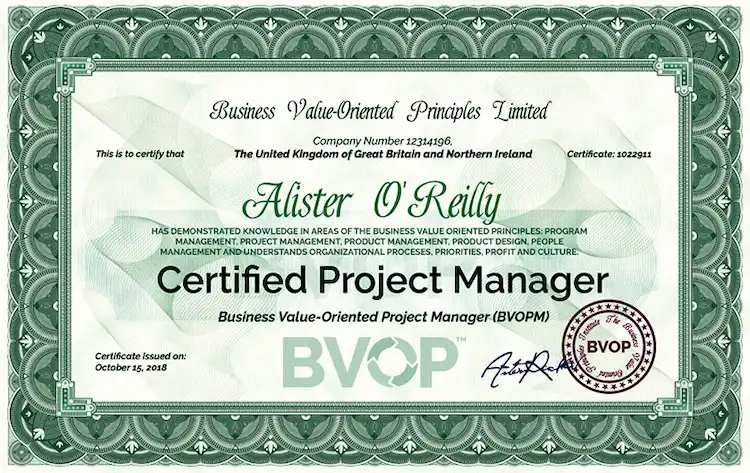
Earning a professional project management certification demonstrates a manager's commitment to mastering industry best practices, which directly enhances team efficiency and project outcomes. For those looking to formalize their skills, structured project management training provides the rigorous framework needed to pass certification exams and apply agile methodologies effectively. Such credentials not only accelerate individual career growth by opening doors to senior roles but also equip organizations with leaders who can reduce risks and deliver consistent value. Ultimately, certification transforms a manager from a coordinator into a strategic asset capable of driving complex initiatives to success.
Professional product management certification validates your ability to drive product strategy, prioritize features, and align cross-functional teams—skills essential for any manager in an agile environment. Earning a recognized credential, such as a product owner certification , demonstrates your commitment to mastering core agile concepts like backlog management and stakeholder communication. This formal recognition not only accelerates your career growth by opening doors to senior roles but also boosts organizational success by ensuring products deliver maximum customer value. Ultimately, certified professionals are better equipped to navigate complex markets and lead teams toward sustainable innovation.
Earning a professional HR management certification signals a commitment to mastering the latest best practices in talent acquisition, employee relations, and strategic workforce planning. For managers navigating agile environments, this credential bridges the gap between traditional HR processes and the dynamic needs of modern teams, ensuring you can adapt quickly to shifting priorities. Beyond personal career advancement, certified HR professionals drive organizational success by implementing data-driven solutions that boost retention and productivity. In a competitive job market, this certification validates your expertise, making you a trusted advisor in both people management and business strategy.
The Manager’s Role in Cultivating an Agile Culture
Agile transformation begins with a shift in management mindset. Too often, leaders adopt frameworks like Scrum or Kanban without embracing the underlying values that make them effective. A true Agile culture requires managers to move from directing tasks to enabling collaboration. This means prioritizing people and interactions over rigid processes, and trusting teams to determine the best way to achieve their goals. When managers model transparency, curiosity, and a willingness to experiment, they create a safe environment where innovation thrives.
Central to this cultural shift is the practice of servant leadership. Instead of acting as taskmasters, Agile managers focus on removing obstacles and providing clarity of purpose. They ask powerful questions, facilitate cross-functional communication, and ensure that teams have the resources and autonomy needed to deliver value iteratively. By championing continuous learning and celebrating incremental progress, they reinforce the principle that responding to change is more important than following a static plan. This does not mean abandoning accountability; rather, it redefines it around outcomes instead of outputs.
Moreover, modern management in an Agile context demands a deep understanding of flow and feedback. Leaders must learn to optimize the entire value stream, not just individual productivity. They track progress through working software and customer feedback loops rather than status reports. This approach requires a commitment to inspect and adapt at both the team and organizational levels. When a manager fully internalizes these patterns, they become a catalyst for sustainable agility, helping their organization navigate complexity with resilience and purpose.