For many organizations, the journey from acknowledging the importance of diversity, equity, and inclusion to implementing tangible change can feel overwhelming. The desire to build a more representative and fair workplace often collides with fragmented efforts, unclear accountability, and initiative fatigue. To bridge the gap between intention and impact, progressive companies are adopting a robust methodology: Assess, Plan, Act. This complete DEI strategy guide will walk you through that framework, offering practical steps to move from assessment to action and build a sustainable DEI strategy that transforms your organization. The Assess, Plan, Act cycle is not a one-time event but a continuous improvement loop rooted in data-driven decision making (as exemplified by Survey to Success: Designing and Acting on Employee Engagement ) and genuine cultural transformation, and it forms the backbone of every successful diversity, equity, and inclusion action plan.
Why DEI Strategy Requires a Structured Approach
Corporate commitments to diversity have multiplied in recent years, yet many initiatives stall because they lack a coherent structure. Without a clear strategy, well-intentioned efforts devolve into isolated events, one-off training sessions, or public statements that are quickly forgotten. A structured DEI strategy guide like Assess, Plan, Act ensures that every action is tied to measurable outcomes and embedded in operational rhythms. Research consistently shows that diverse teams outperform homogeneous ones, but only when inclusion and equity are deliberately cultivated. The business case for DEI is strong, but the human case is even stronger: employees who feel they belong are more engaged, innovative, and resilient. To achieve these outcomes, organizations must treat DEI with the same rigor they apply to product launches, financial planning, or digital transformation. To truly embed inclusion, leaders can turn to Cultivating Courageous Teams: A Leader’s Roadmap to Psychological Safety as a foundational practice.
The Limitations of Surface-Level Diversity Initiatives
Many companies mistake representation metrics for genuine inclusion. Hiring a few underrepresented employees without addressing systemic barriers often leads to revolving-door retention crises and cynical perceptions of performative allyship. Surface-level initiatives typically focus on diversity as a number and neglect the equity and inclusion components that make diversity sustainable. For example, a firm might celebrate reaching a gender parity goal at entry level while ignoring that women leave mid-career at disproportionate rates due to lack of sponsorship, biased performance reviews (which can be tackled with Unlock Star Potential: The Skill Will Matrix Guide ), and inflexible work policies, an issue explored in Navigating the New Office: Performance Without Sacrificing Freedom .
Embedding Equity and Inclusion into the Organizational Fabric
True transformation happens when DEI is not a separate workstream but an integrated element of leadership behavior, talent management, and everyday operations. Equity means designing systems that account for different starting points and removing barriers that disproportionately affect marginalized groups. Inclusion goes beyond inviting people to the table; it demands that all voices are heard, respected, and acted upon. The structured approach of Assess, Plan, Act embeds these principles by connecting assessment findings to strategic planning and then to concrete, time-bound actions across departments. This integration prevents DEI from becoming a siloed initiative that lives and dies with a single passionate leader, and instead makes it a shared responsibility supported by governance, budgets, and performance metrics.
Essential Insight Summary
- A structured approach prevents initiative failure
- Without a structured framework such as Assess, Plan, Act, diversity initiatives tend to fragment into isolated events and standalone trainings that fail to generate measurable, lasting change.
- Surface-level diversity fuels retention crises
- Fixating on representation targets while overlooking systemic barriers fuels high turnover and fosters perceptions of performative allyship among employees.
- Equity demands removing systemic barriers
- True equity demands redesigning systems to reflect different starting points and proactively dismantling obstacles that disproportionately hinder marginalized groups.
- Deep integration prevents siloed DEI efforts
- Embedding DEI deeply into leadership expectations, talent processes, and day-to-day operations transforms it from an isolated initiative into a collective accountability, reinforced by governance and performance metrics.
Embracing the Assess, Plan, Act Framework for DEI Excellence
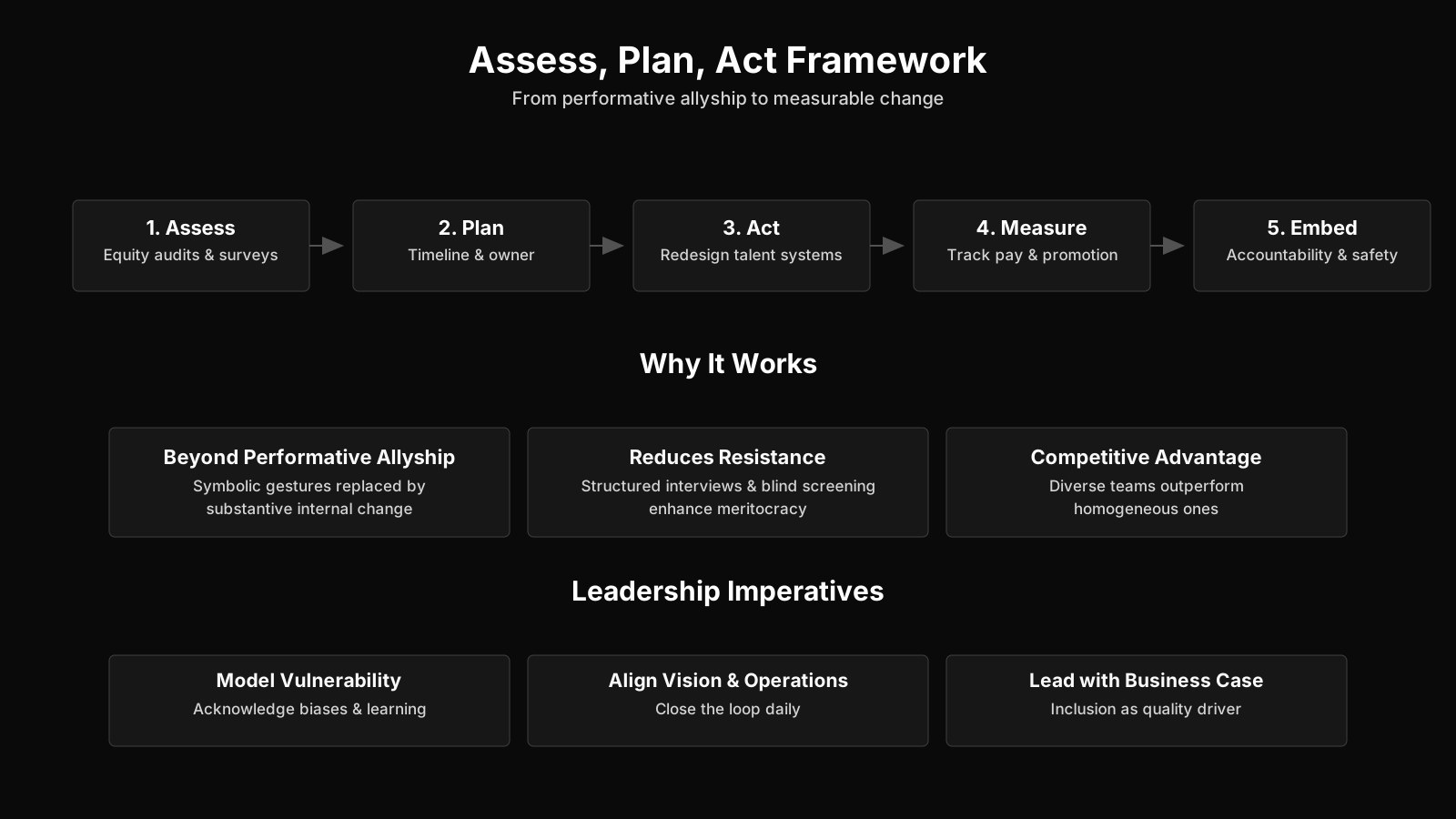
The Assess, Plan, Act framework is designed to turn abstract DEI aspirations into a living, breathing management discipline. It borrows from continuous improvement models like plan-do-check-act but tailors them specifically to the complexities of organizational culture and human dynamics. In the Assess phase, leaders collect quantitative and qualitative data to understand the current state. In the Plan phase, they translate insights into focused strategic objectives, complete with owners, timelines, and resources. In the Act phase, those plans become reality through targeted programs, policy changes, and behavioral shifts. This complete DEI strategy guide emphasizes that the three phases are iterative: action generates new data, which in turn informs the next assessment, creating a virtuous cycle of learning and improvement.
Assess: Benchmarking Your Organization’s Current State
Assessment is the diagnostic heart of any effective diversity, equity, and inclusion action plan. Organizations often skip this step, jumping straight to hiring targets or unconscious bias training without understanding their unique challenges. A rigorous Assess phase uses a combination of workforce analytics, employee engagement survey data segmented by demographic groups, pay equity analyses, and inclusion index scores. It also incorporates qualitative methods such as focus groups, exit interviews, and pulse surveys to capture the lived experiences that numbers alone cannot convey. By benchmarking against industry standards and internal historical trends, companies can identify where the most urgent intervention points lie, whether that is in recruitment funnel leakage, manager inclusion capability, or promotion rate disparities.
Plan: Crafting a Measurable DEI Roadmap with the Assess, Plan, Act Model
Once the assessment reveals the gaps, the Plan phase translates findings into an actionable roadmap. Effective planning requires prioritization, because even the most committed organizations cannot fix everything at once. Leaders should select two to four strategic pillars for a defined period, typically twelve to eighteen months, that address root causes rather than symptoms. Each pillar then breaks down into specific, measurable, achievable, relevant, and time-bound goals. For example, if assessment data shows that underrepresented talent stalls at the manager level, a pillar might focus on equitable promotion processes, with key results such as increasing the representation of diverse candidates in succession pipelines by twenty percent within one year. The Plan phase also includes building governance structures, appointing executive sponsors, and designing accountability mechanisms that will steer the Act phase.
Act: Implementing Tactical Steps within the Assess, Plan, Act Cycle
The Act phase is where strategy meets reality. This is when inclusive hiring practices are piloted, mentorship and sponsorship programs are launched, learning and development curricula are refreshed, and employee resource groups are formalized and supported with budgets. Action must be accompanied by clear communication so that employees understand what is changing and why. Crucially, the Act phase is not the end of the journey; it generates a wealth of new data. Are the initiatives moving the needle on the KPIs identified in the Plan phase? Are there unintended consequences, such as backlash or tokenism, that need to be addressed? The measure of success in the Act phase is not just activity volume but observable shifts in representation equity, inclusion sentiment scores, and retention of diverse talent.
Deep Dive into the Assessment Phase
The assessment phase of any DEI strategy guide is often the most challenging because it requires uncomfortable honesty. Organizations must be willing to uncover inconvenient truths about their culture, power dynamics, and historical patterns. This phase demands a blend of quantitative rigor and qualitative empathy. Without both, assessments can become exercises in confirmatory bias, where leaders find data to support what they already believe. The goal is to develop a comprehensive picture that highlights bright spots to celebrate, systemic issues to address, and pockets of excellence to scale.
Quantitative and Qualitative Data Collection Methods
Quantitative data provides the what of DEI, while qualitative data explains the why. Workforce demographic dashboards should go beyond overall headcount and track metrics like candidate slate composition, offer acceptance rates by demographic group, time to promotion, performance rating distribution, and attrition segmented by voluntary and involuntary reasons. Pay equity audits, using regression models that control for legitimate factors like tenure and role, are essential to identify unexplained pay gaps that signal bias. On the qualitative side, conducting confidential listening sessions with employee resource groups, affinity networks, and cross-sections of the workforce helps illuminate the narratives behind the numbers. These sessions, when facilitated by skilled neutrals, often surface themes such as subtle exclusion, code-switching fatigue, or lack of access to high-visibility projects. Combining both data types yields a rich diagnostic that informs the Plan phase.
Conducting a DEI Audit to Identify Systemic Gaps
A formal DEI audit examines policies, processes, and cultural artifacts for bias. This includes reviewing job descriptions for gendered language, analyzing the applicant tracking system for drop-off points that correlate with demographic identifiers, and evaluating performance management forms for vague criteria that invite subjective interpretation. The audit also spans supplier diversity, examining whether the organization’s procurement practices actively include minority-owned and women-owned businesses. Additionally, an audit should inspect the physical and digital environment for accessibility, ensuring that all employees, including those with disabilities, can fully participate. The output of a DEI audit is not a report card of shame but a prioritized list of structural changes that will remove barriers and create a level playing field. Many organizations pair this audit with a maturity model, rating themselves on a scale from compliance-driven to strategically integrated, to contextualize where they are on the DEI journey.
Analyzing Employee Lifecycle Data through an Equity Lens
To move beyond surface-level metrics, the Assess phase must map the entire employee lifecycle: attract, recruit, onboard, develop, perform, promote, and exit. At each stage, disaggregated data can reveal where inequities crystallize. For instance, an organization might find that its attraction efforts reach diverse candidates, but the interview-to-offer ratio drops sharply for certain groups, indicating potential bias in screening or interview panels. Similarly, a promotion analysis might show that women and people of color receive the same or higher performance ratings as their peers but are promoted at lower rates, pointing to a “broken rung” at the first step into management. Exit interview data, when coded for themes related to belonging, growth opportunities, and manager quality, can confirm or challenge these patterns. This lifecycle analysis provides the granular insight needed to craft a precise diversity, equity, and inclusion action plan that attacks root causes rather than generic symptoms.
Core Ideas
- Uncomfortable honesty required
- Uncomfortable honesty in the assessment phase pushes organizations to confront hidden cultural norms, entrenched power dynamics, and recurring historical patterns, guarding against confirmation bias to produce a genuinely comprehensive diagnosis.
- Quantitative and qualitative data
- Quantitative data surfaces the measurable dimensions of DEI challenges, such as candidate slate composition and pay equity gaps, while qualitative insights from listening sessions uncover the underlying drivers, offering a layered and actionable diagnostic.
- Formal DEI audit scope
- A formal DEI audit systematically reviews policies, job descriptions, recruitment systems, performance management processes, supplier diversity programs, and accessibility standards to pinpoint systemic barriers and generate a prioritized agenda for structural reform.
- Employee lifecycle equity analysis
- Mapping the entire employee journey, from attraction through exit, with disaggregated data reveals precisely where inequities crystallize, as seen in a broken first promotion rung or subtle bias embedded in interview protocols.
- Granular insight for action plans
- Granular lifecycle analysis transforms raw data into precise root-cause understanding, enabling the creation of a diversity, equity, and inclusion action plan that directly dismantles structural barriers instead of merely addressing surface-level inequity.
Crafting a Strategic DEI Plan
Translating assessment insights into a strategic plan is where analytical rigor meets organizational design. The Plan phase must answer three fundamental questions: Where are we now, where do we want to be, and how will we get there? A well-crafted plan connects directly to business objectives, making DEI not a side initiative but a driver of innovation, market relevance, and talent competitiveness. For example, if a company is expanding into new global markets, the DEI strategy might focus on building cultural competence and local hiring pipelines to ensure success in those regions. Alignment with corporate strategy also protects DEI budgets when economic headwinds tighten, as leaders can clearly articulate how inclusion efforts contribute to bottom-line performance.
Setting SMART Goals and OKRs for Diversity, Equity, and Inclusion
Vague aspirations like “increase diversity” are rarely effective. The Plan phase demands specificity. SMART goals, specific, measurable, achievable, relevant, and time-bound, provide clarity. Yet many leading organizations also adopt Objectives and Key Results (OKRs) borrowed from goal-setting frameworks popularized by technology firms. An objective might be “Create a culture where everyone can advance based on merit and contribution,” with key results like “Reduce the racial promotion gap between white employees and employees of color by fifteen percent by Q4.” Using OKRs forces the organization to define leading indicators that can be tracked quarterly, not just lagging indicators reviewed annually. This approach also normalizes DEI metrics as part of regular business reviews, integrating them into the same rhythm as revenue, customer satisfaction, and operational efficiency dashboards.
Building Governance and Accountability Structures
Without governance, DEI plans often stall. Governance clarifies who owns which actions and what decision-making authority they have. A typical structure includes an executive steering committee chaired by the CEO or a senior leader who has DEI accountability in their performance goals, a DEI council of cross-functional leaders who drive implementation, and employee resource groups that serve as sensors and advocates. Town halls and listening forums keep the broader organization informed and engaged. Accountability is reinforced when DEI KPIs are embedded in compensation and bonus structures for senior leaders, not as a punitive measure but as a signal that inclusive leadership is a core competency. When middle managers’ performance reviews include inclusion index scores from team surveys, the message cascades: DEI is everyone’s job, not just the Chief Diversity Officer’s.
Allocating Resources and Securing Leadership Buy-In
Even the most elegant strategic plan will falter without dedicated resources. The Plan phase must budget for technology investments, such as equity analytics platforms, for expert facilitation of focus groups, for learning and development content, and for hiring diverse talent pipelines. It also requires time, specifically, time for leaders to participate in inclusive leadership development programs and for managers to engage in coaching conversations about bias. Securing buy-in goes beyond a single presentation to the C-suite; it involves co-creating the plan with key stakeholders so they feel ownership. Presenting the business case alongside the human case, using data from the Assess phase, and showing a clear line of sight to measurable business outcomes such as reduced turnover costs, enhanced employer brand, or improved innovation metrics, converts skeptics into champions.
From Planning to Action: Executing Your DEI Strategy
The Act phase is the moment of truth where plans become palpable change. Execution must balance immediate visible wins with long-term structural transformation. Quick wins, such as updating parental leave policies to be gender-neutral or introducing floating holidays for religious and cultural observances, signal commitment and build momentum. At the same time, the organization must tackle deeper systemic changes that require iterative effort, such as overhauling performance management or redesigning career paths to reflect diverse leadership styles. The key is to sequence actions so that employees experience progress without feeling that the organization is checking boxes and moving on.
Redesigning Talent Acquisition for Inclusive Hiring
Hiring is often the most visible aspect of DEI action, yet it is only one piece of the puzzle. To make hiring truly inclusive, organizations must move beyond passive job postings and tap into underrepresented talent communities through partnerships with historically Black colleges and universities, professional associations, and coding bootcamps for veterans or career-changers. Job descriptions should be scrubbed of unnecessary requirements and coded language that deters certain groups. Structured interviews with standardized questions and diverse interview panels reduce affinity bias and increase fairness. Implementing blind resume reviews at the initial screening stage can also help mitigate unconscious bias. Each of these actions should be piloted, measured, and refined continuously as part of the Assess, Plan, Act cycle, ensuring that the organization learns what works in its specific context.
Developing Employee Resource Groups and Mentorship Programs
Employee resource groups, or ERGs, are powerful engines of inclusion when they are strategically supported rather than treated as extracurricular clubs. Effective ERGs have executive sponsors, dedicated budgets, and charters aligned with business goals such as product development insights or community engagement. Mentorship and sponsorship programs must also be designed with intention. Traditional mentorship, which focuses on advice and guidance, is valuable, but sponsorship, where senior leaders actively advocate for a protégé’s advancement, is what accelerates career progression for underrepresented talent. The Plan phase should define how mentors and sponsors are matched, trained, and held accountable for outcomes. When sponsorship program participation is tracked and linked to promotion data, the organization can test whether these initiatives are truly changing the trajectory of diverse employees.
Embedding Inclusive Leadership Behaviors Across Management
Managers are the linchpin of the Act phase because they translate strategy into daily team experiences. Inclusive leadership is a set of learnable behaviors: seeking diverse perspectives in decision-making, calling out microaggressions, sharing credit equitably, and creating psychological safety so that team members can speak up without fear of retribution. Organizations must invest in ongoing development, not one-time training, to build these skills. This can take the form of coaching circles, real-time feedback tools, and peer learning cohorts where managers practice handling difficult situations. Performance evaluations for managers should then measure how inclusion behaviors are demonstrated, using upward feedback from team members and metrics like team belonging scores. Through this integration, the Act phase ensures that DEI is not an abstract corporate value but a practiced reality in every meeting and one-on-one.
Creating a Culture of Psychological Safety and Belonging
Psychological safety is the belief that one can take interpersonal risks, such as admitting a mistake or proposing a radical idea, without facing humiliation or retaliation. Research by Amy Edmondson and others has established it as the foundation of high-performing teams. Inclusion efforts cannot thrive without it. The Act phase must therefore deliberately nurture psychological safety through leadership modeling, team charters that articulate norms of interaction, and mechanisms for safely reporting bias or harassment. Belonging goes a step further: it is the emotional counterpart that makes inclusion feel real. Organizations cultivate belonging by celebrating diverse cultural moments, encouraging authentic expression, and ensuring that rituals like meetings, social events, and recognition programs do not inadvertently exclude. When psychological safety and belonging are present, the diverse talent attracted by inclusive hiring policies stays and thrives, closing the leaky bucket that undermines many DEI strategies.
Key Insights
- Balancing quick wins and deep change
- Execution must combine immediate, visible wins, such as gender-neutral parental leave, with long-term structural changes, including performance management redesign, to sustain momentum without appearing performative.
- Redesigning hiring for inclusion
- Truly inclusive hiring demands proactive engagement with underrepresented talent pools, removal of biased language from job postings, structured interviews conducted by diverse panels, and blind resume screening, all tested and refined through continuous iteration.
- Strategic support for ERGs and sponsorship
- Employee resource groups require dedicated executive sponsorship, adequate budgets, and business-aligned charters; sponsorship programs must match senior leaders with protégés, provide training, and track promotion outcomes to ensure advocacy drives measurable career advancement.
- Embedding inclusive leadership behaviors
- Managers must adopt concrete behaviors: actively soliciting diverse viewpoints, addressing microaggressions immediately, and fostering psychological safety, reinforced through coaching circles, peer cohorts, and performance evaluations that explicitly measure inclusion.
- Cultivating psychological safety and belonging
- Psychological safety emerges when leaders model vulnerability and teams adopt clear charters; belonging deepens through intentional celebration of diverse cultural moments and inclusive rituals, enabling all talent to remain and flourish.
Measuring Impact and Sustaining Momentum
A common pitfall in DEI work is declaring victory too soon or relying on lagging indicators that take years to shift. Measurement in the Assess, Plan, Act cycle is continuous and multi-dimensional. It tracks not just final outcomes like demographic representation but also process metrics that reveal whether the system is becoming fairer. For example, tracking candidate conversion rates by source can show whether outreach efforts are generating a diverse enough applicant pool, while promotion application rates can indicate whether high-potential underrepresented employees are self-selecting out of advancement opportunities. These measuring systems must be transparent, though aggregated to protect individual privacy, and visibly discussed in leadership forums to maintain focus.
Leveraging Dashboards and KPIs to Track Progress
Modern DEI dashboards go beyond static annual reports. They provide real-time or quarterly views of key metrics such as hiring diversity, retention by cohort, inclusion survey index, pay equity ratios, and participation in development programs. These dashboards should be accessible to leaders at multiple levels, from the C-suite to frontline managers, with contextual training on how to interpret data without falling into the trap of stereotyping or drawing false causal conclusions. Effective KPIs are balanced: they track representation gains alongside employee sentiment, because a rapid increase in diversity without inclusion can create a toxic environment where new hires feel unsupported. Dashboards also serve as early warning systems, flagging when a unit’s voluntary attrition among underrepresented groups spikes, allowing leaders to activate targeted interventions before the situation deteriorates.
Establishing Regular Feedback Loops and Pulse Surveys
Measurement is not a passive data collection exercise; it must fuel learning and adaptation. Annual engagement surveys are too slow for the iterative demands of the Assess, Plan, Act model. Instead, organizations should deploy pulse surveys focused on inclusion, psychological safety, and belonging at quarterly or even monthly intervals. These pulses can be supplemented by always-on feedback tools where employees can report microaggressions, suggest improvements, or share praise for inclusive behaviors they have witnessed. The feedback loop closes when leadership communicates what they heard and what actions will be taken. Transparency about both progress and setbacks builds trust and demonstrates that feedback genuinely drives decisions. Without this closing of the loop, survey fatigue sets in and skepticism grows.
Iterating the Strategy Using the Assess, Plan, Act Cycle for Continuous Improvement
The cyclical nature of Assess, Plan, Act means that no DEI strategy is ever truly finished. As societal norms evolve and the organization’s workforce composition changes, new challenges emerge. The post-implementation assessment evaluates which interventions worked, which did not, and why. Perhaps blind resume screening improved gender diversity in first-round interviews but did not significantly change hiring rates, prompting a shift toward interviewer calibration training. Maybe a sponsorship program boosted promotions for Black employees in one division but lagged in another due to manager resistance, indicating the need for targeted change management. By embedding this iterative loop into the operational calendar, DEI becomes a dynamic capability rather than a static plan collecting dust. Continuous improvement also counters the DEI fatigue that arises when employees see repeated announcements without sustained change.
Overcoming Common Pitfalls in DEI Implementation
Even with a solid Assess, Plan, Act framework, organizations encounter predictable obstacles. Acknowledging these challenges upfront and building countermeasures into the plan increases the likelihood of long-term success. The pitfalls range from performative actions that erode trust to resistance from employees who perceive DEI as a zero-sum game. Smart organizations anticipate these dynamics and address them through communication, education, and by demonstrating that inclusive environments benefit everyone, not just underrepresented groups.
Avoiding Performative Allyship and DEI Fatigue
Performative allyship happens when organizations make symbolic gestures, such as issuing statements on social media or adopting rainbow logos during Pride month, without backing those actions with substantive internal change. This creates a credibility gap that disengages employees and external stakeholders. The antidote is the discipline of the Assess, Plan, Act approach: every public commitment should be traceable to a concrete, internally focused action with a timeline and owner. DEI fatigue sets in when initiatives feel like a relentless series of mandatory training sessions or when progress is invisible. To combat fatigue, organizations should celebrate wins, however small, and connect them to the human stories of employees who have benefited. Rotating responsibility across teams for driving DEI initiatives prevents burnout among the few passionate volunteers who typically carry the load.
Addressing Resistance and Change Management
Change, by nature, creates discomfort. Some employees and leaders may resist DEI efforts, either because they fear losing status or because they genuinely believe that focusing on identity categories undermines meritocracy. Effective change management addresses these concerns directly with empathy and data. Facilitated dialogues can surface underlying anxieties and separate myths from facts. For instance, explaining that structured interviews and blind screening actually increase meritocracy by reducing bias can reposition DEI as a quality enhancement, not a standards reduction. It is also crucial to lead with the business case that diverse problem-solving teams outperform homogeneous ones, which frames inclusion as a competitive advantage. Senior leaders must model the vulnerability of acknowledging their own biases and learning journeys, which gives permission for others to engage authentically without fear of being pilloried for missteps.
Essential Takeaways
- Avoiding Performative Allyship and Fatigue
- Sustaining momentum requires pairing public commitments with rigorous internal accountability and celebrating incremental progress, which closes credibility gaps and prevents the activist fatigue that erodes long-term change.
- Addressing Resistance Through Change Management
- Using empathetic inquiry, transparent metrics, and facilitated conversations transforms scepticism into engagement by directly addressing status anxiety and repositioning DEI as a genuine meritocracy amplifier and strategic differentiator.
- Senior Leaders Modeling Vulnerability
- When executives openly discuss their own bias recognition and learning journeys, they normalize imperfection, build authentic psychological safety, and free employees to participate fully without fear of making mistakes.
The Future of DEI: Integration into Business Strategy
As the business landscape evolves, DEI is maturing from a standalone program to an integrated component of strategy, risk management, and innovation. The Assess, Plan, Act methodology aligns perfectly with this evolution because it embeds DEI into the rhythm of business operations. Companies that sustain their DEI commitments through economic cycles, political shifts, and leadership transitions are those that have made inclusion part of their DNA, not a temporary initiative. They treat DEI data with the same rigor as financial data, review it in operating reviews, and link it to enterprise risk frameworks, recognizing that groupthink and lack of diverse perspectives are material risks to innovation and growth.
The future will see DEI increasingly intersecting with environmental, social, and governance criteria, employee wellbeing, and digital transformation. As artificial intelligence and algorithmic decision-making enter HR processes, ensuring that these tools do not perpetuate bias will become a core DEI competency. The organizations that embed the Assess, Plan, Act discipline now will be best positioned to navigate these new complexities. They will have the data infrastructure, the governance muscle, and the cultural fluency to anticipate and respond to emerging equity challenges. Ultimately, the complete DEI strategy guide is not a document that sits on a shelf; it is a living management practice that drives continuous improvement, building workplaces where every individual can contribute their full potential and where the organization reaps the collective benefits of diverse thought, fair opportunity, and deep belonging.
Translating Assessment Data into Manager-Level Habits
Most DEI strategies stall at the exact moment insight becomes obligation. A dashboard shows disparities in promotion rates or engagement scores, leaders nod in recognition, and then everyone returns to their existing meeting rhythm. The missing step is rarely more data. In practice it often helps to give front-line managers a short list of low-stakes behaviors they can repeat without feeling like they are running a separate inclusion program. Instead of asking them to "improve belonging," give them three questions for their next one-on-one: What made it easier or harder to do your best work this week? Whose voice gets heard most in team decisions? Which process feels uneven right now? These prompts convert abstract DEI goals into observable conversation patterns.
One underused practice in the Act phase is to build stay interviews into the normal management cadence. Underrepresented employees rarely leave because of a single dramatic incident. More often, the departure follows a long trail of small frictions: being interrupted in meetings, receiving vague feedback, watching stretch assignments go to the same two people. Stay interviews surface those frictions before they harden into resentments. The interesting part is that the value depends less on the question list and more on whether managers listen without defensiveness. When employees sense that sharing a concern will not trigger a justification or a quick fix, they start naming the real barriers.
Accountability works best when it piggybacks on existing operating rhythms rather than spawning a parallel DEI bureaucracy. Embed one inclusion commitment in each manager's quarterly review or team retrospective. Ask them to report what they tried, what backfired, and what they will adjust next. Peer discussion among managers often normalizes experimentation better than an executive mandate, because it shows that missteps are part of the learning curve rather than a career risk. Over time, those small manager-level adjustments compound into the cultural shift the original assessment was meant to trigger.
Advance Your Career with Professional Certification
Earning a professional project management certification signals to employers that you possess standardized, globally recognized competencies, which directly accelerates career advancement and opens doors to senior roles. Organizations benefit from certified practitioners who consistently apply structured methodologies, reducing project failure rates and enhancing resource efficiency across complex initiatives. As industries increasingly prioritize agile delivery and stakeholder alignment, this credential serves as both a personal differentiator and a strategic asset that drives measurable business outcomes.
Earning a professional product management certification equips you with a structured framework to drive product strategy effectively, setting you apart in a competitive job market. As a certified product manager , you demonstrate validated expertise in market analysis, roadmap planning, and stakeholder collaboration, which directly boosts your career trajectory and earning potential. Organizations benefit from having certified professionals who reduce product failure risks and align cross-functional teams around clear priorities, leading to faster time-to-market and stronger customer outcomes. Ultimately, this credential fosters a culture of continuous improvement and accountability that fuels long-term business growth.
Earning a professional HR management certification signals your commitment to strategic people leadership and significantly boosts your career trajectory, opening doors to senior roles and higher salaries. As organizations increasingly align diversity, equity, and inclusion with business goals, a certified HR manager brings validated expertise in designing inclusive policies and driving cultural change that directly impacts retention and innovation. This credential also ensures you stay current with evolving employment laws and ethical practices, reducing organizational risk while building a reputation as a trusted advisor who can turn DEI strategy into measurable action.