Imagine walking into a high-stakes meeting where tensions are palpable and everyone seems to be racing to fill the air with words. The person who ultimately steers the conversation, diffuses conflict, and builds genuine rapport is often not the one who speaks the most, but the one who knows when to stay silent. Mastering the art of silence is not about passivity; it is a deliberate, strategic communication tool that allows leaders, managers, and professionals to speak less and connect more. In an era of constant noise, information overload, and back-to-back virtual meetings, the ability to wield silence effectively has become a defining trait of emotionally intelligent leadership. Understanding why silence wins conversations can transform your management style, deepen your influence, and create a culture of Cultivating Courageous Teams: A Leader’s Roadmap to Psychological Safety and collaboration that no amount of talking can replicate.
Summary: Why Silence Wins Conversations
| Key Concept | Summary |
|---|---|
| Strategic Silence | Purposeful silence repositions a leader from dominating conversation to cultivating deeper resonance, amplifying influence through disciplined restraint rather than continuous verbal assertion. |
| Neuroscience | Quiet moments engage the brain's default mode network, igniting introspection and empathic capacity, and transforming dialogue from a transactional exchange into a meaningful human connection. |
| Social Processing | A deliberately held three-second pause after a colleague speaks signals authentic cognitive engagement and regard, making your eventual response more potent and solidifying trust. |
| Emotional Regulation | Leaders at ease with silence interrupt the amygdala's threat-response loop, allowing the prefrontal cortex to reassert cognitive control, defusing tension and lowering defensiveness throughout the team. |
| Empathy Signal | Shared stillness builds an emotional holding environment where individuals feel fully witnessed rather than hastily diagnosed or corrected, embodying compassionate leadership. |
| Psychological Safety | By restricting their own verbal footprint and preserving conversational white space, leaders invite tentative, formative ideas to surface, directly fueling psychological safety and innovation. |
| Quiet Authority | Holding silence after delivering a decision reinforces authority; resisting the urge to elaborate preserves the message's clarity and projects calm confidence instead of defensive overexplanation. |
| Collective Intelligence | Strategic silence reorients the leader from primary answer-giver to curator of group insight, unlocking collective intelligence in meetings and retrospectives. |
| Active Listening | Silence enables leaders to move beyond reactive, surface-level commentary and access deeper, authentic dialogue that forges genuine rapport and interpersonal trust. |
| Team Empowerment | Leaders who speak less prompt teams to abandon the search for a single correct answer and instead co-create solutions, significantly lifting engagement and long-term retention. |
The Psychology Behind the Power of Silence in Conversations
Silence is often misinterpreted as emptiness or disengagement, but from a neurological and psychological standpoint, it is anything but. When we pause during a conversation, the brain enters a reflective state that consolidates information, processes emotional cues, and prepares a more thoughtful response. Neuroscience research has shown that moments of silence allow the default mode network of the brain to activate, which is critical for introspection, empathy, and memory consolidation. In conversation, a well-timed silence gives both parties the cognitive space to move beyond reactive, surface-level chatter and tap into a deeper, more authentic exchange. This is one of the foundational reasons why silence wins conversations: it elevates the interaction from mere transaction to meaningful connection.
How the Brain Processes Silence in Social Interactions
Human beings are wired to detect subtle pauses. When someone stops speaking in the middle of a dialogue, the listener’s brain does not simply idle; it becomes more alert. The auditory cortex remains engaged, and social cognition circuits search for meaning in the void. This heightened awareness can make the subsequent words far more impactful. For managers in coaching sessions or one-on-one feedback meetings, inserting a three-second pause after an employee finishes speaking signals that you are genuinely processing their words, not just waiting for your turn to talk. That small silence communicates respect and attentiveness more powerfully than a hurried “I understand.” This approach aligns closely with the principles of Navigating Turmoil: The Art of Crisis Communication, where deliberate pauses can de-escalate tension and foster clarity. Furthermore, knowing when to step back and listen rather than jump in can help you assess a team member’s readiness for a new challenge, a concept explored in the Unlock Star Potential: The Skill Will Matrix Guide. And as you master these quieter moments, you may find it easier to strike the right balance between structure and autonomy, much like the strategies in Navigating the New Office: Performance Without Sacrificing Freedom.
Moreover, the brain’s mirror neuron system responds differently during silence. Without verbal cues, people become more attuned to facial expressions, body language, and vocal tone when speech resumes. This multi-layered attention strengthens interpersonal synchrony, which is the bedrock of trust. By speaking less, you effectively invite the other person’s full neural engagement, creating a connection that words alone often fail to build. Leaders who master this skill also contribute to Cultivating Courageous Teams: A Leader’s Roadmap to Psychological Safety, as silence creates space for diverse voices to be heard without interruption.
The Role of Silence in Emotional Regulation and Empathy
Difficult conversations often trigger a threat response: the amygdala activates, and we get defensive or word-vomit just to escape the discomfort. Leaders who learn to tolerate and harness silence can short-circuit this amygdala hijack. When you pause instead of reacting, you signal to your own nervous system that there is no immediate danger, allowing the prefrontal cortex to re-engage. This self-regulation is contagious. An employee or counterparty senses that you are not rushing to judgment, and their own defensive mechanisms begin to lower.
Silence is also a profound empathy signal. When someone shares a vulnerable experience, a quiet, open posture often communicates “I’m with you” more than any phrase could. The absence of words creates a shared emotional space where the speaker feels seen and heard without being analyzed or fixed prematurely. This is a core component of compassionate leadership and a crucial reason why silence wins conversations about performance, career aspirations, or personal struggles. Empathy thrives not in a barrage of reassurances but in the generous act of holding silence for another person.
Core Insights on Silence in Conversations
- Brain activation during silence
- Moments of silence activate the brain's default mode network, prompting introspection, empathic resonance, and cognitive synthesis that elevate conversation beyond shallow exchange.
- Heightened social awareness
- When a speaker pauses, the listener's auditory cortex and social cognition circuits become more attuned, amplifying the impact of the words that follow and signaling genuine, attentive listening.
- Emotional regulation through pauses
- Allowing silence to land during tense conversations dampens the amygdala's threat reaction, giving the prefrontal cortex room to re-engage and reducing defensiveness for everyone involved.
- Silence as an empathy signal
- Holding a quiet, open posture at moments of vulnerability communicates acceptance and full presence more deeply than any words can, creating a shared emotional sanctuary where the speaker feels truly seen and validated.
Strategic Silence as a Cornerstone of Modern Leadership
The traditional image of a charismatic leader often involves a powerful, articulate speaker who can command a room with words. Contemporary leadership models, however, increasingly recognize the power of quiet presence. Leaders who practice strategic silence are not aloof or disengaged; they are intentional about creating space for others to contribute, reflect, and own their ideas. This approach shifts the leader from being the primary source of answers to being a facilitator of collective intelligence. In project governance meetings, product strategy sessions, or agile retrospectives, the most effective facilitators speak less and connect more by asking concise questions and then allowing long, unpressured silences for the team to think.
Cultivating Psychological Safety by Speaking Less
Psychological safety, the shared belief that a team is safe for interpersonal risk-taking, is one of the strongest predictors of high performance. Leaders who dominate conversations inadvertently signal that their voice matters more than others’. When a team lead steps back and creates conversational white space, team members feel invited to share half-formed thoughts, contrarian views, and innovative ideas that would otherwise remain hidden. In practice, a manager might open a brainstorming session with a clear prompt and then literally count to ten in their head before anyone speaks. That silence can feel excruciating at first, but it quickly normalizes the idea that the floor belongs to everyone, not just the most extroverted or senior person.
This act of speaking less and listening more builds a culture where silence is not a void but a container for thinking. Over time, team members stop looking to the leader for the “right” answer and start co-creating solutions. They feel empowered because they have genuinely been heard, which directly impacts engagement and retention. The leader’s silence has transformed the conversation from a reporting exercise into a collaborative connection.
The Quiet Leader: Balancing Authority and Approachability
Quiet leadership does not mean weak leadership. When a manager uses silence intentionally, it can actually amplify authority. Consider the moment after you present a contentious decision. Rather than launching into a lengthy justification, delivering the rationale clearly and then remaining silent forces the team to process the information and react honestly. Rushing to fill that silence with more explanations can dilute your message and make you seem defensive. Standing calmly in the quiet space communicates confidence and invites genuine dialogue, not forced consensus.
This balance is critical in matrixed organizations where influence, not direct authority, is the primary currency. By listening far more than you speak during cross-functional stakeholder meetings, you gather intelligence, understand hidden agendas, and build the relational capital needed to advance initiatives. Your silence becomes a strategic tool for reading the room and making smarter, more inclusive decisions. This is at the heart of why silence wins conversations in a leadership context: it shifts power dynamics from control to connection.
Building Deeper Interpersonal Connections Through Restrained Speech
At a human level, connection is formed not by the quantity of words exchanged but by the quality of the listening that takes place. Many professional relationships stall because both parties are too busy crafting their next statement to be fully present. Speaking less allows you to be fully present, which is the greatest gift you can offer a colleague or direct report. When you listen with the intent to understand rather than to reply, the speaker’s brain registers a safety signal, releasing oxytocin and strengthening the relational bond. This is the biological underpinning of trust, and it is entirely dependent on the listener’s ability to hold silence.
Active Listening and the Art of Holding Space
Active listening is often taught as a set of verbal behaviors: paraphrasing, asking open-ended questions, and summarizing. While these are useful, the most transformative element of active listening is non-verbal silence. The pause after someone finishes speaking, before you interject any verbal acknowledgment, is where true connection resides. During this pause, you are not only absorbing content but also sensing the emotion behind the words. A manager who consistently employs this silent “holding space” will find that employees bring them more challenges, ideas, and unfiltered feedback because they feel psychologically held, not judged or interrupted.
In customer discovery interviews or user research sessions vital for product management, the discipline of silence after a question is what separates superficial data from profound insights. When a participant finishes a surface-level answer, an interviewer trained in the power of silence simply waits, often with a receptive expression. The discomfort of the pause compels the participant to dig deeper and reveal the true motivations or frustrations behind their initial response. That extra layer of insight is a direct result of speaking less and connecting more.
Using Silence to Validate and Empower Others
Validation does not always require verbal endorsement. Often, the most powerful validation is a leader’s silent, focused attention. When a junior team member presents an innovative but risky idea, an immediate critique can crush the spark. A sustained silence followed by a thoughtful “Tell me more about how you see this working” communicates that the idea is worth extended mental effort, not a quick dismissal. This builds creative confidence far more effectively than a stream of praise or critique. The silence communicates, “I am taking you seriously.”
Empowerment also happens when leaders withhold their own opinions until the team has fully explored alternatives. In a decision-making conversation, the senior manager who speaks last, after soliciting and silently absorbing everyone’s input, makes the team feel that the decision was truly collaborative. The manager’s silence throughout the discussion signals trust in the team’s collective intelligence, and when they finally speak, their words carry the weight of thorough consideration. This practice of restraint makes every subsequent utterance more valuable and fosters a profound sense of shared ownership.
Core Insights on Connection Through Silence
- Quality of listening over quantity
- Professional bonds deepen when listening is fully present rather than abundant in words; attentive silence triggers a biological safety response that lays the foundation for trust.
- Power of the silent pause
- The transformative element in active listening is the intentional silence after someone speaks, which allows you to absorb both content and emotion fully before responding, without rushing to judgment.
- Silence in customer discovery
- During user interviews, maintaining deliberate silence after a superficial reply encourages participants to move beyond rehearsed answers and reveal the deeper motivations and frustrations driving their choices.
- Validation through focused attention
- When a leader offers a junior team member silent, sustained focus while they share a risky idea, it signals serious consideration and builds creative confidence more effectively than immediate praise or criticism.
Negotiation and Persuasion: Why Silence Wins Conversations in High-Stakes Contexts
In negotiations, the party who speaks first after a proposal often loses leverage. Silence is one of the most potent yet underutilized tools in a negotiator’s repertoire. It signals confidence, invites the other side to fill the void with concessions, and creates an informational asymmetry that favors the listener. Whether you are negotiating a vendor contract, a compensation package, or a project deadline, mastering the art of not filling the silence can drastically improve your outcomes. The fundamental principle is simple: humans are deeply uncomfortable with conversational voids and will often project their own anxieties into them, revealing more than they intended.
The Tactic of the Intentional Pause in Business Deals
After you state a figure or a non-negotiable requirement, the next person to speak usually loses ground. A well-trained buyer, upon hearing a price, might simply remain quiet, maintaining eye contact with a neutral expression. The seller, feeling the pressure of the silence, might start to justify the price or even voluntarily offer a discount or additional services. This is not manipulation; it is a natural social dynamic. The seller interprets the silence as dissatisfaction, but the buyer has merely created space. As a manager dealing with external partners or internal resource negotiations, you can use the same technique: articulate your need clearly, then close your mouth and wait. The other party’s reaction to the silence will give you invaluable information about their real bottom line and flexibility.
De-escalating Conflict with Silence and Timed Responses
High-stakes conversations often become emotionally charged. When an irate stakeholder or a frustrated team member fires off a verbal barrage, the instinct to defend or counterattack is almost irresistible. Yet a leader who meets anger with silent composure instantly changes the dynamic. After letting the person vent without interruption, a deliberate pause of several seconds before responding serves multiple purposes. It allows the speaker to hear the echo of their own words, often prompting a degree of self-reflection. It signals that you are not reacting emotionally but are processing. And it allows you to respond from a place of strategy and empathy, not raw emotion.
This technique requires practice. The silence in the face of an angry outburst can feel like weakness, but it is actually a display of massive emotional strength. Your refusal to be provoked rebalances the power in the conversation and often de-escalates the situation faster than any soothing word could. By speaking less during the crisis, you create the possibility for real connection once the heat dissipates, allowing for a solution-oriented dialogue rather than a blame cycle.
Silence as a Catalyst for Creativity and Innovation in Teams
Many managers mistakenly believe that the best ideation sessions are characterized by rapid-fire talk and high energy. However, constantly filling the air with chatter can stifle the deep cognitive processing required for truly novel ideas. Introverted team members, who often process information internally before speaking, may get steamrolled in a loud environment. Strategic silence, built into the structure of meetings, gives everyone the mental bandwidth to develop incisive, creative contributions. The goal is to shift from a culture of constant chatter to a rhythm of thinking, sharing, and reflecting.
Designing Meetings That Encourage Thoughtful Contribution
Incorporate silent brainstorming techniques like brainwriting, where team members write down ideas individually for a few minutes before any discussion begins. This ensures that the first voice in the room does not anchor everyone else, and it encourages a diversity of thought. After the silent period, the facilitator can invite comments, still allowing pauses for further reflection. This intentional design, built on the principle that silence wins conversations, produces a richer array of ideas and gives equal weight to all cognitive styles. The quality of the connection among team members also improves when everyone feels their unique processing style is respected.
Similarly, during sprint retrospectives or project post-mortems, begin with a period of silent reflection before opening the floor. Ask team members to individually note what went well and what could improve. This practice prevents groupthink and reduces the influence of hierarchy or dominant personalities. The subsequent discussion is deeper, more honest, and more productive, precisely because the team first connected with their own thoughts in silence.
Encouraging Divergent Thinking Through Contemplative Pauses
Divergent thinking, the ability to generate many unique solutions, flourishes when the mind is allowed to wander without immediate verbal output. Facilitators can deliberately insert a two-minute “silent incubation” pause after presenting a complex problem. During this time, no one speaks; everyone thinks. The brain’s associative networks keep working in the background, and when the conversation resumes, insights often emerge that would never have surfaced in a continuous dialogue. This technique demonstrates practically why silence wins conversations about complex problem-solving: the quiet incubation period allows the brain to make non-obvious connections that verbal noise suppresses.
For product managers and business analysts working through ambiguous requirements, building silent intervals into workshops is not a waste of time; it is a productivity multiplier. The connections formed when participants re-engage after a collective pause are richer and more empathetic, as each person has had a moment to consider not just the problem, but also the perspectives of their colleagues.
Core Takeaways on Strategic Silence
- Deep cognitive processing via silence
- Uninterrupted dialogue in meetings often prevents the focused contemplation necessary for generating original insights, whereas intentional silence provides the cognitive quiet that allows participants to formulate more incisive contributions.
- Brainwriting prevents anchoring bias
- Techniques such as brainwriting, where individuals jot down ideas silently before any discussion, neutralize the anchoring effect of the first speaker and encourage a broader range of perspectives.
- Silent reflection reduces groupthink
- Beginning sprint retrospectives with a phase of individual silent reflection curbs groupthink, diminishes the sway of hierarchy, and sets the stage for more candid, penetrating dialogue.
- Silent incubation for divergent thinking
- A brief two-minute silence following the introduction of a complex problem lets participants’ minds uncover subtle connections that ongoing chatter would otherwise bury.
- Silence as a productivity multiplier
- Embedding silent intervals into workshops dealing with ambiguous requirements is a proven productivity multiplier, because returning from a shared pause consistently yields richer and more empathetic insights.
Overcoming the Personal and Cultural Discomfort with Silence
Despite its immense power, many professionals struggle to use silence because it feels deeply uncomfortable. The discomfort stems partly from cultural conditioning that equates silence with awkwardness, incompetence, or lack of preparation. In many Western business environments, there is an unspoken expectation that you should always have something to say, and any pause longer than a heartbeat must be filled. But this anxiety is exactly what makes silence such a valuable leadership differentiator: when you can be comfortable in silence while others are squirming, you gain a natural advantage in presence and authority.
Recognizing and Reframing Internal Urges to Fill the Void
The compulsion to speak often arises from a fear of what the other person might be thinking during the quiet moment. You may fear they are judging you as slow or unprepared. Recognize that this is a projection. The other person is often just as anxious about the pause and is likely using the time to think. By reframing silence as a gift rather than a vacuum, you can retrain your brain. The next time a natural pause occurs in a one-on-one or a team meeting, notice the urge to jump in, label it as “anxiety filler,” and consciously choose to let it pass. With practice, the anxiety diminishes, and the silence becomes a space of empowerment.
You can also reframe the purpose of the conversation. Instead of viewing it as an information delivery channel, see it as a relational exchange. If your goal is to connect more, not just to transmit data, then speaking less becomes a logical tactic. When you prioritize connection, silence stops being an enemy and becomes your most reliable ally.
Adapting Silence Across Different Cultural Contexts
Cultural norms around conversational silence vary widely. In some East Asian cultures, a thoughtful pause is a sign of respect and deep consideration; in many Nordic cultures, silence is comfortable and valued as part of everyday interaction. In contrast, American and Southern European business settings often favor rapid turn-taking and minimal gaps. A globally effective leader must be attuned to these differences. Using silence in a cross-cultural negotiation might be misinterpreted if you do not read the room. The key is to observe the conversational rhythms of your counterparts. If they use longer pauses, reciprocate; if they are rapid-fire, you can still employ short, strategic silences to slow the pace and command respect.
The universal truth, however, is that genuine, attentive silence almost always signals respect. Even in fast-paced cultures, when you give someone your full, silent attention after they have made a significant point, it transcends local norms and communicates that you truly value what they said. This cross-cultural adaptability of respectful silence is one of the strongest arguments why silence wins conversations everywhere. The connection created through presence is a human universal.
Practical Techniques to Develop Your Conversational Silence Muscle
Building comfort with silence does not require a personality transplant; it requires deliberate practice and subtle behavioral adjustments. Like any leadership skill, it can be broken down into actionable techniques that become second nature over time. The goal is not to become a mute figure but to know when and how to deploy silence for maximum relational impact. The following approaches will help you speak less while dramatically increasing the quality of your connections.
The Three-Second Rule and Beyond
Start with a simple, ironclad rule: after the other person finishes a statement, count silently to three before you say anything. At first, those three seconds will feel like an eternity, but they accomplish several critical things. They prevent you from interrupting a trailing thought. They give you a moment to absorb both content and emotion. And they subtly signal that you are taking the exchange seriously. As you become more comfortable, extend the pause to five or even ten seconds in moments that require deeper reflection, such as after receiving difficult feedback or when an employee shares a complex personal challenge.
This technique is especially powerful in coaching conversations. When a direct report expresses a frustration, your instinct might be to jump in with a solution. By waiting, you often find that the employee fills the silence with a deeper insight or even their own solution, which they will own far more than any advice you might have dispensed. The three-second rule is a gateway to a coaching leadership style that develops people rather than just instructing them.
Using Body Language to Make Silence Inviting, Not Intimidating
Silence can feel punishing if accompanied by crossed arms, a stern gaze, or a lack of eye contact. The art is to make your silence a warm, open invitation. Maintain soft eye contact, nod occasionally to show you are tracking, and keep your posture relaxed and forward-leaning. This body language communicates, “I am here with you; take the time you need.” In hybrid meetings, this translates to looking directly at the camera when remote participants speak, and using affirmative facial expressions without interrupting.
When you are the one creating the silence after asking a question, ensure your facial expression is curious and patient, not interrogatory. A slight, encouraging smile and an open palm gesture can transform the energy from awkward to collaborative. This combination of silent presence and non-verbal encouragement is what makes the difference between a cold, intimidating silence and a connective, thoughtful one.
Scheduling “Silent Office Hours” or Walk-and-Think Meetings
Beyond individual conversations, you can institutionalize the value of silence. Offer a recurring “silent thinking hour” in your team’s calendar where no meetings are booked, and everyone is encouraged to tackle deep work or strategic reflection. For one-on-ones, experiment with walking meetings in nature where periods of silence are natural and less awkward. Walking side-by-side without making constant eye contact makes silence feel companionable rather than confrontational. These environmental hacks support the habit of speaking less and create a rhythm of reflective connection that carries over into more formal conversational settings.
Another tactic is the “silent start” to leadership team meetings. Spend the first five minutes reviewing the agenda and pre-read materials in total silence. This ensures everyone arrives mentally prepared and reduces the early chatter that can derail focus. It sets a precedent that silence is productive, not wasted time. Over multiple sessions, the team learns to use those moments to truly connect with the material and each other, improving the overall quality of strategic dialogue.
Core Techniques for Mastering Conversational Silence
- The Three-Second Rule
- Counting silently to three after a speaker finishes allows you to fully absorb their message, avoid premature interruptions, and signal that you value their input.
- Inviting Body Language
- A combination of soft eye contact, an open posture, and subtle nods transforms silence into a reassuring space that encourages deeper sharing.
- Coaching Through Pauses
- Allowing a pause before responding in coaching conversations gives employees the mental space to explore their own solutions, strengthening ownership and deepening critical thinking.
- Silent Office Hours
- Scheduling regular blocks of uninterrupted quiet time for deep work and strategic reflection embeds silence as a cultural asset, protecting your team's capacity for focused, high-quality thinking.
- Silent Meeting Starts
- Starting leadership meetings with five minutes of silent review grounds participants in the agenda, sharpens focus, and reframes silence as a deliberate, productive tool rather than an empty gap.
Common Pitfalls When Attempting to Wield Silence
While silence is a powerful tool, it can backfire when used without sensitivity or strategic intent. Pausing at the wrong moment or overusing silence can create mistrust, confusion, or disengagement. The goal is not to weaponize silence but to use it as a relational amplifier. Managers who adopt a silent posture as a power play, to make others squirm or to avoid accountability, will quickly erode psychological safety. It is essential to remain authentic and transparent about your intentions.
Avoiding Passive-Aggressive or Stonewalling Behavior
Silence that is accompanied by withdrawal, a refusal to answer direct questions, or emotional coldness crosses the line from strategic tool to stonewalling. In a feedback conversation, if an employee asks you a direct question about their performance, using a prolonged, blank silence instead of a clear, respectful answer is not connection; it is emotional manipulation. Leaders must distinguish between the generous silence that holds space and the punitive silence that withholds information. Always pair your silent moments with a clear willingness to engage when it truly matters. Your body language and follow-up words must reinforce that the silence is for thinking, not for shaming.
If you need time to formulate a response to a tough question, it is far better to say, “Let me take a moment to think about that,” rather than just staring mutely. This verbal framing turns the silence from ambiguous to collaborative. The transparency maintains trust and still gives you the cognitive pause you need. Authentic connection requires that your silence is perceived as a sign of care, not contempt.
Knowing When Silence Must Be Broken
There are critical moments when silence is not the right strategy. If you see a team member visibly drowning in confusion or distress, leaving them in silence will compound the pressure. In such cases, a gentle, clarifying question or a simple “I notice you might be stuck; would it help to talk it through?” breaks the tension and offers a lifeline. Similarly, if a conversation is going in circles and the same points are being rehashed, your silence as a facilitator might be enabling dysfunction. At that point, you need to step in, summarize, and guide the group toward a decision.
Also, be mindful of power dynamics. A senior leader using prolonged silence with a junior employee who is already nervous can come across as an interrogation tactic, even if unintended. In such situations, the leader must actively mitigate the power gradient by prefacing the silence with a supportive statement: “There’s no rush; just think it through. I’m asking because I genuinely want your perspective.” This kind of empathetic framing ensures that the silence connects rather than alienates.
Measuring the Impact of Speaking Less on Leadership Effectiveness
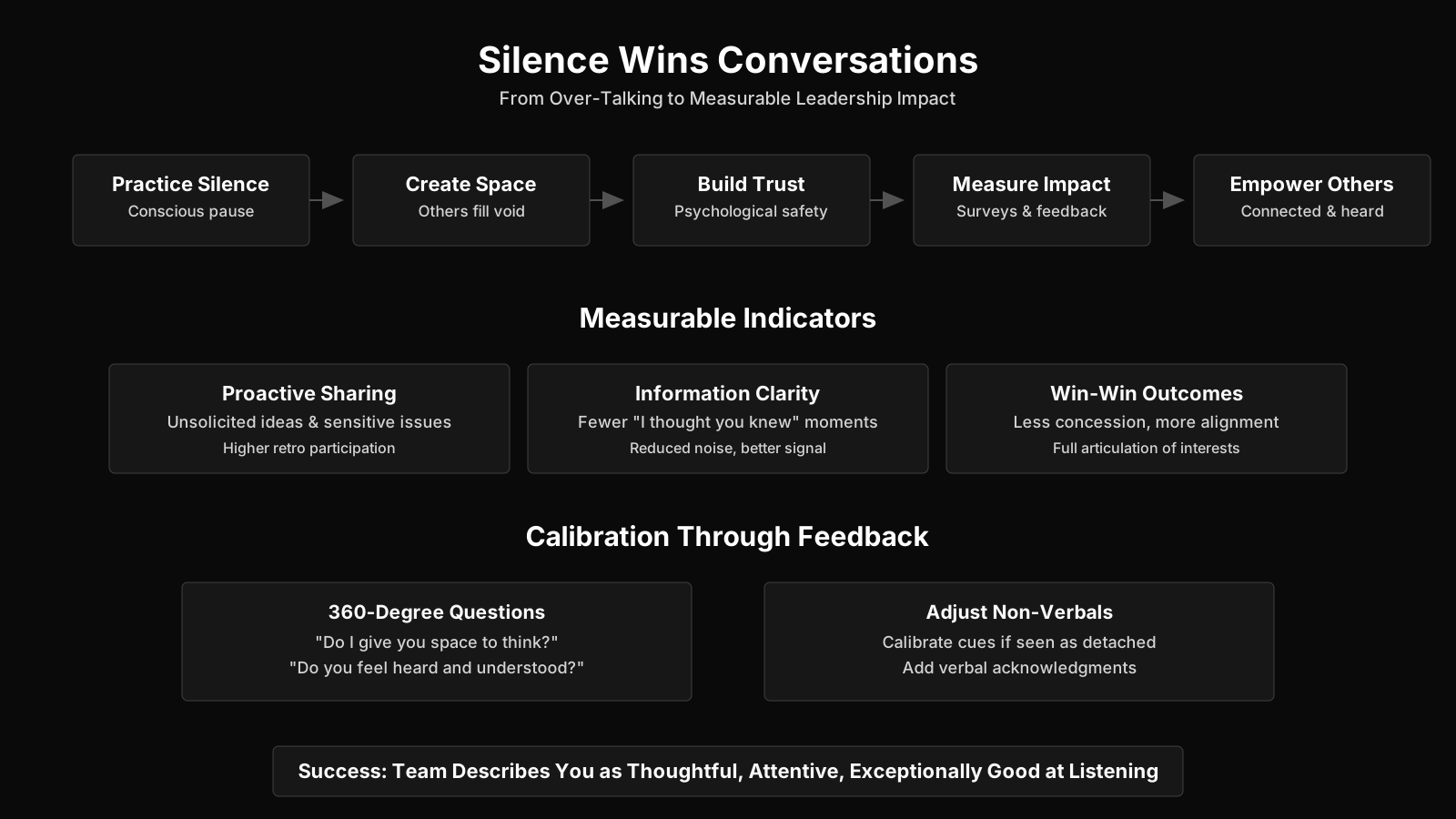
Because silence is an intangible skill, its benefits can feel hard to quantify. However, the downstream effects show up clearly in team engagement surveys, retention rates, and the speed of conflict resolution. Leaders who consciously practice speaking less often report a noticeable shift in how often team members proactively come to them with innovative ideas or sensitive problems. This shift is a direct measure of increased trust and psychological safety, both of which are quantifiable through regular pulse surveys and anonymous feedback mechanisms.
Tracking Engagement and Innovation as Proxy Metrics
Before implementing more intentional silence in your communication style, establish a baseline. Use a short anonymous survey to gauge how comfortable team members feel speaking up in meetings and how heard they feel by leadership. After several months of consistent practice, measure again. Leaders often see statistically significant improvements in these metrics. Other indicators include an increase in unsolicited improvement suggestions, higher participation rates in retrospectives, and a drop in the number of times people say “I thought you already knew that” — a sign that information was being lost in the noise of over-talking.
Additionally, track the outcomes of negotiating and difficult conversations. Compare the number of compromises or creative solutions reached before and after you started employing the intentional pause. Many managers find that they concede less and achieve more win-win outcomes simply because they gave the other party space to fully articulate their underlying interests, thanks to silence. The connection formed through this patience often leads to durable agreements that do not require constant reinforcement.
Soliciting 360-Degree Feedback on Listening and Presence
Your own perception of your silence can be skewed. You might think you are being a masterful listener, while others experience you as checked out or aloof. To close this gap, seek specific, honesty-based feedback. In your next 360-degree review, include questions like, “Do I give you enough space to think and speak during our interactions?” or “Do you feel heard and understood after our conversations?” The responses will provide a reality check. If the feedback suggests your silence is being misinterpreted as detachment, you can calibrate your non-verbal cues and add more verbal acknowledgments to bridge the gap.
Ultimately, the measure of success is not whether you talk less but whether the people around you feel more connected, understood, and empowered after interacting with you. When your team members start voluntarily describing your leadership as thoughtful, attentive, or exceptionally good at listening, you have successfully translated the principle that silence wins conversations into measurable organizational impact. The quiet confidence that emerges allows you to lead not by volume but by the depth of presence you bring to every interaction.
Core Takeaways on Measuring Silent Leadership
- Quantifiable proxy metrics
- The effectiveness of silent leadership can be gauged through specific proxy indicators such as rising team engagement scores, higher retention rates, and markedly shortened conflict resolution cycles.
- Baseline and follow-up surveys
- Anonymous baseline surveys that capture psychological safety and the extent to which team members feel heard provide a rigorous starting point for tracking statistically significant gains after leaders adopt intentional silence.
- Improved negotiation outcomes
- Deliberate pauses in high-stakes negotiations shift conversations away from forced compromises and toward mutually beneficial agreements, because silence gives the other party room to reveal core interests they might otherwise suppress.
- 360-degree feedback calibration
- Adding targeted questions about being heard and understood to 360-degree reviews lets leaders verify that their restraint is perceived as authentic, attentive listening rather than emotional distance or disengagement.
What Silence Reveals That Words Hide
One underused move is to ask a direct question and then simply stop talking. Many managers feel compelled to soften the discomfort by rephrasing, adding examples, or filling the pause with their own assumptions. When you do that, you train people to wait you out. The interesting part is that a genuine pause, five or seven seconds, often prompts the other person to say what they initially held back. They might add a caveat, a worry, or a detail that changes your understanding of the situation. In negotiation or performance reviews, the person who can tolerate the silence usually gains better information.
In practice it often happens that silence exposes the difference between what someone reports and what they actually believe. A team member may say a project is on track, then pause, glance down, and add a small qualifier about a dependency. If you rush to accept the first answer, you miss that signal. Letting the pause extend can draw out risk earlier, when it is cheaper to address. This is where sensemaking for managers becomes practical: in ambiguous situations, you are not waiting for a perfect answer, you are collecting fragments that help you piece together what is really happening.
The same discipline applies in group settings. After posing a hard question to a team, stay quiet even if the silence feels awkward. The first voice is often not the most informed voice, just the least comfortable with quiet. If you give in too soon, you anchor the discussion around the fastest talker. Holding the pause for even a few extra seconds changes the pattern. You signal that thoughtfulness is valued more than speed, and you often get a more diverse set of perspectives.
Advance Your Career with Professional Certification
Earning a professional project management certification significantly elevates your career trajectory by validating your expertise in leading complex initiatives and delivering results on time and within budget. Becoming a certified project manager not only boosts your earning potential and job mobility but also equips you with standardized best practices that enhance team collaboration and stakeholder confidence. For organizations, hiring certified professionals reduces risk, improves project success rates, and fosters a culture of continuous improvement. In a competitive market, this credential distinguishes you as a strategic asset capable of aligning projects with long-term business goals.
In today's competitive landscape, a professional product management certification validates your strategic thinking and execution skills, setting you apart as a candidate who can drive real business outcomes. Earning a product owner certification equips you with the frameworks to prioritize backlogs effectively and align cross-functional teams, directly boosting your career trajectory. Organizations benefit from certified leaders who reduce costly missteps and accelerate time-to-market, creating a culture of accountability and continuous improvement. Ultimately, this credential transforms a good product person into a trusted strategic partner, securing both personal advancement and sustained company growth.
In a field where listening often reveals more than speaking, earning a professional HR management certification demonstrates a deep commitment to understanding people and shaping healthy workplace cultures. This credential validates your expertise in employment law, conflict resolution, and strategic planning, giving you quieter confidence to influence decisions and guide both employees and executives. It signals to organizations that you have the disciplined knowledge to turn subtle human dynamics into measurable business results, making you an indispensable partner in long-term success.
The Strategic Pause as a Decision-Making Accelerator
In modern management practice, silence is often misunderstood as hesitation or lack of preparation. Yet research in organizational behavior reveals that strategic pauses actually accelerate decision-making by creating cognitive space for reflection. When a leader remains silent after posing a challenging question, team members are compelled to think more deeply before responding, leading to higher-quality contributions rather than knee-jerk reactions. This approach aligns with the principles of psychological safety championed by scholars like Amy Edmondson, where silence signals that the leader values thoughtful input over rapid agreement. In agile project management contexts, for instance, a scrum master who intentionally pauses during retrospectives invites team members to surface hidden concerns that might otherwise remain unspoken, ultimately preventing costly misalignments later in the sprint cycle.
Moreover, silence functions as a powerful calibration tool for assessing group dynamics. When you speak less during a negotiation or conflict resolution session, you create an observational advantage that allows you to read non-verbal cues, detect underlying tensions, and identify unspoken priorities. This heightened situational awareness enables leaders to make more informed decisions about when to intervene, when to delegate, and when to allow the team to self-correct. In remote and hybrid work environments, where digital fatigue often erodes conversational depth, the deliberate use of silence during video calls can re-engage participants who might otherwise disengage behind muted microphones. By resisting the urge to fill every pause, you signal confidence, invite collaboration, and build a culture where connection deepens naturally rather than through constant verbal output.