What activities take place during project closure? The answer begins with the Closing Process Group, the final set of processes used to finalize all activities across every Project Management Process Group. Project closure formally completes the project, a phase, or contractual obligations. It is not simply turning off the lights and moving on; it is a structured set of verification and handoff activities that establish whether the defined processes have actually been completed. Many teams mistake reaching the last deliverable for being finished, but formal closure is what converts completed work into an official record of completion.
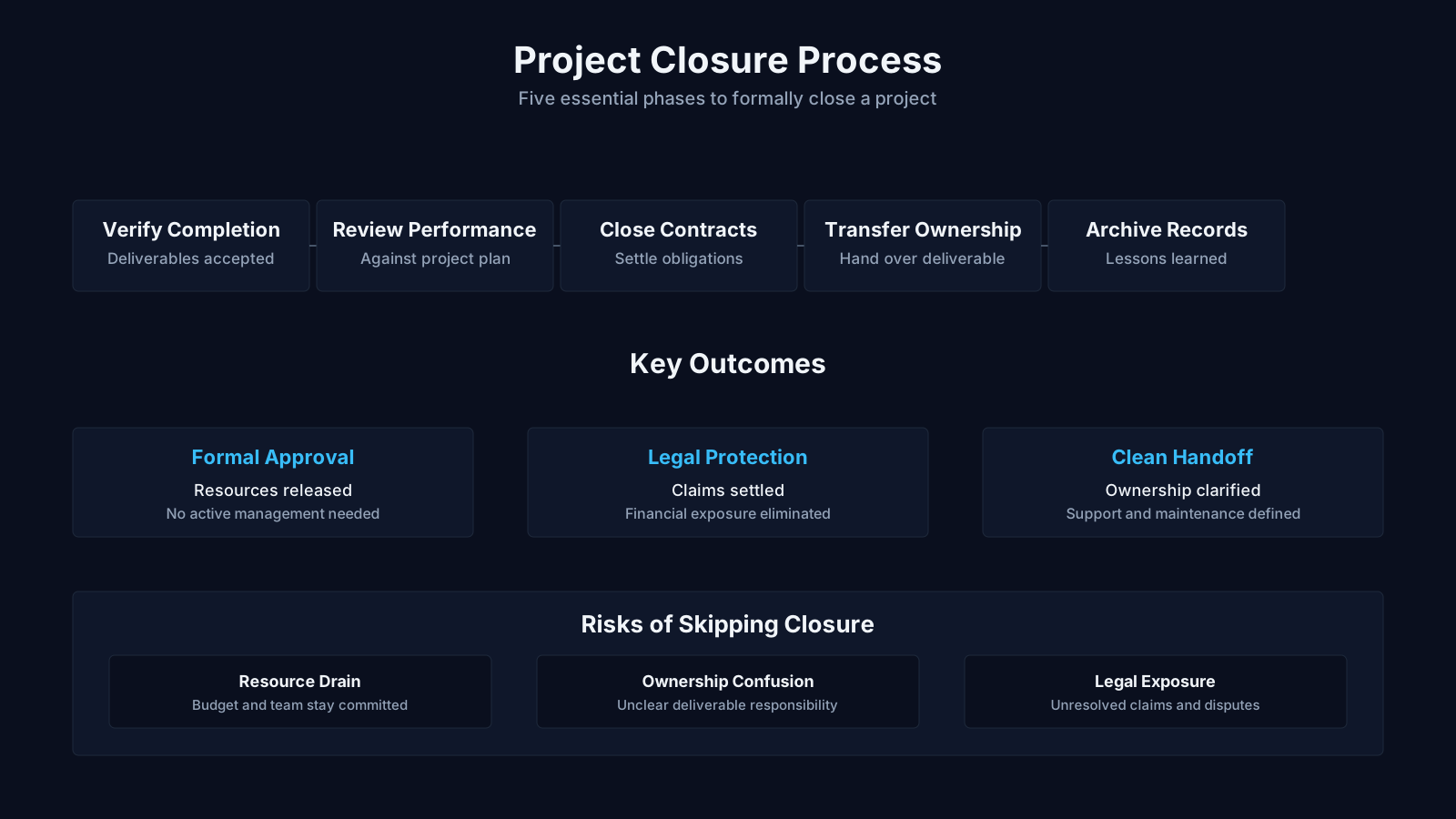
Project Closure Activities: Key Topics Summary
| Key Concept | Summary |
|---|---|
| Closure Objective | Project closure is a governed sequence of verification and handoff activities that confirms completion of defined processes, rather than an administrative shutdown. |
| Formal Sign-off | Formal sign-off authorizes the release of resources, initiates final payments, and transfers deliverables into operational service. |
| Ownership Clarity | Without a formal closure record, stakeholders may continue to treat a completed project as active, diverting attention and obscuring accountability for deliverables. |
| Risk Exposure | Failure to formally close out obligations can expose the organization to unresolved liability claims, payment disputes, and lapsed warranty protections. |
| Perception Signals | Closure communications shape how customers, sponsors, and operational teams judge the quality, reliability, and maturity of the deliverables and the delivery team. |
| Closure Activities | Closure activities encompass obtaining formal acceptance, conducting post-project reviews, documenting lessons learned, updating organizational process assets, archiving project records, and closing out procurement contracts. |
| Tailoring Records | Tailoring records capture the specific adaptations made to standard processes, enabling future teams to understand the rationale for each modification and assess its contribution to project outcomes. |
| Evidence Review | Verification requires objective evidence such as test results, inspection reports, user sign-offs, or demonstration logs; lessons learned should reference specific incidents and measurable impacts rather than general observations. |
The Closing Process Group and Formal Project Completion
The Closing Process Group exists to bring a project to formal project closure, finalizing all activities across the Project Management Process Groups. This process group is not just an administrative wrap-up; it is the formal declaration that the project or phase has met its defined completion conditions. In PMBOK, the Closing Process Group verifies that the defined processes are completed within all Process Groups. Once this verification happens, the project or phase is formally established as complete. That formal establishment matters because it triggers release of resources, final payments, and the transition of deliverables to operational use.
What often gets overlooked is that closure is not the same as stopping work. Stopping work can happen for many reasons, including resource loss, priority shifts, or stalled progress. Closure is different because it confirms that the work has either been delivered and accepted or that a decision was made to terminate the project under controlled conditions. In both cases, the organization needs a record that the project no longer requires active management. Without that record, stakeholders may continue to treat a finished project as if it were still open, consuming attention and creating confusion about who owns the deliverables.
The two specific processes in this process group are Close Project or Phase and Close Procurements. Close Project or Phase focuses on the administrative and procedural finalization of the project or a single phase. Close Procurements deals with the completion of contracts, settlement of claims, and verification that all procurement work has been accepted. These processes work together, but they are not identical. A project can have multiple procurements that close at different times, while the overall project closure may happen once all contracts and other obligations are settled.
Formal completion also has a legal dimension. Contractual obligations often specify what must be delivered, how acceptance is documented, and what happens after handoff. If the project team does not formally close out those obligations, the organization may remain exposed to liability, payment disputes, or warranty issues. Project managers who understand this treat closure as a governance checkpoint, not a formality. They know that the signals sent at closure influence how the customer, sponsor, and operational teams perceive the quality and reliability of the delivered work.
Phase closure is a related but distinct activity. In a multi-phase project, each phase can be closed before the next begins. This allows the organization to confirm that the phase met its objectives, resolve any open issues, and capture knowledge before new work starts. Phase closure uses the same logical steps as project closure but applies them to a smaller scope. Many practitioners fail to distinguish the two, which leads to a project that drifts from phase to phase without any formal checkpoint. That drift can hide unresolved problems until they become much more expensive to fix.
Core Insights on Formal Closure
- Formal declaration of completion
- The Closing Process Group establishes formal acceptance by confirming that a project or phase has met its predefined completion criteria, moving beyond routine administrative closeout to an explicit declaration of closure.
- Verification across process groups
- In accordance with the PMBOK Guide, the Closing Process Group verifies that all required processes across every Project Management Process Group have been completed before the project or phase is formally recognized as complete.
- Triggers for operational transition
- Formal closure initiates the release of remaining resources, the final settlement of outstanding payments, and the transition of project deliverables into operational use.
- Distinction from stopping work
- Closure is distinct from an unplanned work stoppage caused by resource loss or shifting priorities, as it validates either accepted delivery or a deliberate, condition-based decision to terminate the project.
- Importance of closure records
- Without a formal closure record, stakeholders may continue to treat a completed project as active, exposing the organization to confusion, liability claims, payment disputes, and unresolved warranty obligations.
What Activities Take Place During Project Closure?
At the heart of the question what activities take place during project closure are seven recurring actions. Teams obtain acceptance by the customer or sponsor, conduct post-project or phase-end reviews, record impacts of tailoring to any process, document lessons learned, update organizational process assets, archive project documents in the Project Management Information System, and close out procurements. These closure activities are not optional housekeeping. Each one protects a different part of the organization's ability to learn, govern, and deliver future work.
The seven activities map onto the two processes mentioned earlier. Activities such as obtaining acceptance, conducting reviews, documenting lessons learned, updating assets, and archiving records fall under Close Project or Phase. Procurement closure handles the verification and settlement of contracts. That mapping helps project managers avoid treating closure as a single undifferentiated task. Instead, they can assign clear owners for each activity and sequence them correctly.
Obtaining acceptance is usually the first activity because it establishes that the customer or sponsor agrees the deliverables meet the agreed requirements. Without this acceptance, later closure activities may rest on an unstable foundation. The team might archive documents for a deliverable that is later disputed, or update organizational assets with lessons learned from a project that is not actually considered complete. Acceptance is the trigger that gives the rest of the closure process its legitimacy.
Conducting a post-project or phase-end review then examines how the work was performed. This review covers schedule, cost, scope, quality, risk, and stakeholder satisfaction. It is not a performance evaluation of individuals, though individual performance may inform the discussion. The purpose is to identify systemic improvements that the organization can apply to the next project. Teams that skip this review lose the chance to turn project experience into organizational learning.
Documenting lessons learned and recording tailoring impacts are closely related but serve different audiences. Lessons learned capture what went well, what went wrong, and what should be done differently next time. Tailoring impacts record the specific adaptations made to standard processes so that future teams can understand why a process was modified and whether the modification produced value. Both feed into the organization's ability to improve without repeating past mistakes.
Finally, updating organizational process assets and archiving project documents ensure that the knowledge and records generated by the project remain available. Organizational process assets include templates, policies, procedures, and historical information. Archiving in the Project Management Information System preserves project records for future reference, audits, and legal requirements. Procurement closure, the last major activity, settles contracts and verifies that all seller obligations have been met. Together these activities create a complete, verifiable end to the project.
Obtaining Customer and Sponsor Acceptance During Project Closure
One of the first activities that takes place during project closure is obtaining customer and sponsor acceptance of the deliverables. This activity formalizes the agreement that the project has met its requirements. The customer may be an external buyer or an internal department, while the sponsor is typically the internal champion who authorized the project. Both roles may need to provide acceptance, depending on the project charter and the terms of the contract. Without this acceptance, the project cannot be considered formally complete.
Acceptance Criteria and Formal Sign-Off During Project Closure
Acceptance criteria are usually defined early in the project, often in the project charter, scope statement, or contract. During closure, the project manager compares the final deliverables against those criteria. This comparison is not guesswork; it requires evidence such as test results, inspection reports, user sign-offs, or demonstration records. Formal sign-off is the documented confirmation that the customer or sponsor has reviewed that evidence and accepted the deliverables. Verbal acceptance may feel sufficient in the moment, but it leaves the organization exposed if a dispute arises later.
Formal sign-off can take different forms. In some organizations it is a physical signature on a completion certificate. In others it is an electronic approval in a project management system. The format matters less than the clarity of the record. The acceptance documentation should identify exactly what was accepted, which version or iteration applies, and the date of acceptance. It should also note any conditions or follow-up items that remain open, so that the team does not confuse conditional acceptance with full acceptance.
A common pitfall is treating a successful demo as acceptance. A demo shows that the deliverable worked in a controlled setting, but it does not necessarily confirm that all requirements were met or that the customer has formally reviewed the evidence. Similarly, a sponsor who says the project is done in a meeting without signing anything has not provided formal acceptance. Project managers who want to protect their teams will push for a clear, written record before moving into the final stages of closure.
Handling Conditional Acceptance and Punch Lists During Project Closure
Conditional acceptance occurs when the customer agrees that the deliverable is mostly complete but identifies minor items that must still be addressed. These items are often collected in a punch list. The project manager must track these open items and confirm that they are resolved before final acceptance. If the punch list items are not tracked carefully, the project can drift into an unofficial support period with no clear end date. That is a common source of dispute because the customer may expect free fixes while the organization considers the project closed.
The acceptance activity also interacts with procurement closure. If a seller delivered a component of the project, the buyer may accept the component before the overall project is accepted. In some cases, the customer accepts the final integrated deliverable only after all seller work has been verified. Project managers must sequence these acceptance points correctly to avoid a situation where the customer accepts the project but a seller has not yet been paid or has an unresolved claim. The sequence depends on the contract structure and the nature of the deliverables.
Key Insights on Formal Acceptance Sign-Off
- Acceptance begins project closure
- Customer and sponsor acceptance of deliverables is among the first closure activities, and the project charter or contract may require approval from both roles.
- Criteria defined early on
- Acceptance criteria are typically defined early in the project charter, scope statement, or contract, which keeps the final evaluation objective and predictable.
- Evidence drives acceptance decisions
- Acceptance decisions should rely on concrete evidence such as test results, inspection reports, user sign-offs, and demonstration records rather than subjective impressions.
- Formal sign-off beats verbal
- A formal written sign-off confirms that the customer or sponsor has reviewed the evidence, while verbal acceptance leaves the organization vulnerable if a dispute arises later.
- Demos and punch lists
- A demonstration proves only that the deliverable worked under controlled conditions, so project managers should secure a written record; conditional acceptance may also be granted when minor punch-list items remain outstanding.
Conducting Post-Project and Phase-End Reviews
A central activity during closure is the post-project review, also called a phase-end review when applied to a single phase. This review evaluates how the project performed against its baseline and what the organization can learn from the experience. It is not a pass/fail assessment of the project manager, though project performance is part of the data. The review should be structured enough to produce actionable insights but flexible enough to capture the real complexity of what happened.
Post-Project Review Agenda and Stakeholder Participation
The post-project review typically covers schedule performance, cost performance, scope changes, quality outcomes, risk management effectiveness, and stakeholder satisfaction. The project manager gathers input from team members, the sponsor, the customer, and other key stakeholders. Each perspective reveals a different part of the story. A team member may highlight a process bottleneck that never appeared in status reports, while a customer may identify a communication gap that affected trust. The review works best when participants feel safe to speak honestly without fear of blame.
One practical way to run the review is to ask three broad questions. What went well that we should repeat? What went poorly that we should change? What surprised us that we did not anticipate? These questions produce enough structure to guide the discussion without turning it into a checklist exercise. The facilitator should capture specific examples rather than vague generalities. For instance, a statement like "communication was bad" is less useful than "the weekly status report did not include risk updates, so the sponsor learned about risks too late to act." The second version points to a concrete change.
The output of the post-project review is not just a list of complaints. It should produce recommendations linked to specific processes, templates, or decision points. The project manager can then route those recommendations to the appropriate owners, whether that is the project management office, the functional manager, or the executive sponsor. Without that routing, the review becomes an archive document that no one reads. The value comes from connecting the review to future action.
Phase-End Review as a Control Point
In multi-phase projects, a phase-end review serves as a control point before the next phase is authorized. This review asks whether the current phase achieved its objectives, whether the business case still holds, and whether the next phase should proceed as planned. It is particularly important when later phases depend on assumptions or deliverables from earlier phases. If the phase-end review reveals a major issue, the organization can adjust before committing more money and resources. The same logic applies at project closure, but the phase-end review allows earlier intervention.
Practitioners sometimes confuse the post-project review with the lessons learned session. The two are related but not identical. The post-project review evaluates overall performance and produces a holistic picture. Lessons learned documentation captures specific knowledge items that can be reused. The review often generates lessons learned, but lessons learned can also emerge throughout the project, not just at the review. Keeping the two distinct helps maintain focus and prevents the review from becoming an unstructured memory dump.
Documenting Lessons Learned and Recording Tailoring Impacts
Documenting lessons learned documentation during closure captures the knowledge that the team gained from doing the work. This activity is not a formality; it is the organization's memory. Projects create unique situations that rarely appear in standard process manuals. By documenting what worked and what did not, the organization reduces the chance that the next team will repeat the same mistakes. The lessons learned register becomes part of the organizational process assets and is available for future project planning.
Capturing Lessons Learned During Project Closure
Lessons learned should be specific, actionable, and owned by someone who can apply them. A lesson like "risk management was useful" is too vague to help anyone. A better lesson would be "the team identified a critical supplier risk during the second planning workshop, but the risk response was not added to the risk register until three weeks later; future projects should assign a risk owner immediately after identification." That level of specificity gives the next project manager a concrete behavior to adopt. It also shows why the lesson matters in terms of project outcomes.
Many teams attempt to document all lessons learned in a single meeting at the end of the project. That approach often fails because memory fades and people focus on the most recent events. A better practice is to capture lessons as they emerge during the project and then review them at closure. The review can identify patterns, prioritize the most important insights, and remove entries that are no longer relevant. The final set of lessons should be clean and usable, not a raw list of complaints.
Lessons learned are sometimes confused with issues or risks. An issue is a current problem that needs resolution. A risk is a future uncertainty that may or may not occur. A lesson learned is a reflection on what happened and what should be done differently. While an issue may generate a lesson learned, the two artifacts serve different purposes. Project managers should record the issue in the issue log and the lesson in the lessons learned register. Confusing them leads to a muddled knowledge base that future teams cannot trust.
Recording Process Tailoring Impacts During Project Closure
Tailoring impacts record the modifications made to standard organizational processes for this specific project. Every project is different, so teams often adapt templates, approval flows, meeting cadences, or documentation requirements. Those adaptations are legitimate as long as they are deliberate and recorded. At closure, the project manager documents which processes were tailored, why the tailoring was necessary, and what effect the tailoring had on project performance. This record helps the organization decide whether the tailoring should become a standard practice or remain an exception.
Recording tailoring impacts also supports governance. Auditors and process owners want to know that the organization followed an approved methodology, even if it was adapted. The tailoring record demonstrates that the changes were intentional and had a rationale. Without that record, a future auditor might see a missing artifact and assume the team skipped a required step. The project manager can point to the tailoring impact and explain that the step was consciously replaced with a more suitable activity. This reduces the risk of noncompliance findings.
In practice, tailoring impacts are often captured in a simple log or included in the closure report. The key fields are the process name, the nature of the change, the reason for the change, and the observed result. That structure keeps the record brief and useful. Project managers who skip this step often find that their well-intentioned adaptations are forgotten, and the next project reverts to a process that did not work. The closure activity is what turns individual project experience into durable process improvement.
Key Insights on Lessons Learned
- Capture knowledge at project closure
- Capturing lessons during project closure converts hard-won experience into institutional memory, significantly lowering the risk that future initiatives will repeat avoidable mistakes.
- Assign owners to every lesson
- Assigning a named owner to every lesson ensures that each insight is converted into specific, actionable improvements, preventing valuable knowledge from remaining unused.
- Write lessons with concrete detail
- Effective lesson documentation records the specific situation, the impact it caused, and the recommended action, for example assigning a risk owner as soon as a risk is identified.
- Vague lessons provide little guidance
- Entries such as "risk management was useful" offer no actionable detail, leaving future project managers without clear guidance on what to replicate or change.
- Review keeps the register relevant
- Structured reviews of the lessons learned register surface recurring patterns, prioritize the highest-impact insights, and retire outdated entries, ensuring the register remains a living, actionable resource rather than a static archive.
Updating Organizational Process Assets and Archiving Project Records
Updating organizational process assets during closure makes the project's knowledge available to the rest of the organization. Organizational process assets include templates, policies, procedures, guidelines, and historical information. When a project produces a better template, a revised risk checklist, or a new decision framework, those improvements should be formally incorporated into the assets. The update ensures that the next project does not start from scratch or rely on outdated materials.
Updating Organizational Process Assets After Closure
The update process begins with identifying which assets changed during the project. Some changes are obvious, such as a new status report template that the team created. Others are subtler, such as a revised escalation path that the project manager developed informally. The closure review should surface these changes and route them to the appropriate process owner for approval. Not every project-specific artifact rises to the level of an organizational asset. The project manager and the process owner together decide what should be standardized and what should remain project-specific.
Organizational process assets also include the lessons learned register and the tailoring impact log. When those documents are finalized at closure, they become part of the historical information that future project managers can search. The quality of that information determines whether future teams will actually use it. If the lessons are vague or the tailoring log is incomplete, the assets lose credibility. Project managers who treat closure as a handoff to the organization invest the time to make these records clean and accessible.
An important distinction is between updating assets and archiving project records. Updating assets means improving the reusable materials that guide future work. Archiving records means preserving the specific documents generated by this project for reference, audit, or legal purposes. Both happen at closure, but they have different purposes. The asset update is forward-looking and designed for reuse. The archive is backward-looking and designed for verification. Mixing the two leads to cluttered process libraries and incomplete project records.
Archiving Project Documents in the Project Management Information System
Archiving all relevant project documents in the Project Management Information System is a closure activity that supports historical data, audits, and legal requirements. The archive should include the project management plan, baselines, change logs, risk registers, issue logs, status reports, correspondence, acceptance records, and procurement documents. The specific list depends on organizational policy and the nature of the project. The goal is to create a complete record that allows someone to reconstruct what happened and why.
The archive should be organized so that future users can find what they need without knowing the project's internal file structure. A clear folder hierarchy, consistent naming conventions, and an index of key documents make the archive usable. The project manager may also include a summary note that explains the project context, major decisions, and any unusual circumstances. That note helps a future reader understand the archive without reading every document. Without that summary, the archive can become a repository of disconnected files that no one knows how to interpret.
Retention policies also matter. Some documents must be kept for a specified number of years due to legal or contractual requirements. Others can be deleted after a shorter period. The project manager should follow the organization's retention schedule and mark documents accordingly. Failing to archive is a common problem, but over-archiving can also create risk, especially if the records contain sensitive personal data or proprietary information. A thoughtful closure process balances completeness with data minimization.
Closing Out Procurements in Project Closure
Closing out procurements is a distinct activity during closure that focuses on procurement closure, not just project closure. This process verifies that all contractual work has been completed and accepted, that all claims have been settled, and that the procurement records are complete. In many projects, procurement closure happens before the overall project closure because the final deliverable may depend on seller work that must be accepted first. The sequence matters because unresolved procurement issues can block formal project completion.
Verifying Deliverables and Settling Claims During Project Closure
Procurement closure begins with verifying that the seller delivered everything required by the contract. The buyer reviews the deliverables, inspection results, and any acceptance tests. If the seller met the contract terms, the buyer issues formal acceptance. If there are open claims, such as disputed charges, late delivery penalties, or warranty obligations, those claims must be resolved before the procurement can close. The project manager works with the procurement department or contract administrator to settle these items in accordance with the contract.
A common error is to close the procurement too early, before all obligations are fully verified. For example, a seller may have delivered the main component but still owes training materials or a final report. If the procurement is closed, the buyer may lose leverage to obtain those remaining items. The contract should be reviewed carefully to identify all deliverables, not just the most visible ones. This verification step is as important as the verification of the project deliverables themselves.
Procurement records must also be archived as part of closure. These records include the contract, change orders, invoices, payment records, inspection reports, and correspondence with the seller. They support future audits and may be needed if a warranty claim arises months or years later. The project manager should ensure that these records are stored in the same Project Management Information System or a designated contract management repository, with appropriate access controls.
Early Termination and Procurement Records During Project Closure
Sometimes a procurement ends early because the project is cancelled or the contract is terminated for convenience or cause. Early termination still requires formal closure. The buyer and seller must agree on what work has been completed, what payments are due, and what happens to unfinished deliverables or materials. The project manager should document the termination reason and the settlement terms. Failing to formally close an early-terminated contract can leave the organization with ongoing obligations it no longer tracks.
Procurement closure also interacts with organizational process assets. The performance of sellers can be recorded and used to inform future procurement decisions. If a seller consistently delivered late or produced high-quality work, that information is valuable for the next procurement. Some organizations maintain a preferred supplier list or contractor performance database. The project manager's input during closure is often the only source of that performance data, so it should be objective and documented.
Key Procurement Closure Insights
- Verification of contractual completion
- Closing a procurement verifies that every contractual deliverable has been formally accepted, all outstanding claims have been resolved, and complete records are archived for audit readiness.
- Procurement closure precedes project closure
- Procurement closure typically occurs before overall project closure because seller obligations must be verified and accepted to confirm the final deliverable meets project requirements.
- Deliverable review and formal acceptance
- The buyer evaluates deliverables against contract specifications, inspection outcomes, and acceptance test results before issuing formal acceptance to the seller.
- Settlement of open claims
- Disputed charges, late delivery penalties, and unresolved warranty obligations must be settled before the procurement can be formally closed.
- Secure storage of procurement records
- Procurement documentation should be retained in the Project Management Information System or a designated contract repository with role-based access controls to protect contractual evidence.
Verifying Process Completion Across All Process Groups
The Closing Process Group verifies that process completion verification has occurred across all Project Management Process Groups. This means the project manager checks that initiating, planning, executing, and monitoring and controlling activities have been completed and their outputs are finalized. For example, the project charter and assumptions log from initiating should be updated or closed. The project management plan and baselines from planning should be archived. Deliverables from executing should be accepted. Issues, risks, and changes from monitoring and controlling should be resolved or formally closed. This verification is what gives closure its authority.
Phase Closure Versus Project Closure During Process Verification
Phase closure applies the same verification to a subset of the project. At the end of a phase, the project manager confirms that the phase's deliverables are accepted, its risks are reviewed, and its issues are resolved or escalated. The phase gate then determines whether the project should continue. This is different from project closure because the overall project is not finished; only the phase has ended. Confusing the two can cause a team to archive the entire project when only a phase is complete, or to continue working without a formal phase gate.
The verification step is often perceived as bureaucratic because it seems to add tasks after the work is done. In reality, it is a control that catches incomplete items before they become institutional problems. A risk register with open risks that no one owns is not just a documentation gap; it may represent a real exposure for the organization. An unresolved issue that is ignored at closure can resurface as a customer complaint or a legal challenge. The verification step forces those items to be addressed or formally accepted as residual.
Transitioning to Operations and Benefits Realization
Formal closure also marks the transition of deliverables to operations or to the customer for use. This transition should be planned as part of closure, not left as an afterthought. The project manager confirms that operational teams have the documentation, training, and access they need to support the deliverable. In some organizations, this includes a service transition checklist or a handover meeting. The goal is to ensure that the value the project intended to create can actually be realized by the users.
Benefits realization often begins after closure, although some benefits may have been delivered during the project. The closure process does not usually measure the full benefits, since many benefits take time to appear. Instead, it establishes the baseline and the handoff conditions for benefits tracking. The project manager may identify who will track benefits and what metrics will be used. In program management, this connection is even more explicit, because program benefits span multiple projects and may include non-financial outcomes such as employee engagement or reduced future risk.
Common Pitfalls and Misconceptions in Project Closure Activities
Many project closure pitfalls come from treating closure as a formality rather than a governance activity. Teams rush through the steps because the work is done and everyone is ready to move on. They skip formal acceptance, abbreviate the review, ignore lessons learned, and postpone archiving. Each skipped step creates a small hole in the organization's knowledge and control. Over time, those holes accumulate and make future projects harder to run well.
One common misconception is that closure is only about the final deliverable. In fact, many closure activities concern the project's processes and knowledge, not the product itself. A project can deliver a perfectly functional product and still fail closure if the records are incomplete, the contracts are unsettled, or the lessons learned are missing. The product may work, but the organization loses the ability to prove what was done and to learn from the experience. That loss is invisible in the short term but costly in the long term.
Another pitfall is conflating phase closure with project closure. A team may close a phase and then neglect to formally close the project because they assume the last phase closure is enough. That assumption leaves the project in a limbo state. Resources may remain assigned, the budget may stay open, and stakeholders may still request changes. The project manager must recognize that each phase closure is a checkpoint, but only the final project closure releases the organization from the project's active management.
Poor archiving is a quieter but equally damaging pitfall. Teams often save files to a shared drive with inconsistent names and no index. Six months later, no one can find the risk register or the acceptance certificate. The project may have been successful, but its history is effectively lost. The Project Management Information System exists to prevent this, but only if the project manager uses it deliberately. A well-organized archive costs a few hours at closure; a disorganized one costs days of searching later.
Finally, some teams believe that lessons learned are only worth documenting when the project failed. That belief misses half the value. Successful projects also generate lessons about what practices worked, which estimates were accurate, and which communication approaches reduced friction. Those positive lessons can be even more valuable because they give future teams a model to follow. Ignoring them means the organization only learns from pain, not from success, which is a slow and inefficient path to improvement.
Key Takeaways on Closure Pitfalls
- Closure as governance activity
- When project closure is treated as a routine administrative step instead of a formal governance activity, teams tend to skip formal acceptance, compress reviews, overlook lessons learned, and delay archiving.
- Skipped steps create knowledge gaps
- Every omitted closure step leaves a gap in institutional knowledge and control, and these gaps compound over time to make future projects more difficult to execute effectively.
- Product success does not equal closure
- A project can meet its technical objectives and still fail proper closure when records are incomplete, contracts are unsettled, or lessons learned are not captured.
- Only final closure ends active management
- While each phase closure functions as a checkpoint, only final project closure releases the organization from active management by freeing resources, closing budgets, and stopping further stakeholder change requests.
Project Closure in Agile and Business Value-Oriented Environments
Agile and business value-oriented approaches treat business value-oriented project closure as a continuation of their iterative principles. In Agile, closure is often distributed across sprint reviews, release retrospectives, and the final definition of done. The team does not wait until the end of the entire effort to accept deliverables or reflect on process. Instead, acceptance happens incrementally, and process improvement occurs in every retrospective. Even so, a final closure activity still matters because it marks the end of the funding, the release of the team, and the transition of the product to its operational owners.
Agile Retrospectives and Definition of Done During Project Closure
In Agile environments, the definition of done is the acceptance criterion for each increment. At the end of a release or project, the team confirms that all completed increments meet that definition. The retrospective serves the same purpose as the post-project review, but it happens more frequently. By the time the project ends, the team has already captured many lessons and made many adjustments. The final closure activity then focuses on consolidating those lessons, ensuring that product documentation is accessible, and confirming that the product owner has accepted the final release.
A subtle difference is that Agile teams may not produce the same volume of formal documentation as traditional projects. They may rely on working software, user stories, and automated tests as the record of what was delivered. Closure in this context still requires archiving key artifacts such as the product backlog, release notes, and architectural decisions. The principle is the same even if the artifact list differs. The organization needs a verifiable record of what was done and why.
Program Benefits and Realization Sets in Business Value-Oriented Closure
Business Value-Oriented Project Management adds another layer to closure by linking the project to program-level benefits. In this perspective, program closure or project closure includes non-financial benefits such as employee engagement and future risk reduction, not just revenue or cost savings. The project manager records how the project contributed to those benefits even if the financial impact is not yet visible. Program realization sets allow different projects within the same program to use different methodologies, so closure must also capture which methodology was used and why. That record helps the program office evaluate whether the chosen approach delivered the expected value.
This emphasis on value does not replace the traditional closure activities. Acceptance, review, lessons learned, asset updates, archiving, and procurement closure are still necessary. The business value perspective simply asks closure to answer an additional question: what value did this project create, and how will that value be tracked after handoff? Answering that question turns closure from an administrative end into a strategic feedback loop. The organization learns not only whether the project followed the process, but whether the investment was worth it.