Understanding how procurement audits help with contract closure begins with a clear picture of what a procurement audit actually is. A procurement audit is a structured review of the procurement process from planning right through to contract administration. Its goal is not to find fault but to uncover both successes and failures that can be applied to future contracts, whether on the same project or across the entire organization. This process provides the final layer of scrutiny that ensures nothing is left unresolved before a contract is formally closed. Many project managers still view the audit as an administrative burden, but when done well, it becomes a powerful tool for tying up loose ends and preventing problems that can surface months or years after the paperwork is signed.
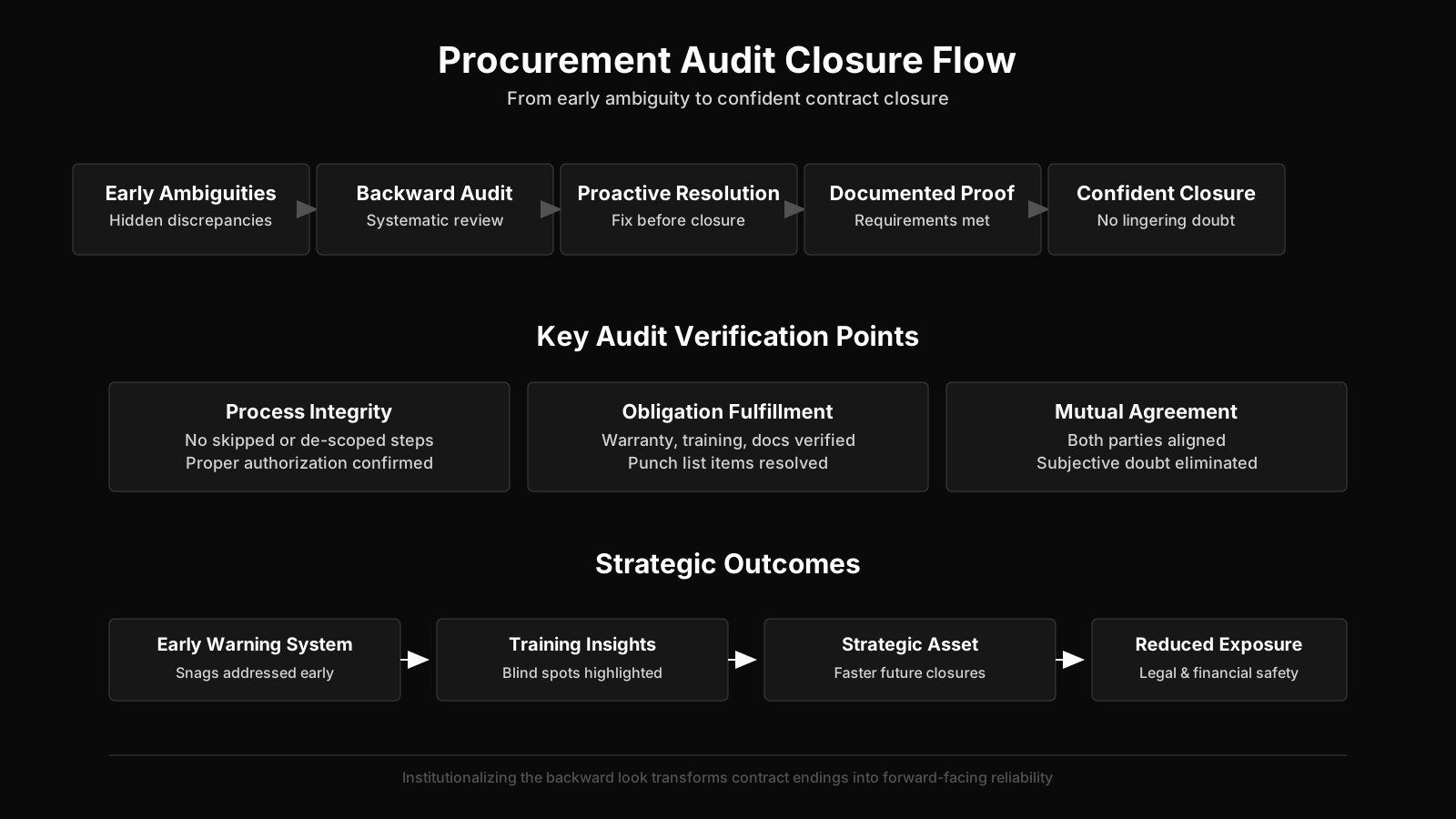
Key Takesways: Procurement Audits & Contract Closure
| Key Concept | Summary |
|---|---|
| Procurement Audit | A systematic review of the full procurement lifecycle, enabling project managers to resolve outstanding issues and embed preventive measures for future engagements. |
| Scope | The audit evaluates the complete procurement process from make-or-buy analysis and solicitation through source selection, contract administration, and performance monitoring. |
| Focus Areas | It scrutinizes decision-making rationale, risk allocation, change-request handling, and buyer, seller communication, rather than limiting its view to the final deliverable. |
| Forward Purpose | While retrospective in nature, the audit feeds actionable insights into organizational process assets so future contracts benefit directly from the lessons captured today. |
| Documentation | The audit draws on the complete procurement documentation set, including procurement management plans, statements of work, bid documents, signed contracts, and performance reports. |
| Contract Closure | It ensures that contract sign-off leaves no unresolved design flaws, performance shortfalls, or undocumented verbal commitments behind. |
| Benefits | A rigorous audit supports confident final payments, prevents the reopening of closed issues, and produces a fair seller performance reference for future solicitations. |
| Risk Example | The audit may uncover discrepancies such as warranty periods commencing on dates that differ from assumptions, prompting renegotiation before final closure. |
The Nature and Scope of a Procurement Audit
At its core, a structured assessment of the procurement lifecycle means examining every step the project team and the seller took, from the initial make-or-buy analysis and procurement planning documents through the actual solicitation, source selection, contract administration, and performance monitoring phases. The audit does not limit itself to the final product or service delivered; it scrutinizes how decisions were made, how risks were allocated, whether change requests were handled properly, and how communication flowed between buyer and seller. This breadth is essential because many contract closure problems originate in the early stages, such as ambiguous specifications or poorly defined acceptance criteria, which get discovered only when the project tries to wrap things up.
In the PMBOK framework, procurement audits are listed as a tool and technique of the Close Procurements process, which belongs to the Closing Process Group. This placement signals that the audit should happen after the work is substantially complete but before the contract is formally closed. The audit pulls together records from the earlier Plan Procurement Management, Conduct Procurements, and Control Procurements processes, providing a cohesive story of what actually transpired. Naturally, the review is backward-looking, but its purpose is entirely forward-facing: it feeds insights into the organizational process assets so that future contracts benefit from today's lessons.
What the Audit Covers From Plan Procurements Through Administer Procurements
The source material delineates the audit's range as spanning from Plan Procurements to Administer Procurements. In practical terms, that means the audit starts by evaluating the procurement management plan, the statement of work, and the source selection criteria. It checks whether the procurement documents reflected realistic lead times and whether the evaluation criteria were properly weighted against project needs. Then it moves into the execution phase, verifying that the contract was administered with robust change control and that performance reports were analyzed regularly. Finally, it inspects the administer procurements records to confirm that all inspections, tests, and acceptance procedures matched what was agreed, and that any claims were managed according to the contract terms.
By covering the entire sequence, the audit avoids the trap of focusing only on the end result. A poorly worded incentive clause that caused delays might otherwise never be flagged if the auditor only looks at the final deliverable. This comprehensive scope is why procurement audits contribute directly to effective contract closure: they ensure that when you sign off on a contract, you are not leaving behind unresolved design flaws, overlooked performance gaps, or undocumented verbal commitments that could come back to haunt the project later.
Audit Objectives Beyond Simple Compliance
Many people assume that a procurement audit is purely a compliance check, but its stated objective is to identify successes and failures for reuse. That is a far richer mandate. The audit captures what worked well, perhaps a supplier's innovative approach to logistics that saved time, so that future solicitation documents can include that as a desired practice. At the same time, it flags what didn't work, such as a vendor's repeated late deliveries that stemmed from a scheduling misunderstanding that could have been clarified upfront. These findings are not just about blame; they are about pattern recognition that strengthens the organization's procurement capability.
This broader lens has a direct impact on contract closure. When you close a contract, you want to walk away with not just a signed release but also a clear understanding of the relationship's full story. That understanding helps you settle any final payments with confidence, avoid reopening closed issues, and provide a fair reference for the seller in future solicitations. In this sense, the audit acts as a debrief that finalizes the contract on a foundation of complete and honest data.
Key Takeaways on Audit Scope
- Whole lifecycle examination
- The audit systematically reviews the entire procurement lifecycle, spanning make-or-buy analysis and planning through solicitation, source selection, contract administration, and performance monitoring, rather than limiting its focus to the final deliverable.
- PMBOK closing process tool
- Procurement audits are formally positioned as a tool in the Close Procurements process, conducted after work is substantially complete but before the contract is formally closed, to capture lessons while project memories are still fresh.
- Backward-looking, forward-facing purpose
- By examining past decisions and records, the audit feeds actionable lessons into organizational process assets, helping future contracts avoid unresolved design flaws, performance gaps, and verbal commitments that were never documented.
Where Procurement Audits Fit in the Project Closing Process
The formal close procurements process is the designated home for procurement audits in most project management frameworks. This process includes activities like verifying that all work is completed and accepted, finalizing open claims, updating records, and archiving procurement documentation. The audit serves as the analytical backbone that supports each of those activities. Without the audit, a project manager might close a contract based solely on the seller's invoice matching the payment schedule, overlooking discrepancies that only a systematic review would catch.
In practice, the audit should be initiated once the product, service, or result has been verified and the seller has submitted its final invoice or close-out documentation. The timing is delicate: you need enough evidence from the execution phase to conduct a thorough review, but you cannot delay closure indefinitely. Many organizations schedule the audit shortly after the final acceptance and before the project manager signs the formal contract closure documents. This sequencing ensures that the audit's findings directly inform whether the contract is truly ready to close and what conditions need to be met first.
The PMBOK Context for Procurement Audits
Within the PMBOK Guide, procurement audits are firmly embedded in the Project Procurement Management knowledge area. They draw upon the entire procurement documentation set, including the procurement management plan, procurement statements of work, bid documents, signed contracts, seller performance reports, and correspondence. The audit is not a standalone process; it interfaces with the Integration Management knowledge area when its findings feed into the final project report and lessons learned register. This interconnectedness means that a well-executed procurement audit contributes to the overall administrative closure of the project, not just to the closure of individual contracts.
From a governance standpoint, the audit also provides evidence that proper procurement procedures were followed, which can be critical for external compliance or internal audits. Public sector projects, for instance, often require documented proof that funds were spent in accordance with the approved procurement plan. The audit trail generated during the review becomes part of the permanent project archive, supporting transparency and accountability long after the project team has disbanded.
Administrative Closure and the Audit's Role
Administrative closure involves gathering project records, analyzing project success and failure, and archiving information for future use. For contracts, this means ensuring that all contractual documents are complete, that final payments have been made or agreed upon, and that any retained funds are released appropriately. The procurement audit supplies the necessary analysis to confirm that these conditions are met. It may reveal, for example, that a seller's final report contains a warranty period that starts from a different date than the project team assumes, prompting a renegotiation before closure. Without the audit, such mismatches might slip through, resulting in a contract that is technically closed but legally ambiguous.
Moreover, the audit often uncovers informal agreements or side letters that were never formally documented but have bearing on closure. These typically emerge during interviews with the project team or the seller. By bringing them to light, the audit transforms a potentially messy situation into a neat closure where all parties have the same understanding of what was delivered and what remains outstanding. That alignment is the essence of clean contract closure.
How Procurement Audits Help With Contract Closure
The real question is how exactly an audit helps you close a contract rather than just review history. The audit's role in achieving definitive contract closure hinges on its ability to surface gaps between what was planned, what was contracted, and what was actually delivered. These gaps are the root cause of most closure delays and disputes. By systematically comparing the contract baseline against the performance records, the audit reveals whether all deliverables meet the specified acceptance criteria and whether any unresolved change requests or claims linger that could prevent a final settlement.
Consider a scenario where a construction contractor completes the building, but during the audit, the team discovers that the as-built drawings differ from the approved shop drawings in a way that affects future maintenance contracts. That discovery can be addressed now, with the seller providing corrected documentation as a condition for final payment. If the contract were closed without the audit, the discrepancy would only surface years later when another contractor struggles to interpret the records, potentially leading to litigation. The audit thus acts as a safety net that catches these loose threads before they become knots.
How Procurement Audits Verify All Contractual Obligations Before Contract Closure
One of the most direct contributions of a procurement audit to contract closure is verification of performance. The auditor compares the final deliverables against the contract terms, statements of work, and any accepted change orders. This goes beyond a simple checklist; the audit examines whether intangible obligations were also satisfied, such as training the buyer's staff, providing maintenance manuals, or transferring intellectual property rights. These peripheral items are often the last to be completed and the first to be forgotten, yet they are legally binding parts of the contract.
When the audit confirms that every element is done, the project manager can confidently authorize the final payment and sign the release. If any gaps exist, the audit's findings provide the basis for withholding payment partially until the seller completes the outstanding tasks. Either way, the closure decision is evidence-based, reducing the risk of post-closure disputes. The seller also benefits because they receive a clear, documented explanation of why certain payments are being held, which can accelerate resolution.
Resolving Disputes Through Procurement Audits Before Final Contract Closure
Procurement audits shine a light on unresolved claims and disagreements. It is not uncommon for a project to accumulate a series of minor disputes over extra work, delays, or quality issues that neither party has formally addressed. These simmering tensions can erupt after closure if they weren't settled. The audit process forces both parties to review the correspondence, event logs, and negotiation histories, often bringing those latent disputes to the surface. With the contract still open, there is leverage to negotiate a settlement, whether through mediation, a negotiated credit, or a mutually agreed scope adjustment.
Once the contract is closed without addressing such claims, the door to compromise often shuts, leaving only formal litigation as a recourse. The audit, therefore, functions as a structured conflict resolution mechanism embedded in the closing process. It provides a neutral forum for evaluating each claim against the contract language, which can cool emotions and lead to fair outcomes. This proactive dispute resolution is arguably one of the most valuable ways procurement audits help with contract closure, because it prevents the expensive and relationship-damaging escalation that can follow a rushed closure.
Turning Procurement Audit Findings Into Future Contract Closure Excellence
The lessons extracted from an audit are not just for the current contract; they equip the organization to close future contracts more smoothly. When an audit reveals that a particular type of acceptance test consistently causes delays because the criteria were ambiguous, that insight can be incorporated into future procurement documents. The next project team will write clearer acceptance criteria, which directly reduces closure friction. In this way, the audit's contribution to contract closure is cumulative. Each audit makes the next contract a little easier to close.
Furthermore, audit findings can feed into the organization's standard contract templates and boilerplate clauses. If audits repeatedly show that lack of a clear handover protocol causes closure delays, the legal and procurement departments can institutionalize a mandatory handover checklist in all contracts. The benefit extends beyond a single project, creating a virtuous cycle where closure becomes faster and more predictable over time. This is the true strategic value of linking procurement audits to contract closure practices.
Key Insights on Audit-Driven Contract Closure
- Reveals gaps before final settlement
- By mapping contractual commitments against actual performance data, the audit surfaces unmet acceptance criteria, unresolved change orders, and lingering claims that could block definitive closure.
- Provides a safety net for future disputes
- When the audit catches discrepancies such as inaccurate as-built drawings, the buyer can make corrected documentation a condition of final payment, preempting costly litigation that might otherwise arise years later.
- Validates both tangible and intangible obligations
- Beyond physical deliverables, the audit verifies that intangible requirements like staff training, maintenance manuals, and IP transfers are complete, with any outstanding items forming a justified basis for partial payment retention.
Turning Audit Findings Into Organizational Learning
The organizational learning from procurement audits is what transforms a one-time review into a lasting asset. Each audit generates a set of success stories and failure patterns that, when properly catalogued, inform the entire organization's procurement maturity. The key is distinguishing between isolated incidents and systemic issues. One late delivery might be a fluke, but five projects reporting the same supplier's quality deviations signal a deeper problem that procurement teams need to address in source selection criteria or contract performance metrics.
Project managers sometimes treat the audit report as a confidential document to be filed away, but real value comes from sharing the findings broadly, within the limits of confidentiality. An anonymized summary can be circulated to project management offices, procurement centers of excellence, and even to trusted partners to help them improve. This transparency builds a culture where contract closure is not a burdensome final step but an opportunity to gather intelligence that sharpens the organization's competitive edge.
Distinguishing Success Patterns From Failures
A procurement audit does not merely catalogue mistakes; it actively identifies practices that led to excellent outcomes. For instance, if a particular supplier consistently delivered early and under budget when they were given early access to the project's design documents, that success pattern can be documented and recommended for future procurements. The audit captures the conditions that enabled that performance, such as the collaborative clause in the contract or the frequency of progress meetings. These successes are just as important for contract closure as failure analysis because they tell the team what to replicate, making closures smoother and relationships stronger.
Failures, of course, receive detailed attention. The audit might uncover that a piece of equipment repeatedly failed acceptance tests because the technical specifications were contradictory. That failure pattern is flagged as a root cause that can be avoided next time by involving the supplier earlier in the specification development. By documenting both positive and negative patterns, the audit ensures that the knowledge gained from this contract closure is nuanced and actionable, not a simplistic blame game.
Feeding Lessons Into the Organizational Process Assets
The audit's findings, once reviewed and approved, become part of the organization's lessons learned register and other process assets. They might be categorized under procurement risk management, seller selection, or contract type selection. In a program environment, these insights can inform the program realization sets that the Business Value-Oriented Project Management (BVOPM) approach advocates, allowing each project within the program to choose a procurement methodology that suits its specific context while still benefiting from aggregated procurement intelligence. That way, the next project's contract closure process starts with a head start of refined templates, realistic acceptance criteria, and known negotiation tactics that have worked before.
This systematic knowledge transfer ensures that the effort invested in the audit pays forward. A project manager closing a contract on a new project can pull up the past audits, see what went well and what went wrong with similar suppliers or contract types, and proactively address potential closure pitfalls. The result is a steep reduction in closure cycle time and a marked improvement in stakeholder satisfaction with the procurement function.
Common Mistakes When Using Audits for Contract Closure
Even when project teams understand the value, several common audit pitfalls can undermine the connection between procurement audits and successful contract closure. One of the most frequent is treating the audit as a simple tick-box exercise where the auditor checks whether files are present without examining their content. A superficial audit that merely confirms that a procurement management plan exists does nothing to reveal whether the plan was followed effectively or whether its weaknesses contributed to performance issues. Such an audit provides a false sense of security and adds no real value to the closure decision.
Another mistake is delaying the audit until the contract is essentially closed. When the final payment has been made and the seller's team has been released, the opportunity to verify facts, clarify discrepancies, and negotiate remedies evaporates. The audit then becomes a post-mortem with no influence on closure, destroying most of its practical benefit. The right moment is when the work is accepted but the contract is still active and both parties are motivated to reach a clean settlement.
Rushing the Audit to Meet Deadline Pressure
Here's the thing: project deadlines can push managers to compress the audit timeline to an unrealistic degree. A rushed audit often misses subtle but critical issues, such as the seller's failure to transfer software licenses or the absence of performance bonds. The result is a contract closure that shortcuts due diligence. Later, when the missing item becomes a problem, the project team is blamed for signing off prematurely. An audit that is given insufficient time and resources is worse than no audit at all, because it creates a paper trail that implies everything was checked when it wasn't.
The antidote is to plan the audit early in the project lifecycle, not as an afterthought, and to allocate sufficient budget and skilled resources. The procurement management plan should include audit milestones and criteria, so that when the time comes, the process is well-defined and the team is prepared. Some organizations even conduct preliminary audits at major milestones to reduce the burden at the end, but that approach must be balanced against the need to see the full picture before concluding.
Ignoring Negative Findings to Avoid Conflict
There is a natural human tendency to sweep problems under the rug, especially when the project is nearly done and everyone is tired. An auditor who uncovers embarrassing failures, such as acceptance of substandard work under pressure, may face resistance from the project team that does not want to reopen old wounds. However, suppressing these findings undermines the entire purpose of the audit. The contract closure then becomes a silent acceptance of those problems, which can manifest later as warranty claims or damaged reputation.
A healthy audit culture requires leadership support to present findings objectively and without fear of reprisal. The audit's goal is to learn, not to punish, and that message must be communicated clearly from the start. When organizations embrace this mindset, audit findings become constructive inputs to closure, enabling honest conversations about what went wrong and how to make it right. That honesty often strengthens the buyer-seller relationship because both parties acknowledge the reality and move forward with a clean slate.
Core Audit Pitfalls at Closure
- Superficial tick-box audits
- Limiting verification to document existence without substantive content review creates a deceptive sense of completeness and conceals whether executed plans actually delivered the required outcomes or introduced performance gaps.
- Rushed audits miss critical details
- Auditors working against tight deadlines routinely overlook closure deliverables such as unresolved software license transfers or missing performance bonds, leaving the project exposed to post-handover disputes and compliance risks.
- Ignoring negative findings to avoid conflict
- When project teams suppress evidence of accepted substandard work to sidestep confrontation, they undermine the legitimacy of the closure decision and embed latent defects that will resurface as operational failures.
Practical Steps to Conduct an Effective Procurement Audit
A systematic audit methodology turns the theory into reliable practice. The first step is to define the audit criteria clearly, drawing directly from the contract baseline and the procurement management plan. The auditor must know what constitutes acceptable evidence for each deliverable and obligation. This criteria set should be shared with the seller early, so there are no surprises about what the audit will examine. Transparency builds trust and encourages the seller to prepare their documentation thoroughly, which speeds up the review.
Once criteria are established, the auditor gathers evidence from procurement records, correspondence, meeting minutes, test reports, and payment histories. Interviews with the project manager, contract administrator, technical leads, and even the seller's account manager provide qualitative context that documents alone cannot convey. A document might show that a change order was approved, but only through an interview can one learn that it was approved under protest and with lingering performance concerns, which might affect whether the closure is truly satisfactory.
Drafting an Actionable Audit Report
The audit report should not be a massive dump of data but a focused document that highlights key findings, links them to specific contract clauses, and offers recommendations that directly inform the closure decision. Each finding should be accompanied by a suggested resolution: accept as is, require corrective action before closure, or escalate to the project steering committee. The report must be written in plain language so that stakeholders without deep technical or procurement expertise can understand the implications for final payment and release of liability.
The recommendations should also include forward-looking items, such as updates to the lessons learned register and suggestions for improving the procurement process. This dual focus, immediate closure actions and long-term improvements, ensures that the audit serves both the current contract and the organization's future. The report becomes the basis for closing the contract with full confidence that everything has been addressed.
Sharing Results and Closing the Loop
After the audit is complete, the findings should be discussed with both the internal project team and the seller in a dedicated close-out meeting. This meeting allows the parties to agree on any remaining actions, sign off on corrective measures, and settle final payments. The open discussion prevents misunderstandings and ensures that the seller has a chance to respond to the audit's observations. Following this, the project manager can formally close the contract, archiving all audit documentation alongside the contract records.
Internally, the audit results feed into the project's overall lessons learned session and are included in the final project report. The procurement department may also use the insights to update its supplier performance databases and preferred vendor lists. By closing this loop, the organization makes sure that the work done in this procurement audit is not a one-off activity but a continuous improvement process that makes every subsequent contract closure more robust and less stressful.
Procurement Audits in Agile and Hybrid Delivery Models
Here's where it gets interesting: traditional procurement audits assume a linear, predictive project lifecycle with a fixed scope, but many projects today use iterative or incremental approaches. Agile procurement audit practices require a shift in thinking, because the contract may have been structured around a time-and-materials arrangement or a flexible statement of work, with deliverables evolving throughout the project. The audit cannot simply compare a frozen specification against a final deliverable; instead, it must examine how the adaptive governance functioned, whether value was delivered at each iteration, and how the acceptance criteria evolved in a controlled way.
In an agile context, the audit might evaluate the product backlog and sprint reviews to determine if the supplier consistently met the definition of done for each user story. The audit also checks whether the change management process was respected, even if the scope was fluid, to ensure that scope creep did not happen unilaterally. This requires the auditor to be familiar with agile practices and to work collaboratively with the product owner and development team.
Adapting Audit Checkpoints to Iterative Deliveries
Instead of one big audit at the end, agile projects may benefit from smaller, incrementally conducted audits tied to important milestones or release points. These interim audits can validate that the seller's performance is on track and that any emerging risks are being managed, feeding into the project's continue-or-terminate decisions. When the final contract closure arrives, the accumulated mini-audits provide a rich history that speeds up the final review because most issues have already been addressed.
This approach also aligns well with the BVOPM concept of using per-project methodology choice within a program's realization set. If a program includes both traditional and agile projects, the procurement audit methodology can be tailored to match, ensuring that each project's unique contracting approach is audited appropriately. The result is that contract closure remains thorough and evidence-based, regardless of the delivery model.
When Traditional Audit Approaches Fall Short
Rigidly applying a predictive audit template to an agile contract often leads to unnecessary conflicts. For example, an auditor expecting a signed final specification may find only a series of approved user stories in a digital tool, causing them to mistakenly flag a lack of documentation as a non-compliance. This can delay closure and sour the relationship. Educating auditors on the nuances of agile procurement and involving them early in the project framing can prevent such misunderstandings.
Ultimately, the objective remains the same: to identify successes and failures and ensure the contract is closed cleanly. The methods must adapt, but the underlying principle of a structured review from plan to administration still holds, simply reinterpreted for a more dynamic environment.
Core Takeaways for Agile Audit Adaptation
- Evaluate iterative value delivery
- Procurement audits must pivot from checking a frozen specification to assessing whether adaptive governance consistently produced demonstrable value in each iteration against controlled acceptance criteria.
- Check change control within fluid scope
- Even as requirements evolve, auditors should verify that all scope adjustments followed a transparent, governed change process and that no supplier-driven scope creep occurred unilaterally.
- Use interim milestone checkpoints
- Agile and hybrid programs benefit from small, release-aligned audits that continuously evaluate supplier performance, surface emerging risks, and support go/no-go decisions, with each methodology tailored to the project's contracting model.
The Strategic Value Beyond the Single Project
Procurement audits do much more than help close one contract; they elevate organizational procurement maturity by creating a feedback loop that refines sourcing strategies, contract templates, and supplier management practices. When an organization conducts procurement audits systematically across all projects, it accumulates a data set of procurement performance that can be analyzed for trends. This analysis might reveal, for instance, that fixed-price contracts with new suppliers consistently end in costly disputes, prompting a policy shift toward phased contracting or more rigorous prequalification.
This strategic dimension transforms the procurement audit from a mere closing tool into a governance instrument that strengthens the entire enterprise. Executives begin to see the audit not as a cost but as an investment in reducing future procurement risk. Over time, the organization's ability to close contracts quickly and with minimal litigation becomes a competitive differentiator, especially in industries where multiple contractors and suppliers are the norm.
Feeding Audit Insights Into Supplier Relationship Management
Supplier relationships often span multiple projects and years. The procurement audit captures a detailed picture of a supplier's performance on a specific engagement, which can be fed into a centralized supplier management system. Future project teams can consult this record when considering that supplier for new work, allowing them to verify that past closure issues have been resolved or to negotiate appropriate protections. This shared memory prevents the organization from repeating the same mistakes or rewarding a supplier that underperformed.
Moreover, strategic suppliers appreciate the transparency because it gives them concrete feedback they can use to improve. Some forward-thinking organizations share the audit findings with the supplier as a development tool, fostering a partnership culture rather than an adversarial one. This collaborative approach makes future contract closures even smoother because both parties have learned from the audit together, building trust and mutual understanding.
Embedding Procurement Audits Into Standard Project Governance
For procurement audits to become a routine part of contract closure, they must be embedded in the organization's project management methodology and governance framework. This means establishing a continuous improvement in contract management process that mandates a procurement audit for every significant contract, defines the roles of the auditor, allocates budget, and sets timelines. A project management office can play a pivotal role by providing audit templates, training auditors, and maintaining the lessons learned repository. When audits are optional or left to the whim of a busy project manager, they inevitably get skipped, and the organization forfeits the closure benefits.
Governance also involves follow-up. An audit that produces recommendations without follow-up is a hollow exercise. The organization must track whether the recommended corrective actions were taken for the current contract and whether the process improvements were implemented for the next. This can be done through management reviews or by assigning ownership of each recommendation to a specific department. Over time, this discipline builds a culture where every contract closure is an opportunity to get better, not just an endpoint to rush past.
The real payoff emerges when the organization looks back after a couple of years and sees that contract closure disputes have dropped significantly, audit findings are increasingly positive, and suppliers comment on the fairness and professionalism of the process. That is when the organization realizes that procurement audits are not merely a box to check but a cornerstone of mature project delivery. And that is the ultimate answer to how procurement audits help with contract closure: they turn a potentially chaotic, adversarial final phase into a structured, knowledge-generating activity that protects the project and prepares the organization for what comes next.
Key Insights on Audit Embedding
- Mandatory embedded audits
- Embedding procurement audits into the project management methodology and governance framework converts them into a routine, non-negotiable closure step for every significant contract.
- Defined audit structure
- A mature continuous improvement process requires a formal mandate to audit high-value contracts, clearly assigned auditor roles, dedicated budget allocations, and firm timelines that prevent audits from being deprioritized.
- PMO as audit enabler
- The project management office drives audit consistency by supplying standardized templates, delivering focused auditor training, and maintaining a central lessons-learned repository that informs future engagements.
- Audit follow-up discipline
- Organizations must systematically track whether corrective actions were implemented on the current contract and verify that process improvements carried forward to the next, turning audits into genuine learning loops instead of hollow rituals.
- Long-term contract benefits
- Sustained audit discipline steadily reduces closure disputes, yields increasingly constructive findings, and builds a culture where every contract closure becomes a springboard for measurable improvement.