In every project that involves external vendors, contractors, or suppliers, the path to a smooth closeout can be unexpectedly rocky when disputes surface near the end of the engagement. The way you handle these disagreements will determine whether the procurement terminates with a signed certificate of completion, or drags into months of friction, cost overruns, and strained business relationships. The project management discipline holds that the final equitable settlement of all outstanding issues, claims, and disputes by negotiation is not just a preference; it is the primary goal that every procurement professional must internalize. The question of how to resolve disputes before closing a procurement is therefore one of the most practical and consequential challenges a project manager will face.
Resolving Disputes Before Procurement Close: Summary
| Key Concept | Summary |
|---|---|
| Negotiation | Achieving a final, equitable settlement through negotiation remains the foremost objective for procurement professionals, safeguarding both value and relationships. |
| PMBOK Framework | Claims administration is an ongoing responsibility within the Control Procurements process, culminating in formal resolution during Close Procurements. |
| Cost-Effective Tool | Genuine, good-faith negotiation is the most cost-effective method for resolving disputes early, averting the steep financial and relational costs of escalation. |
| Preparation | Thorough preparation requires project managers to assemble the full procurement record, clarifying each claim, the governing contract clauses, and the precise points of factual disagreement before discussions commence. |
| Scope Framing | When a subcontractor submits an unexpected bill, anchor the discussion in the original scope statement and the contractual procedures for handling unforeseen conditions. |
| Arbitration | Arbitration provides a streamlined process and the critical advantage of selecting an arbitrator with specialized technical industry knowledge, making it especially suited for complex technical disputes. |
The Critical Role of Direct Negotiation in Procurement Settlement
Every procurement lifecycle, from initial solicitation through contract administration, eventually converges on a moment of reckoning: the closeout. At that point, unresolved change orders, performance disagreements, and financial claims often crystallize into formal disputes. In project management, the first and most desirable path is always direct negotiation for equitable settlement of these conflicts. The logic is straightforward: the parties who structured the deal and executed the work are best positioned to craft a mutually acceptable resolution without outside intervention.
Why Negotiation Is the Default Route for Project Managers
Negotiation carries none of the procedural overhead or third-party costs that alternative methods impose. It preserves the working relationship because both sides retain control over the outcome. The PMBOK framework places this activity squarely within the Control Procurements process, where claims administration is an ongoing responsibility, but it culminates most visibly during Close Procurements, when the contract must be finalized. A project manager who approaches closure without having attempted genuine, good-faith negotiation overlooks the most cost-effective tool available. The simple act of sitting across a table and working through a disputed invoice can often defuse tensions that would otherwise escalate into a written demand or a formal notice of claim.
Preparing for Effective Procurement Negotiations
Effective negotiation does not happen by instinct. It demands preparation rooted in the documentary trail the project has accumulated. Every request for information, every design change, every site instruction, and every email exchange becomes part of the evidentiary foundation. Before entering direct talks, the project manager must assemble the complete procurement file and identify precisely what is being claimed, what contract clause applies, and what factual disagreements exist. A common mistake is to approach the discussion with only a general sense of grievance. Instead, map each dispute to its contractual origin, such as a variation clause, a delay provision, or a quality specification. This mapping exposes whether the issue is one of legal interpretation or simply a matter of incomplete documentation.
Tactical Steps in the Negotiation Process
When the negotiation begins, the sequence of conversation matters. Start with agreed facts and acknowledged deliverables before moving into contested ground. Present the claim or counter-claim not as a personal accusation but as a logical consequence of the contract’s mechanisms. For example, if a subcontractor submits an unexpected bill for additional equipment rental, frame the discussion around the original scope statement and the procedure for unforeseen conditions. Use the contract as a neutral reference point, not a weapon. Open-ended questions such as “Can you walk me through how you arrived at this amount?” often reveal misunderstandings that can be corrected without a formal fight. The project manager’s tone in these moments strongly influences whether the counterparty moves toward compromise or digs in.
Overcoming Impasse and Hard Bargaining
Some negotiations will stall despite good preparation. When this happens, many project managers make the error of repeating their position louder or faster, which only entrenches the other side. A more productive move is to reframe the deadlock in terms of mutual risk: if this remains unresolved, both parties face delayed payment, withheld retention money, and potential exclusion from future opportunities. At that point, the negotiation can shift from arguing about who is right to a structured discussion of settlement ranges. Proposing a handful of trade-offs—such as accepting a portion of the claim in return for an expedited sign-off—often breaks the logjam. The key is to keep the conversation collaborative enough that both sides can justify the outcome to their own leadership.
Core Insights on Direct Negotiation
- Direct Negotiation as the Primary Route
- The individuals who structured the agreement and executed the work hold unmatched insight into the project’s realities, making direct dialogue the most reliable way to reach a fair, mutually acceptable resolution without external interference.
- Cost-Effective Alternative to Formal Claims
- Negotiation sidesteps the procedural timelines, administrative burdens, and third-party fees that accompany mediation, arbitration, or litigation, positioning it as the most resource-efficient instrument for project managers to resolve closeout disputes while preserving working relationships.
- Preparation and Mutual Risk Framing
- Building a persuasive negotiation case depends on compiling the full procurement record, pinpointing each specific claim and the governing contract provisions, and then reframing contentious issues in terms of shared consequences like payment delays and forfeiture of future business, which creates the commercial impetus for reciprocal concessions.
Using Alternative Dispute Resolution When Direct Talks Fall Short
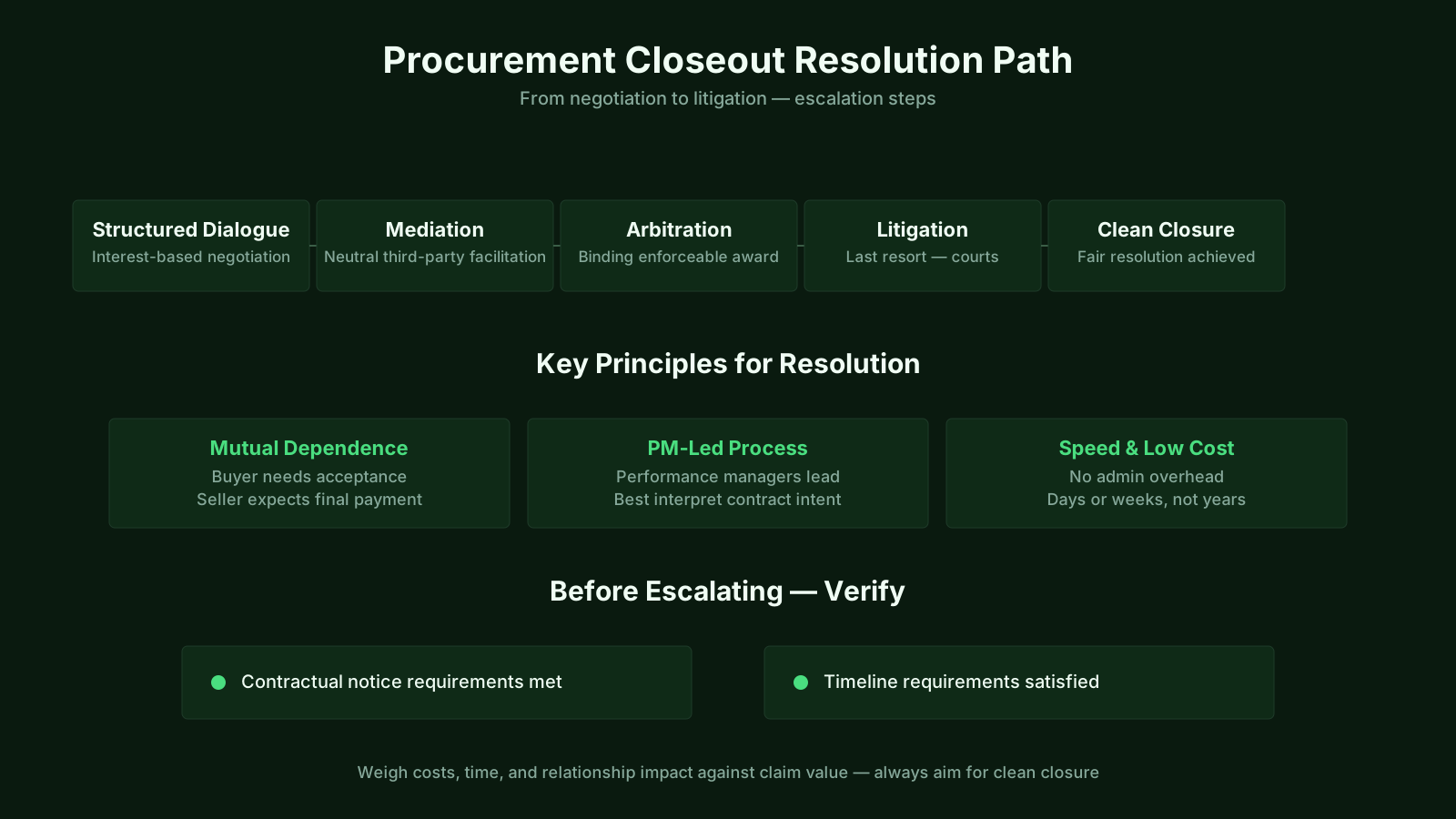
There comes a moment in some procurements when negotiation reaches a genuine deadlock. Interests are too far apart, or the interpersonal dynamic has soured so much that further face-to-face talks would be unproductive. This is when project managers turn to alternative dispute resolution methods in procurement to avoid the courtroom while still achieving closure. Alternative dispute resolution, commonly called ADR, encompasses a range of processes that introduce a neutral third party to help the parties bridge their differences.
Mediation as a Facilitative Approach
Mediation is the least adversarial form of ADR and the one most compatible with preserving long-term business relationships. In a mediation, a neutral mediator meets with the disputing parties, often in joint and private sessions, to help them identify common ground and explore settlement options. The mediator has no authority to impose a decision; the entire process relies on the willingness of the parties to reach an agreement. Mediation in a procurement context is particularly useful when the underlying issues are not purely legal but involve miscommunication, poor contract administration, or divergent expectations about performance standards. A skilled mediator can reframe technical disagreements in commercial terms, making the cost of continued conflict visible to both sides.
Arbitration as a Binding Alternative
When the gap between the parties cannot be closed by facilitated dialogue, arbitration steps in as a more structured option. Arbitration resembles a private court proceeding in which one or more arbitrators hear evidence and arguments and then render a binding decision. Many procurement contracts, especially in construction and international trade, include mandatory arbitration clauses precisely to avoid public litigation. The arbitration process can be streamlined compared to court, allowing the parties to select an arbitrator with technical knowledge of the industry, which is a significant advantage when disputes revolve around engineering specifications or software performance criteria. However, arbitration is not without cost; fees for the arbitrator and the administering institution can be substantial, and the finality of the award means there is very limited opportunity for appeal.
Deciding Between Mediation and Arbitration
The choice between mediation and arbitration is rarely a clean fork in the road. Many ADR clauses now employ a tiered approach: the parties must first attempt mediation, and only if that fails do they proceed to arbitration. From a project manager’s perspective, mediation should almost always be the first ADR step because it preserves the option of self-determined resolution. If the mediation succeeds, the settlement can be structured as a contract amendment or a standalone settlement agreement that closes out all claims. If it fails, the project is no worse off, and the conversation has at least clarified the contested factual issues for whatever comes next. Some project managers shy away from mediation because they fear showing weakness, but in reality, the willingness to mediate signals a professional commitment to closure rather than a litigious posture.
Implementing ADR Clauses in Procurement Contracts
How procurement disputes are resolved is often decided long before a dispute ever arises, embedded in the original contract. Savvy project managers pay close attention to the dispute resolution clause during contract drafting and negotiation. A well-written clause will specify the governing law, the ADR institution (if any), the number of arbitrators, the location of proceedings, and the language. Vague clauses that simply state “the parties shall settle disputes by arbitration” without details create a secondary negotiation when tensions are already high. For projects that involve multiple tiers of subcontractors, the main contract should also address how disputes flowing down from subcontractors will be handled, preventing a situation where the project manager is caught between incompatible resolution mechanisms.
The Unwanted Path of Litigation and Its Ripple Effects
When every other avenue closes, litigation in the courts becomes the mechanism of last resort. The project management doctrine is unambiguous: litigation as the least desirable option should be avoided whenever a viable alternative exists. This is not because litigators lack skill, but because court proceedings fundamentally alter the dynamics of a procurement relationship, converting a commercial disagreement into a public, adversarial battle with unknown duration and escalating costs.
When Litigation Becomes Unavoidable
Some circumstances genuinely leave no alternative to filing or defending a lawsuit. A counterparty may refuse to participate in any ADR process, or the dispute may involve allegations of fraud that demand a judicial forum. In some jurisdictions, certain types of procurement disputes, particularly those involving government contracts, must be heard by a specific tribunal. When litigation looms, the project manager’s role shifts from negotiation facilitator to custodian of evidence. A complete, well-organized record of the procurement becomes the single most valuable asset. Contemporaneous notes, meeting minutes, inspection reports, and even informal messages can determine whether the court sees a simple contract breach or a more complicated narrative.
The Hidden Costs of Court Proceedings
Beyond legal fees, litigation extracts costs that project managers often underestimate. The discovery process can tie up key technical staff for weeks, pulling them away from active projects. The emotional drain on the team can be significant, particularly in smaller organizations where the dispute becomes all-consuming. Public court filings may reveal proprietary pricing structures or internal performance metrics, and the final judgment, win or lose, rarely compensates for the management attention diverted from core business. There is also the near-certainty that the commercial relationship will be destroyed; once legal pleadings are exchanged, the mutual trust needed for future collaboration evaporates. These hidden burdens are the reason why the project management profession treats litigation not as a viable option among many, but as a breakdown to be prevented at nearly any cost.
Protecting Relationships After Litigation
In the uncommon case where a project must litigate a procurement dispute and still intends to maintain some form of ongoing relationship—perhaps because the vendor is a sole-source supplier—the aftermath requires deliberate care. The project manager should work with legal counsel to structure any settlement or judgment in a way that draws a clear line under the past without poisoning future interactions. A joint statement released to both organizations can help reset the tone, as can a post-resolution debrief that focuses on how the contract terms might be clarified for future transactions. None of this is easy, and the scars often remain, but without a conscious effort to separate the dispute from the ongoing commercial partnership, both organizations suffer long after the court file is closed.
Core Insights on Litigation Risks
- Litigation as a last resort
- Litigation transforms commercial disagreements into public, adversarial proceedings with unpredictable timelines and mounting costs, making it the least preferred option under project management best practices whenever alternative resolution methods are available.
- Circumstances that necessitate litigation
- A lawsuit becomes the only viable path when the opposing party rejects alternative dispute resolution, when allegations of fraud require a formal judicial setting, or when jurisdictional rules mandate that government contract disputes be heard by designated tribunals.
- Manager’s role as evidence custodian
- As litigation approaches, the project manager’s role transitions from negotiation facilitator to evidence custodian because contemporaneous records, meeting minutes, inspection logs, and informal communications can significantly shape the court’s interpretation of the facts.
- Exposure of proprietary information
- Court documents that enter the public record may expose pricing models and internal performance data, and even a favorable verdict seldom offsets the strategic distraction that litigation imposes on management, pulling focus away from primary business objectives.
- Rebuilding relationships after litigation
- If a continuing commercial relationship must endure the strain of litigation, as with sole-source suppliers, issuing a joint communication to both organizations and conducting a post-resolution workshop to clarify ambiguous contract terms can reestablish a cooperative foundation for future dealings.
Integrating Dispute Resolution Into the Procurement Closeout Sequence
Waiting until the final month of a contract to think about outstanding claims is a recipe for rushed decisions and poor outcomes. Effective integration of dispute resolution into procurement closeout starts far earlier in the project lifecycle. The methodical project manager regards every potential disagreement as a problem to be managed alongside scope, schedule, and cost, not as an interruption that appears only at the end.
Managing Claims Throughout the Contract Lifecycle
A claim is not a sudden event; it is the culmination of a series of events and decisions that have been building, sometimes for months. The Control Procurements process in PMBOK explicitly includes claims administration as an ongoing activity. When a contractor submits a change notice or indicates that a delay may lead to additional costs, that is the moment to open a claim file, even if the issue seems small. Early, honest communication can often resolve the matter before it hardens into a formal claim. Project managers who adopt a posture of “let’s deal with this now” rather than “let’s see how it plays out” dramatically reduce the backlog of unresolved items during closeout. Documenting every conversation, even the informal ones, provides the factual spine that later gives negotiation its power.
Aligning Dispute Resolution With Contractual Timelines
Most contracts include specific time bars for submitting claims and responding to them. A contractor who fails to notify the client of a delay within the contractual window may forfeit the right to pursue that claim later. Project managers who are not intimately familiar with these notice provisions can inadvertently trigger disputes by rejecting a late claim without considering the business context. The better approach is to treat deadlines as tools for focus, not weapons. When a claim arrives, acknowledge receipt immediately, even if a full response will take time. If the contract requires a written decision within thirty days, calendar that deadline and communicate interim status updates. This procedural diligence reduces the perception of stonewalling, which itself is a major fuel for escalated disputes.
Working With Legal, Procurement, and Technical Teams
Procurement dispute resolution is inherently a multidisciplinary endeavor. The technical team understands what was built or delivered; the procurement team knows the contractual constraints; legal counsel can interpret the enforceability of clauses. Too often, the project manager acts as a relay between these groups, losing nuance with each handoff. A much more effective model is to convene a short, structured settlement review in which all three perspectives are represented at the same time. During this review, the group can assess the strength of the claim, the cost of settlement versus the cost of defending, and the impact on the overall project closure. This collaborative approach also prevents the all-too-common scenario where legal insists on a hard line, procurement fears setting a precedent, and the project manager is left with no room to negotiate.
Finalizing the Settlement and Achieving Administrative Closure
The end goal of all this effort is a formal settlement that allows the procurement closeout to proceed without lingering obligations. That settlement might take the form of a final change order, a negotiated payment, or a mutual release document that extinguishes all claims. Once signed, the project manager can complete the Close Procurements process: verifying that all deliverables have been accepted, final payments have been processed, and all required documentation has been archived. The lesson learned from any dispute, regardless of outcome, should be captured and fed back into the organization’s procurement practices. Perhaps the contract template needs clearer scope descriptions, or the risk register should explicitly address the type of issue that arose. Treating each dispute as an isolated event wastes the opportunity to strengthen the project management system for the next procurement.