Cost Plus Fixed Fee (CPFF) is a type of cost-reimbursable contract in project management where the buyer reimburses the seller for all allowable costs incurred in performing the work, plus a fixed fee that represents the seller's profit. The fixed fee is negotiated and set at the start of the contract and does not vary with actual costs unless the scope of work changes. This contract type shifts most cost risk to the buyer while providing the seller with a predictable profit margin, making it suitable for projects with high uncertainty or evolving requirements.
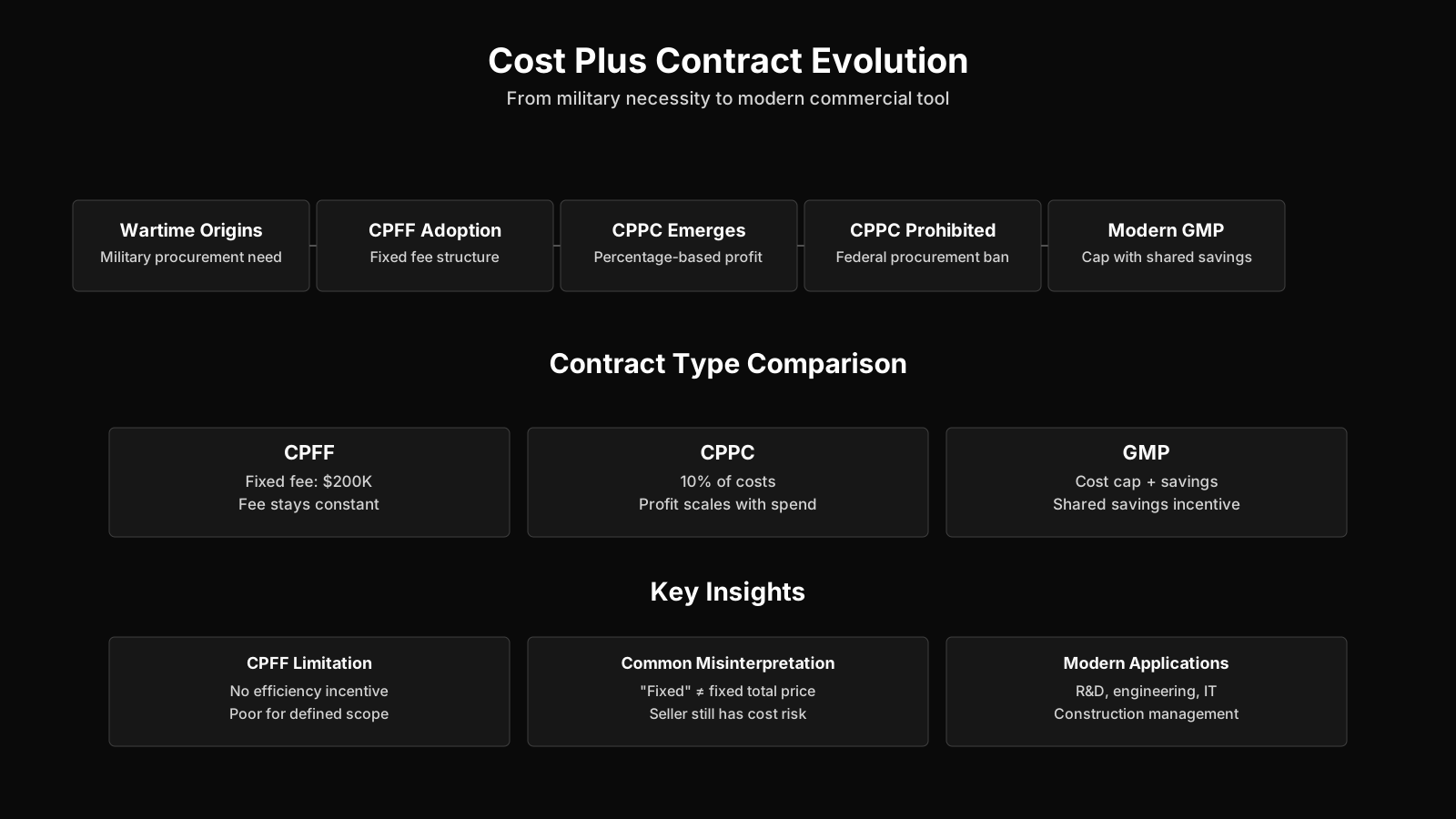
Cost Plus Fixed Fee: Summary of Key Topics
| Key Concept | Summary |
|---|---|
| CPFF Contract | Cost Plus Fixed Fee (CPFF) is a cost-reimbursable contract structure in which the buyer reimburses all allowable project costs and pays a predetermined fixed fee that represents the seller's profit. |
| Risk Allocation | This arrangement transfers the majority of cost risk to the buyer while providing the seller with predictable profit, making it well suited for projects with uncertain or evolving scope. |
| Fixed Fee Basis | The seller earns the same fixed fee irrespective of actual cost performance. For example, if actual costs reach $2.4 million, the buyer pays $2.6 million in total while the fee remains fixed at $200,000. |
| Allowable Costs | The contract explicitly identifies reimbursable direct and indirect costs, typically referencing applicable accounting standards, government regulations, or mutually negotiated cost principles. |
| Fee Adjustment | The fixed fee can be modified only through a formal scope change or, in rare cases, renegotiation under extraordinary circumstances. |
| Seller Incentives | Because the fee is fixed, the seller has no direct financial gain from cost overruns and no direct financial penalty for inefficiency. Consequences are limited to reputational harm and reduced prospects for future contracts. |
| CPPC Alternative | Cost Plus Percentage of Cost (CPPC) ties the fee directly to actual costs and is generally discouraged or prohibited because it creates a clear incentive to inflate costs. |
| Procurement Monitoring | During Control Procurements, the project manager reviews cost submissions, progress reports, and earned value management data to confirm that actual costs correspond with completed work before approving payments. |
What Is Cost Plus Fixed Fee?
A clear cost plus fixed fee definition is a cost-reimbursement contract where the buyer pays the seller's allowable costs and a fixed fee that is independent of actual cost performance. The fee is not calculated as a percentage of actual costs, which distinguishes CPFF from more problematic arrangements like cost plus percentage of cost. Instead, the fee is a lump sum negotiated before work begins. If the project's actual costs rise or fall, the fee remains unchanged, unless the parties agree to amend the contract due to a change in scope.
To make this concrete, imagine a research project with an estimated cost of two million dollars and a negotiated fixed fee of two hundred thousand dollars. If the seller completes the work for one point eight million in actual allowable costs, the buyer pays two million dollars. If actual costs reach two point four million because of unexpected technical complexity, the buyer pays two point six million, but the seller still receives the same two hundred thousand dollar fee. The seller's profit does not increase when costs overrun, which removes one incentive to inflate spending, but it also does not encourage aggressive cost reduction.
Practitioners often observe that the name causes confusion. The word fixed applies to the fee, not the total contract price. Many stakeholders mistakenly assume a fixed fee means a fixed price. In a CPFF contract, the total price is open-ended because the buyer accepts financial responsibility for all legitimate costs of performance. This is a fundamental risk allocation decision, not a mere administrative detail.
CPFF Contract Core Takeaways
- CPFF contract definition
- A cost-plus-fixed-fee contract is a cost-reimbursement arrangement in which the buyer reimburses the seller's allowable costs and pays a fixed fee that does not vary with actual cost performance.
- Fee independent of costs
- Unlike cost-plus-percentage-of-cost arrangements, the fixed fee is negotiated as a lump sum before work begins and remains unchanged even if actual costs rise or fall.
- Cost overrun example
- For a $2 million research project with a $200,000 fixed fee, the seller receives the same fee whether final costs are $1.8 million or $2.4 million.
- Incentive structure explained
- Because the fee does not increase with cost overruns, the seller has little incentive to inflate spending, yet also lacks a strong financial incentive to pursue aggressive cost reductions.
- Open-ended total price
- Because the buyer bears financial responsibility for all allowable costs, the total contract price remains open-ended, reflecting a deliberate transfer of cost risk to the buyer.
Key Components of Cost Plus Fixed Fee
Understanding the key components of cost plus fixed fee requires separating the cost reimbursement mechanism from the profit mechanism. The contract has several distinct parts that work together. The first component is the set of allowable costs defined in the contract. Not every expense qualifies for reimbursement. The contract specifies which direct and indirect costs are allowable, often by referencing accounting standards, government regulations, or a negotiated cost principle. The second component is the fixed fee itself, which is negotiated upfront and stated as a specific amount. The third component is the scope of work, which defines what work the seller must perform and under what circumstances the fee can be adjusted.
Actual Allowable Costs
In CPFF contracts, the buyer reimburses only costs that are reasonable, allocable, and consistent with the contract terms. Direct costs such as labor, materials, equipment, and subcontracting are typically reimbursable if they support the project. Indirect costs, including overhead and general administrative expenses, may also be reimbursed if allocated according to an agreed rate structure. Disallowed costs might include entertainment expenses, certain marketing costs, or costs incurred beyond the authorized scope. The contract often grants the buyer audit rights so that the buyer can verify the claimed costs before payment.
Fixed Fee Component
The fixed fee is a negotiated amount that represents the seller's profit and a portion of its return for performing the work. It is not tied to actual cost performance. The fee may be adjusted only if the scope of work changes through a formal change order, or in rare cases if the parties agree to renegotiate due to extraordinary circumstances. Because the fee is fixed, the seller has no direct financial reward from cost overruns, but also no direct penalty for inefficiency beyond potential damage to its reputation and future contracting opportunities.
Variations of Cost-Reimbursable Contracts
CPFF is one member of a family of cost-reimbursable contracts. Cost Plus Incentive Fee (CPIF) includes a formula that adjusts the fee based on cost performance against a target. Cost Plus Award Fee (CPAF) ties a portion of the fee to subjective performance criteria evaluated by the buyer. Cost Plus Percentage of Cost (CPPC) calculates the fee as a percentage of actual costs, which is generally discouraged or prohibited in government contracting because it creates a direct incentive to increase costs. CPFF sits between these extremes, offering a fixed profit amount without an explicit incentive for cost control.
Cost Plus Fixed Fee in Project Management Frameworks
Within formal project management frameworks, cost plus fixed fee in project management appears primarily in procurement planning and contract administration. The PMBOK Guide classifies CPFF as a cost-reimbursable contract type under the Procurement Management knowledge area. It is one of the options a project manager and procurement team evaluate when developing the procurement strategy for a project. The choice of CPFF affects how the project budget is structured, how cost risk is allocated, and how the Control Procurements process will be executed.
Cost Plus Fixed Fee PMBOK
In the PMBOK framework, contract type selection is an output of the Plan Procurement Management process. The project manager analyzes scope clarity, risk tolerance, market conditions, and the buyer's ability to oversee costs. Cost-reimbursable contracts like CPFF are typically used when the scope is not well defined, the work is complex or innovative, or the buyer wants to attract qualified sellers who would not accept the high risk of a fixed-price contract. During Control Procurements, the project manager monitors the seller's cost submissions, reviews progress reports, and may use earned value management to assess whether the actual costs align with the physical work performed.
PRINCE2 and Cost Plus Fixed Fee
PRINCE2 does not mandate a specific contract type, but its principles of continued business justification and manage by stages align with the flexibility of CPFF when requirements are uncertain. A project using PRINCE2 might select CPFF if it needs to begin work before the full product breakdown structure can be established. Stage boundaries provide natural points for reviewing the contract and the fixed fee against emerging scope changes. PRINCE2's emphasis on tolerances means the project board may set cost tolerances that trigger escalation if actual reimbursable costs exceed planned estimates, even though the contract itself does not cap costs.
Agile and Hybrid Environments
In Agile projects, the preference for customer collaboration over rigid contract negotiation might seem at odds with formal CPFF arrangements. However, some organizations use a CPFF structure when engaging a development team for an evolving backlog. The fixed fee rewards the team's availability and expertise without penalizing the buyer for changes in priorities. A hybrid approach might use CPFF for an initial discovery or prototyping phase, then transition to a fixed-price contract once the scope becomes clearer. The key is that the fee remains fixed while the cost base fluctuates, which can reduce conflict over scope changes that are common in Agile delivery.
Core Insights on CPFF Contracts
- PMBOK classifies CPFF as cost-reimbursable
- The PMBOK Guide categorizes cost plus fixed fee contracts under Procurement Management as a cost-reimbursable type, reflecting that the buyer reimburses allowable costs and pays a fixed fee that remains stable regardless of actual expenses.
- Ideal for uncertain or complex scope
- Cost plus fixed fee agreements suit projects where the scope is incomplete, requirements are likely to evolve, or technical uncertainty is high, enabling the buyer to attract qualified sellers who would otherwise decline fixed price risk.
- Monitoring and stage boundary reviews
- During Control Procurements, project managers review seller cost submissions and earned value data to confirm that only allowable costs are reimbursed, while PRINCE2 stage boundaries provide structured checkpoints for reassessing the fixed fee against progress and continued viability.
Purpose and Importance of Cost Plus Fixed Fee
The primary purpose of cost plus fixed fee is to allocate cost risk to the party best able to absorb it, which is typically the buyer in projects with high uncertainty. When a project involves research, development, or novel technology, the seller cannot reasonably estimate the full cost of performance. A fixed-price contract would force the seller to include a large risk premium or simply refuse to bid. CPFF allows the buyer to pay only the actual costs of the work, plus a modest fixed profit, without forcing the seller to gamble on an unpredictable scope. This makes CPFF particularly important for government agencies, aerospace, defense, and advanced engineering projects where failure to proceed could be more costly than the risk of cost overruns.
Another important purpose is maintaining a qualified and motivated contractor base. In highly specialized fields, few sellers possess the technical capability to perform the work. Requiring those sellers to assume large cost risk would discourage participation and reduce competition. CPFF provides a stable profit while transferring the uncertainty of technical discovery to the buyer, who is usually better positioned to fund the effort. In practice this means the buyer takes on more administrative burden but gains access to specialized expertise that might otherwise be unavailable.
Cost Plus Fixed Fee vs Other Contract Types
Comparing cost plus fixed fee vs other contract types clarifies when CPFF is the right choice and when another model works better. The fundamental variable is risk allocation. In a firm fixed price contract, the seller bears the risk of cost overruns because the price is fixed regardless of actual costs. In CPFF, the buyer bears that risk because actual costs are reimbursable. Between these extremes sit incentive contracts and hybrid models that share cost risk according to negotiated formulas. Each type creates different behavioral incentives for the seller and different administrative requirements for the buyer.
Cost Plus Fixed Fee vs Cost Plus Percentage of Cost
CPFF is often confused with cost plus percentage of cost, but the difference is significant. Under CPPC, the fee increases as costs increase, giving the seller a direct financial incentive to spend more. Under CPFF, the fee is fixed and does not grow with actual costs. This removes the perverse incentive of CPPC while still providing reimbursement for legitimate expenses. However, CPFF does not create a positive incentive for cost savings either. The seller earns the same fee whether costs are high or low, so cost efficiency must be driven by the buyer's oversight and the seller's professionalism.
Cost Plus Fixed Fee vs Firm Fixed Price
Firm fixed price contracts transfer virtually all cost risk to the seller. The price is set at award and does not change unless the scope changes. This works well when the scope is clear, the market is competitive, and the seller can estimate costs reliably. CPFF is the opposite. The buyer absorbs cost risk, which is appropriate when the scope cannot be fully defined or when technical unknowns dominate. A common misconception is that fixed price is always better for the buyer. In reality, a fixed price on uncertain work may include such a large contingency that the buyer ends up paying more than it would under a well-managed CPFF contract.
Cost Plus Fixed Fee vs Cost Plus Incentive Fee
Cost plus incentive fee contracts add a formula that rewards the seller for meeting or beating cost targets and penalizes it for exceeding them. This gives the seller a reason to control costs, something CPFF lacks. However, CPIF requires a reliable target cost, which may not exist early in a highly uncertain project. CPFF offers simplicity: the buyer accepts cost variation while the seller receives a stable fee. Some organizations start with CPFF and switch to CPIF or fixed price in later phases once enough cost data becomes available to set meaningful targets.
Core Insights on CPFF Contract Choices
- Firm fixed price shifts cost risk
- Under a firm fixed price contract, the seller assumes full responsibility for cost overruns because the agreed price remains fixed regardless of actual expenses incurred.
- CPFF removes perverse spending incentives
- CPFF removes the incentive to inflate costs that is inherent in cost plus percentage of cost arrangements because the fee remains constant regardless of actual spending; as a result, cost discipline depends on buyer oversight and seller professionalism.
- Fixed price contingency can backfire
- When the scope of work is uncertain, fixed price bids often include a contingency cushion large enough that the buyer may ultimately pay more than under a well-managed CPFF contract.
- Migration to CPIF or fixed price
- Cost plus incentive fee contracts reward sellers for meeting cost targets and penalize them for exceeding those targets, which is why organizations often begin with CPFF and later transition to CPIF or fixed pricing once sufficient cost data is available to establish meaningful benchmarks.
Practical Application and Use in Projects
When examining cost plus fixed fee in practice, the contract type appears most often in research and development, defense and aerospace, complex construction, and early-stage engineering. A buyer selects CPFF after determining that the scope cannot be defined with enough precision for fixed pricing, but the work must begin immediately to meet a strategic deadline. The project manager and procurement officer work together to define allowable costs, establish reporting requirements, and negotiate a fixed fee that reflects the seller's expertise and the project's risk profile. The fee is often expressed as a percentage of estimated costs during negotiation, but once set, it becomes a fixed dollar amount.
When Cost Plus Fixed Fee Is Appropriate
CPFF is appropriate when the buyer has the capability to monitor and audit costs, when the work is so novel that no reliable historical cost data exists, and when the buyer places a premium on attracting specialized sellers. It is also suitable when the buyer expects frequent scope changes and wants to avoid contentious change order negotiations that would arise under a fixed price contract. In research projects, for example, the path to a solution may not be known at the outset, and forcing a fixed price would only create contractual disputes as discoveries alter the plan.
Lifecycle Stages and Cost Plus Fixed Fee
CPFF affects every stage of the project lifecycle. During initiation and planning, the contract type influences budget estimates, risk registers, and the procurement management plan. The project manager must secure funding that can absorb cost overruns because the contract does not cap costs. During execution, the buyer tracks actual costs, reviews progress reports, and conducts audits to ensure claimed costs are allowable. During monitoring and controlling, earned value management becomes important because cost alone does not indicate progress. The project manager compares the work performed to the costs incurred and investigates any significant variances. At closure, the buyer verifies all costs, resolves any disallowed expenses, and processes the final payment of the fixed fee.
Roles and Responsibilities
In a CPFF project, the buyer's contract administrator plays a central role in reviewing invoices and conducting cost audits. The project manager focuses on scope control, because each scope change may trigger a fee adjustment. The seller's accounting team must maintain detailed records that segregate allowable costs from unallowable costs. Senior management on both sides should periodically review the cost performance and the continued appropriateness of the contract type. Without clear roles, CPFF can devolve into administrative discord over what counts as an allowable cost.
Common Challenges, Pitfalls, and Misconceptions
Several cost plus fixed fee challenges emerge in real projects, particularly around cost control and administrative burden. Because the seller receives reimbursement for actual costs, there is little natural pressure to minimize spending. The buyer must supply that pressure through audits, progress reviews, and clear cost principles. This requires time and expertise that many organizations underestimate. A poorly monitored CPFF contract can result in significant cost growth without corresponding value delivery. The fixed fee does not punish inefficiency, so the buyer must rely on performance reviews and the seller's reputation to keep costs reasonable.
Misconceptions About Cost Plus Fixed Fee
A common misconception is that the total price is fixed. In reality, only the fee is fixed. Another misconception is that the seller bears no risk at all. While the seller's profit is protected from cost variation, the seller still faces risks related to schedule, reputation, and the possibility of contract termination for poor performance. Some stakeholders also assume CPFF is the same as cost plus percentage of cost. This is incorrect, as the fixed fee removes the direct incentive for cost inflation. Finally, some believe CPFF is always the buyer's last resort. In many high-uncertainty projects, CPFF is actually the most rational choice because it avoids paying excessive risk premiums embedded in fixed price bids.
Limitations and When Not to Use
CPFF should not be used when the scope is well defined and the market can support fixed price competition. It is also problematic when the buyer lacks the ability to audit costs or monitor progress. In such cases, the buyer may pay for inefficiencies it cannot detect. CPFF is less appropriate for commodity products or services where multiple qualified sellers exist and the work is routine. Additionally, if the buyer has a strict fixed budget, a cost-reimbursable contract without a ceiling may exceed available funds. Some organizations use a cost plus fixed fee with a guaranteed maximum price to place an upper limit on the buyer's exposure, but that changes the risk allocation and must be negotiated carefully.
Core Insights on CPFF Contract Challenges
- Cost control burden falls on buyer
- Sellers reimbursed for actual costs have little inherent incentive to contain spending. Buyers must therefore enforce cost discipline through structured audits, regular progress reviews, and unambiguous cost principles.
- Only the fee is fixed, not the total price
- A common misconception is that CPFF caps the total contract price. In reality, only the seller's fee is fixed while allowable costs are reimbursed, so the buyer absorbs cost variation and the seller remains exposed to schedule, reputational, and termination risks.
- CPFF is rational for high-uncertainty projects
- For projects with high technical or scope uncertainty, CPFF is often the most rational choice because it prevents the buyer from paying inflated risk premiums that fixed-price contractors build into their bids.
Relationships to Other Project Management Concepts
The cost plus fixed fee relationships to other project management tools and processes are extensive. In risk management, CPFF is a risk allocation strategy: the buyer accepts cost risk while the seller accepts performance and reputation risk. This decision should be documented in the risk register and reflected in the procurement management plan. In cost management, the project budget must include a contingency reserve for cost overruns because the contract does not cap reimbursable costs. Earned value management becomes especially important because cost performance cannot be judged by spending alone. The project manager must compare the budgeted cost of work performed with actual cost of work performed to detect inefficiencies.
CPFF also connects to the work breakdown structure and the statement of work. Any ambiguity in the scope can lead to disputes over which costs are allowable and whether a change justifies a fee adjustment. The contract administrator uses the WBS to map cost reports to work packages and identify unauthorized scope expansion. In procurement management, CPFF is one of several contract types that must be selected through a structured source selection process. The buyer may require the seller to submit a cost proposal with a detailed cost breakdown, and the fixed fee is often negotiated separately from the cost estimate.
Evolution and Current Thinking on Cost Plus Fixed Fee
The cost plus fixed fee evolution reflects decades of government and commercial experience with cost-reimbursable contracting. Cost-reimbursable contracts became prominent during the mid-twentieth century in defense and aerospace, where fixed pricing could not accommodate rapid technological change. Over time, agencies and corporations observed that CPFF without strong oversight could lead to cost growth and schedule slippage. This led to the development of incentive contracts, target cost arrangements, and hybrid models that share savings or overruns between buyer and seller. Current thinking emphasizes tailoring the contract type to the specific risk profile of the project rather than treating CPFF as a one-size-fits-all solution.
In construction, a related evolution is the guaranteed maximum price contract, which combines cost plus fee reimbursement with a cap and often a shared savings provision. This gives the seller some incentive to control costs while still reimbursing legitimate expenses. In government procurement, regulations have tightened cost accounting standards and audit requirements to reduce fraud and waste in cost-reimbursable contracts. The debate continues over whether fixed fees should include a performance component. Some practitioners argue that a purely fixed fee, untethered from outcomes, fails to motivate strong performance. Others counter that adding performance criteria converts CPFF into an award fee contract and undermines the simplicity that makes CPFF attractive in uncertain work.
Key Lessons from CPFF Evolution
- Defense origins of CPFF
- Cost plus fixed fee contracts gained traction in mid-twentieth century defense and aerospace programs, where rapid technological change outpaced the fixed pricing models that had previously governed procurement.
- Oversight failures drove innovation
- Weak oversight of CPFF contracts allowed cost growth and schedule slippage to become systemic, which in turn drove the development of incentive contracts, target cost arrangements, and hybrid risk sharing models.
- Risk-based contract tailoring
- Modern practice favors matching the contract type to a project's specific risk profile rather than treating CPFF as a universal solution, and guaranteed maximum price contracts in construction illustrate this shift by pairing reimbursement caps with shared savings incentives.
- Performance incentive debate
- Even as tighter government standards reduced waste, practitioners remain divided over whether a pure fixed fee fails to motivate performance or whether adding performance criteria would erode CPFF's simplicity by converting it into an award fee contract.
BVOP Perspective on Cost Plus Fixed Fee
From a BVOP cost plus fixed fee viewpoint, the contract type aligns with the principle that scope change should be treated as user feedback rather than failure. A fixed fee decouples profit from actual cost, which reduces seller anxiety about changing requirements. However, BVOPM would caution that the fee should reflect delivered business value rather than simply effort or elapsed time. The methodology's emphasis on waste reduction also raises a concern: because CPFF does not reward cost efficiency, the buyer must actively monitor for overwork, perfectionism, and rejected acceptable work that inflate reimbursable costs without adding value. BVOPM would likely pair CPFF with frequent value assessments and cross-functional oversight to ensure the fixed fee does not become a passive profit despite poor outcomes.