Fast tracking is a schedule compression technique in project management in which activities or phases normally performed in sequence are partially or fully overlapped to reduce the overall project duration. It does not change the scope of work, and it does not necessarily add resources. Instead, it alters the logical dependencies between activities, allowing a successor to begin before its predecessor has formally finished. The technique appears in the PMBOK Guide as one of the two main schedule compression methods, alongside crashing, and it is widely used in construction, engineering, and software projects.
Fast Tracking: Key Topics Overview
| Key Concept | Summary |
|---|---|
| Definition | Fast tracking is a schedule compression technique that overlaps sequential activities or phases to shorten the overall project timeline without changing the project scope. |
| PMBOK Recognition | The PMBOK Guide identifies fast tracking as one of two primary schedule compression techniques, together with crashing, and it is widely applied in construction, engineering, and software delivery. |
| Core Value | The primary advantage is a shorter critical path without the direct resource cost increases typically associated with crashing. |
| Cost Distinction | This distinction matters because stakeholders often assume that schedule recovery requires additional hiring or overtime; fast tracking avoids those direct cost increases. |
| Practical Example | For instance, a project team may release an early electrical drawing package so conduit installation can begin in parallel with the remaining design work. |
| Historical Origin | It emerged from construction and engineering as a response to owner and contractor demand for faster facility delivery, avoiding the wait for complete design documentation. |
| Design Packages | Project teams release packages for foundation, structural, and mechanical systems as each portion of the design reaches an acceptable level of definition, rather than completing the entire design first. |
| Key Components | Effective fast tracking requires disciplined dependency analysis, accurate lead time modeling, deliberate activity overlap, accelerated information flow, and more rigorous risk management controls. |
What Is Fast Tracking in Project Management?
The fast tracking definition used in most project management standards centers on overlapping phases or activities that would normally be performed in sequence. In a conventional finish-to-start relationship, a successor activity cannot begin until the predecessor has finished. Fast tracking replaces that assumption with a partial or complete overlap, often represented in scheduling software as a lead time applied to the dependency. For example, a software team might begin writing test cases while the design specification is still being finalized, rather than waiting for formal approval.
Fast tracking is not the same as simply working faster. It restructures the schedule logic itself. The project manager and team examine the network diagram, identify discretionary dependencies, and decide where parallel execution is feasible. Mandatory dependencies cannot be fast tracked because they represent physical, legal, or contractual constraints. Discretionary dependencies, on the other hand, are based on preferred practice or established sequencing, and those are often candidates for overlap.
The core value of fast tracking is that it shortens the critical path without increasing direct resource costs in the way that crashing typically does. However, the duration reduction is not free. It transfers risk into the project because work can begin before all preceding information is stable. A downstream team may start building against an incomplete design, and later changes in that design can force rework. For this reason, experienced project managers describe fast tracking as a risk trade-off rather than a pure efficiency gain.
Core Meaning and Schedule Compression Context
Schedule compression refers to the set of techniques used to reduce the scheduled duration without changing project scope. Fast tracking is one of those techniques. The other primary technique is crashing, which adds resources to critical path activities. Fast tracking achieves compression by changing the sequence of work, not by adding cost-generating capacity. This distinction matters because many stakeholders assume that schedule recovery automatically means hiring more people or paying overtime.
Within schedule network analysis, fast tracking often emerges when the critical path is too long relative to the required completion date. The project team looks for finish-to-start relationships that can be converted into start-to-start relationships with a lead. For example, if detailed electrical drawings normally finish before conduit installation starts, the team might release the first drawing package early enough for installation to begin in parallel with the remaining design work. The schedule shortens only if the overlapped activities are on the critical path. Overlapping non-critical activities may improve local efficiency but has no effect on the project finish date.
Fast Tracking Versus Crashing
A common point of confusion is the difference between fast tracking and crashing. Fast tracking changes the logic of the schedule by overlapping activities. Crashing keeps the existing sequence but adds resources to reduce activity durations. Crashing almost always increases direct costs because it involves overtime, additional staff, or equipment. Fast tracking may not increase direct costs immediately, but it often increases indirect costs through rework, additional coordination, and quality failures.
In practice, the two techniques are frequently combined. A project may fast track design and procurement while also crashing a critical engineering task by assigning a second team. The project manager must evaluate both options against the schedule baseline, the risk register, and the available contingency reserves. Neither technique is inherently better. The appropriate choice depends on how the project tolerates risk versus additional cost.
Core Takeaways on Fast Tracking
- Overlapping Previously Sequential Work
- Fast tracking compresses the schedule by running normally sequential activities in parallel, typically represented in scheduling tools as lead time on a finish-to-start relationship so the successor begins before the predecessor fully completes.
- Only Discretionary Dependencies Overlap
- Teams reviewing the network diagram can overlap only those discretionary dependencies where the sequencing reflects preference rather than necessity; mandatory dependencies driven by physical, legal, or contractual constraints leave no room for fast tracking.
- Critical Path Savings with Added Risk
- Fast tracking reduces critical path duration without adding the direct resource costs that typically come with crashing, but experienced project managers approach it as a deliberate risk trade-off because starting work before upstream outputs are stable can create rework and coordination issues.
Origin and Cross-Industry Context of Fast Tracking
The origin of fast tracking is closely tied to construction and engineering, where owners and contractors sought ways to deliver facilities faster without waiting for every design document to be completed. Fast-track construction became a recognized delivery approach in which design and construction phases overlap. Instead of completing the entire design before breaking ground, the project team releases packages for foundation work, structural work, and mechanical systems as each portion of the design reaches an acceptable level of definition.
The same logic appears in manufacturing under terms like concurrent engineering or simultaneous engineering. Product design, tooling development, and process planning may run in parallel to shorten time to market. Software engineering also uses overlapping work through iterative development, continuous integration, and early prototyping. These approaches share a central idea: downstream work does not always need full upstream finality to begin meaningfully productive activity.
The cross-industry use of overlapping work gives fast tracking credibility outside project management standards. Still, the formal term fastest tracking is most consistently defined in the predictive project management world. PRINCE2 and Agile frameworks have their own ways of expressing similar ideas, but the underlying schedule logic remains the same. The broader engineering experience also shows that successful overlap depends on clear interface management and controlled information hand-offs.
Key Components and Characteristics of Fast Tracking
The key components of fast tracking include dependency analysis, lead time modeling, partial or full activity overlap, accelerated information flow, and heightened risk management. None of these components operates in isolation. A project team that simply tells two groups to work simultaneously without adjusting how information moves between them is likely to create confusion rather than save time.
Dependency Restructuring and Overlap
Dependency restructuring is the technical heart of fast tracking. The project manager reviews the schedule network and separates mandatory dependencies from discretionary dependencies. Mandatory dependencies, such as pouring concrete before erecting steel, cannot be overlapped without violating physical reality. Discretionary dependencies, such as completing all requirements before starting design, often reflect organizational preference and can be relaxed.
Overlap can be total or partial. Total overlap means a successor begins at the same time as the predecessor. Partial overlap means the successor starts after the predecessor has reached a specific milestone or level of completeness. For example, procurement of long-lead equipment may begin when engineering reaches 60 percent design completion. This partial release is common in construction and capital projects because it balances schedule pressure against the need for adequate design maturity.
Leads, Lags, and Schedule Logic
In scheduling tools, fast tracking often appears as a lead applied to a finish-to-start relationship. A lead is negative lag. If painting normally starts after drywall finishing with a two-day lag, fast tracking might apply a two-day lead, allowing painting preparation to begin two days before drywall finishing is complete. The project manager must document the logic clearly because leads can become invisible in complex schedules and lead to analytical mistakes.
The schedule model must also account for hand-off points. When design and construction overlap, the design team releases packages in a sequence that aligns with construction priorities. This is not the same as blurring accountability. Each package still has an owner, a review process, and a change threshold. Without those controls, overlapping work turns into uncontrolled parallel chaos.
Increased Risk and Iterative Rework
Fast tracking inherently increases the probability of rework. When a successor starts before the predecessor is final, any change in the predecessor can invalidate work already completed downstream. The project may need to redo portions of code, rebuild sections of a prototype, or modify an installation. That rework consumes schedule and budget, sometimes erasing the original time savings.
Risk management therefore becomes a central component. The risk register should capture the specific overlap decisions and their associated assumptions. The project manager should also define trigger conditions for stopping the overlap if rework rates exceed acceptable levels. Fast tracking is not a set-and-forget technique. It requires active monitoring because the cost of discovering a design error after construction begins is far higher than discovering it during a sequential review.
Core Takeaways on Fast Tracking
- Five foundational components
- Fast tracking succeeds only when five elements work as an integrated system: dependency analysis, lead time modeling, partial or full activity overlap, accelerated information flow, and heightened risk management.
- Dependency classification is critical
- Project managers need to distinguish mandatory dependencies, which cannot be overlapped because of physical constraints, from discretionary dependencies, which often reflect organizational preferences and can usually be relaxed to compress the schedule.
- Partial overlap via milestones
- A successor activity commonly starts when the predecessor reaches a specified completeness milestone, such as beginning long-lead equipment procurement after engineering reaches 60 percent design completion.
- Leads model schedule compression
- In scheduling software, fast tracking is modeled by applying a lead to a finish-to-start relationship, for example starting painting preparation two days before drywall finishing completes rather than waiting for a two-day lag.
Fast Tracking in PMBOK and Predictive Frameworks
Fast tracking in PMBOK is recognized as a schedule compression technique within the Schedule Management knowledge area. In the PMBOK Guide, schedule compression is performed during the Develop Schedule process, which belongs to the Planning Process Group. The technique is also revisited during Control Schedule, when actual performance falls behind the approved schedule baseline and corrective action is required.
The PMBOK framework treats fast tracking as an output of schedule network analysis. The project manager examines the critical path, evaluates discretionary dependencies, and applies leads where overlap is feasible. The resulting schedule must still be validated through the critical path method and resource optimization. Fast tracking can change the critical path because shortening one sequence may make a previously near-critical path the new longest path through the network.
From a governance perspective, fast tracking often triggers a change request if it alters the approved schedule baseline. The project management plan may need to be updated, especially if the overlap changes milestone dates, procurement timing, or quality control points. Stakeholders may accept the new schedule, but only if they understand the increased risk profile. A schedule change approved without a corresponding risk review can create hidden exposure that appears later as rework or defects.
Role in Develop Schedule and Control Schedule
During Develop Schedule, fast tracking is an option when the initial network analysis produces a finish date later than what stakeholders require. The project team does not immediately add resources. Instead, it looks for activities that can be overlapped without violating mandatory constraints. The schedule model is updated with lead times, and the resulting duration is compared against the target date.
During Control Schedule, fast tracking becomes a recovery technique. When actual progress falls behind, the project manager may recommend overlapping upcoming activities rather than accepting a slip. This often happens when procurement is delayed but construction start dates are fixed. The team releases partial information or package-level designs to avoid idle time on site. The control process then monitors whether the overlap creates excessive rework or coordination problems.
Critical Path and Schedule Baseline Implications
Fast tracking only helps the project finish date when it shortens the critical path. Overlapping activities that have abundant float may improve resource utilization, but it does not shorten the project. This is a subtle point that junior project managers often miss. They see two activities being performed simultaneously and assume the entire project is ahead of schedule. In reality, the critical path may be elsewhere, and the overlap may simply shift float from one activity to another.
The schedule baseline also changes character after fast tracking. The original baseline represented a lower-risk sequence with clear hand-offs. The new baseline assumes that certain downstream activities begin with incomplete upstream information. If the baseline does not reflect that assumption, progress measurement becomes distorted. A design task may be reported as 100 percent complete even though significant portions were released early and remain subject to change. This requires more careful definition of completion criteria and quality gates.
Fast Tracking in PRINCE2, Agile, and Hybrid Environments
Fast tracking in PRINCE2 is not a named technique, but the framework supports overlapping work through its stage management and product-based planning practices. PRINCE2 projects are divided into management stages, and each stage has a defined scope and set of products. The Project Board authorizes one stage at a time, based on the stage plan. In certain situations, preparatory work for the next stage can begin before the current stage formally closes, particularly when the project is operating under an exception plan and time pressure is high.
PRINCE2 also emphasizes continued business justification and management by exception. If a schedule slip threatens the project’s viability, the Project Manager may propose overlapping activities as part of an exception plan. The Project Board reviews the revised plan and the associated risk. The framework does not prescribe exactly how to overlap activities, but its control structures require that roles and accountabilities remain clear. Fast tracking in PRINCE2 therefore tends to be more governed than in some informal project environments.
Agile and Hybrid Application
Agile delivery naturally contains overlap. Teams work in short iterations, and many activities such as analysis, design, coding, and testing occur continuously rather than in rigid sequential phases. Continuous integration and cross-functional teams reduce the need for formal fast tracking because the delivery model already breaks down wait states. However, the concept still applies at a higher level when organizations try to accelerate a release by overlapping market research, user research, and early architectural work.
In hybrid environments, fast tracking often appears at the boundary between predictive and iterative work streams. A hardware component may follow a sequential design and manufacturing process, while the software component uses iterative development. The project may begin firmware development before hardware specifications are fully frozen. This overlap is a deliberate fast tracking decision. It requires a strong interface agreement so that firmware changes can be absorbed when hardware parameters shift.
Core Takeaways on Fast Tracking Approaches
- PRINCE2 supports overlap via stages
- Although PRINCE2 does not identify fast tracking as a formal technique, its stage management and product-based planning framework allows teams to begin preparatory work for the next stage before the current stage has been formally closed.
- Exception plans enable fast tracking
- When schedule slippage threatens project viability, the Project Manager can propose overlapping activities in an exception plan, and the Project Board maintains control by continuing to authorize each stage individually.
- Clear roles stay mandatory
- PRINCE2 does not prescribe a single method for overlapping work, yet its governance structure demands unambiguous roles and accountabilities so that accelerated delivery does not introduce confusion.
- Agile reduces formal fast tracking
- Continuous integration, cross-functional teams, and short iterations reduce wait states so effectively that Agile teams rarely require formal fast tracking. The main exception occurs when a release must be accelerated by overlapping market research, user research, and early architectural work.
Purpose and Importance of Fast Tracking
The purpose and importance of fast tracking rests on the basic need to compress time when the original schedule is no longer competitive or compliant. Many projects face hard external deadlines linked to regulatory deadlines, market windows, seasonal demand, or contractual milestones. When those deadlines cannot be moved, the project team must find ways to deliver sooner without expanding scope.
Fast tracking is important because it offers a path to schedule recovery that does not immediately require large cost increases. In capital-intensive projects, adding resources may be impossible because there are physical limits on how many people or machines can work in a given area. Overlapping design and construction may therefore be the only viable compression strategy. The technique also encourages the project team to question artificial sequencing assumptions that may have existed for years but no longer serve the project.
The technique also matters for competitive advantage. In product development, shortening time to market can produce financial benefits that outweigh the cost of rework. A company may accept additional risk during development to launch before a competitor. Fast tracking is not always a sign of poor planning. In some industries, it is a deliberate strategic choice based on the value of early market entry.
Practical Application and Common Scenarios
When to use fast tracking depends on the nature of the dependencies, the tolerance for rework, and the maturity of the teams involved. It is most appropriate when activities have discretionary dependencies, when downstream teams can start with partial information, and when the project has a strong governance structure for managing change. It is less appropriate when quality requirements are extremely high, when regulatory approval gates are rigid, or when the cost of rework is catastrophic.
Activity-Level Fast Tracking
At the activity level, fast tracking often involves releasing work packages in smaller increments. A design team might release the foundation package for procurement while still completing the structural design for upper floors. A software team might begin coding a module while the interface specification for that module is still under review. These micro-overlaps seem small, but when repeated across many activities on the critical path, they can remove meaningful time from the schedule.
Phase-Level and Cross-Discipline Fast Tracking
Phase-level fast tracking is common in construction and engineering projects. The project may begin site preparation before the full building permit is issued, assuming that permit conditions are unlikely to affect site work. Procurement of long-lead equipment may start before detailed engineering is complete. These overlaps require a procurement and engineering interface that manages technical queries, vendor data, and specification changes continuously.
In software and product projects, phase overlap often appears as evolving requirements, architecture, and coding the same time. The architecture team may define high-level interfaces while developers begin building modules against those interfaces. If the interfaces change, the cost is absorbed through refactoring. The project manager must track the rate of change and ensure that the overlap does not degrade the product’s structural integrity.
Core Insights on Fast Tracking
- Ideal conditions for overlap
- Fast tracking is most effective when activities are linked by discretionary dependencies, downstream teams can begin work with partial information, and a robust governance framework manages change without disrupting parallel work.
- When to avoid fast tracking
- Avoid fast tracking when quality requirements leave no margin for error, regulatory approval gates are immovable, or the cost of rework would outweigh any schedule gain.
- Micro-overlaps add schedule savings
- Releasing work packages in smaller increments, such as sending a foundation package for procurement while structural design continues, creates cumulative micro-overlaps that translate into meaningful savings across the critical path.
- Phase overlap requires coordination
- Starting later phases early, such as initiating site preparation before full permit issuance or coding while interface specifications remain under review, demands continuous coordination of technical queries, vendor data, and evolving specifications.
Common Challenges, Pitfalls, and Misconceptions
Common misconceptions about fast tracking include the belief that it always shortens the schedule, that it is cheaper than crashing, and that any two activities can be overlapped. None of these are reliably true. Overlapping non-critical activities does not change the project finish date. Fast tracking can become more expensive than crashing if the resulting rework is substantial. And many activities cannot be overlapped because of physical, legal, or quality constraints.
Another pitfall is underestimating coordination overhead. When two groups work in parallel on related tasks, they must communicate far more frequently. Document hand-offs become continuous rather than occasional. The project may need additional design reviews, interface meetings, and progress reconciliations. That coordination itself consumes time and can delay decisions. Some projects discover that the overhead of fast tracking eats up the very time it was meant to save.
Quality problems are another challenge. Rework is not just an inconvenience; it can damage team morale and erode stakeholder confidence. A construction crew that installs ductwork based on preliminary drawings may have to remove and reinstall part of the system when the final drawings arrive. A development team that builds against an unstable interface may produce code that fails integration testing. These failures often appear late, making them more expensive and politically difficult to manage.
Fast tracking also fails when accountabilities are unclear. If a successor begins early, who owns a problem caused by incomplete upstream information? Without a clear interface agreement, the downstream team may be blamed for errors that originated upstream. This blame dynamic reduces trust and creates defensive behavior. Effective fast tracking requires a culture that treats early information as provisional and supports collaborative problem solving rather than finger pointing.
Relationship to Other Project Management Concepts
The fast tracking vs crashing distinction is the most common conceptual comparison. Fast tracking overlaps activities and changes schedule logic. Crashing adds resources to reduce durations while keeping the existing sequence. Fast tracking tends to increase risk without immediately increasing direct cost. Crashing tends to increase direct cost without fundamentally changing the sequence. Both are schedule compression techniques, but they operate through different mechanisms and carry different secondary effects.
Fast tracking also relates closely to lead and lag logic, rolling wave planning, and progressive elaboration. Rolling wave planning naturally creates the conditions for fast tracking because detailed planning for later work is deferred until more information is available. That means early packages can be released while later packages are still being defined. Progressive elaboration also supports fast tracking by accepting that requirements and designs evolve over time, which makes downstream teams more comfortable starting with partial information.
The technique intersects with risk management, change control, and quality management. A fast tracked schedule should be accompanied by updated risk registers, change thresholds, and quality gates. It also connects to procurement management in projects where early release of design packages enables earlier vendor engagement. In earned value management, fast tracking can distort planned value curves because work is performed in a different sequence than originally baseline, requiring careful rebaselining to keep performance measurement meaningful.
Core Takeaways on Fast Tracking Connections
- Fast tracking vs crashing
- Fast tracking compresses the schedule by overlapping activities and revising dependency logic, whereas crashing adds resources to shorten activity durations while preserving the original sequence of work.
- Risk and cost trade-off
- Fast tracking typically raises coordination and rework risk without an immediate rise in direct costs, while crashing increases direct costs through added resources but does not fundamentally alter the schedule logic.
- Rolling wave planning link
- Rolling wave planning creates room for fast tracking by deferring detailed planning of later phases until more information becomes available, allowing early activities to proceed before downstream scope is fully defined.
- Progressive elaboration support
- Progressive elaboration helps downstream teams start work with preliminary information because requirements and design details are refined incrementally as the project moves forward.
- EVM and rebaselining need
- Fast tracking can distort planned value curves and shift the timing of earned value, so disciplined rebaselining is essential to keep earned value management reliable.
Evolution and Current Thinking on Fast Tracking
Current best practices in fast tracking emphasize modeling, transparency, and risk-informed decision making rather than simple overlap commands. Modern scheduling tools allow project teams to simulate different overlap scenarios and compare their effect on the critical path. Monte Carlo analysis can estimate the probability of rework and schedule slippage under different fast tracking assumptions. These tools help project managers move beyond intuition and provide stakeholders with a clearer picture of the trade-offs.
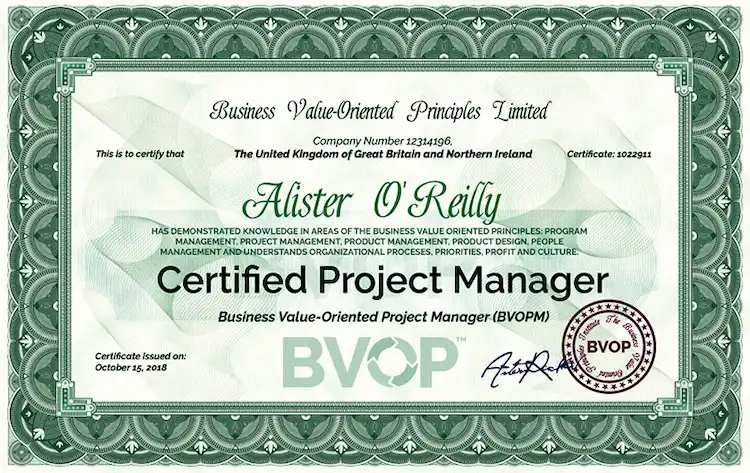
Business Value-Oriented Project Management, or BVOPM, treats fast tracking through the lens of planning accuracy and process waste. It uses relational effort points rather than fixed estimates, and if overlapping work creates instability, the resulting rework may be categorized as process damage rather than a normal schedule adjustment. This view encourages teams to ask whether the apparent time savings justify the hidden waste generated by overlapping incomplete work.
Current thinking also recognizes that fast tracking is not automatically a sign of failure. In sequential environments, it may indicate a healthy challenge to outdated hand-off assumptions. In hybrid environments, it may simply be a formal acknowledgment that modern teams already work in overlapping ways. The professional debate centers on whether organizations should rely on fast tracking as a routine recovery strategy or instead invest in better upfront planning and more realistic baselines. Most practitioners accept that fast tracking has a legitimate place, but only when it is treated as a deliberate schedule decision with managed consequences.
The long-term trend is toward more adaptive scheduling. Digital collaboration tools, shared information models, and real-time status data make it easier to manage overlap without losing control. The technique is no longer limited to large construction projects. It appears in product launches, business transformation programs, and regulatory compliance initiatives. The core principle remains unchanged: when time is critical and partial information is sufficient to begin meaningful work, overlapping activities can shorten the path to completion, but only if the project team manages the resulting risk with the same discipline it applies to cost and scope.