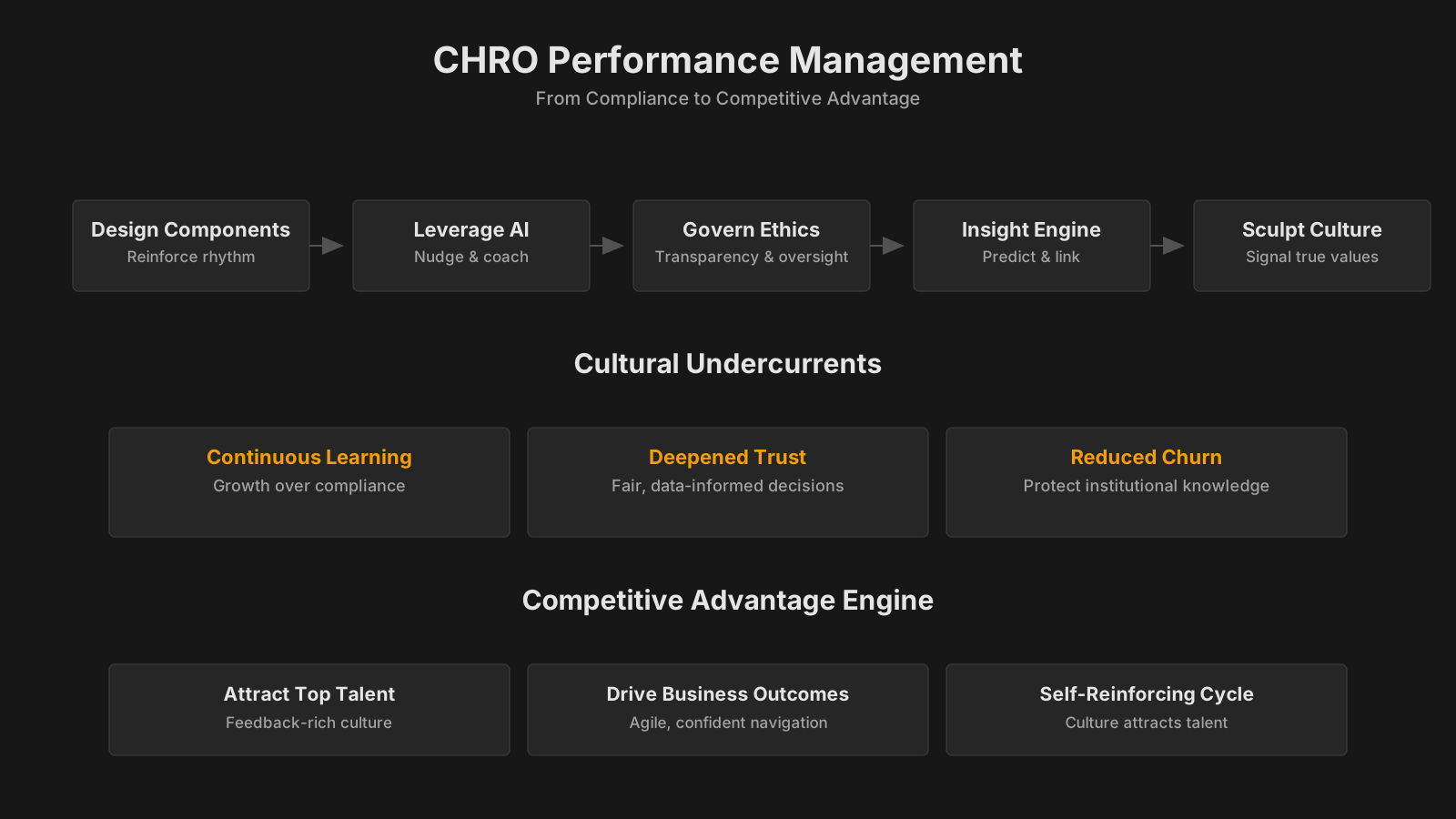
The chief human resources officer’s role in performance management has evolved from a custodial function of tracking reviews to a strategic lever that shapes culture, agility , and business outcomes. CHRO leadership in performance management systems now demands a deep understanding of organizational psychology, digital tools, and the shifting expectations of a modern workforce . Performance management is no longer an annual event but a continuous ecosystem of goal alignment, feedback, coaching, and development , and the CHRO sits at the center of this transformation, bridging executive vision with day-to-day people practices. This article examines how CHROs can architect performance systems that drive sustainable high performance, integrate with talent strategy, and respond to the complexity of contemporary organizations, while anticipating the future of work.
CHRO Leadership in Performance Management: Key Takeaways
| Key Concept | Summary |
|---|---|
| Strategic Shift | The CHRO repositions performance management from a static compliance exercise into a strategic lever that directly drives revenue growth, fuels innovation, and sharpens competitive differentiation. |
| Business Case | CHROs conduct rigorous audits to surface hidden costs of disengagement and underperformance, then build a data-rich business case that links talent practices to critical business metrics such as retention, productivity, and margin. |
| Continuous Model | Performance management evolves into an always-on rhythm of dynamic goal setting, real-time feedback, and developmental coaching that mirrors agile workflows, enabling rapid adjustment and sustained momentum. |
| Manager Role | CHROs systematically equip managers with coaching capabilities and embed team development metrics into performance reviews, preventing small gaps from becoming systemic issues and fostering a proactive accountability culture. |
| Organizational Alignment | The CHRO architects transparent goal cascading through frameworks like OKRs, translating executive ambition into measurable frontline actions and cultivating shared ownership of company-wide outcomes. |
| Values Integration | Observable, values-aligned behaviors are hardwired into everyday feedback and recognition loops, making cultural expectations tangible and ensuring that core principles shape daily decisions and interactions. |
| Digital Tools | Intuitive digital platforms enable frictionless, in-the-moment feedback, sharply reducing administrative drag while amplifying the frequency and quality of constructive dialogue between managers and teams. |
| Psychological Safety | Frequent, forward-looking check-ins replace the pressure of annual judgments, dissolving defensive barriers and building the trust needed for candid, growth-focused conversations and early course correction. |
| Data Utilization | Performance analytics serve as predictive intelligence, illuminating emerging skill gaps, guiding internal mobility, and sharpening build-versus-buy decisions with precision that aligns talent supply with future demand. |
| Future Readiness | CHROs future-proof the organization by designing fluid performance frameworks that enable rapid talent redeployment, continuous capability building, and the strategic agility required to navigate shifting market conditions. |
The Strategic Imperative of CHRO-Led Performance Management
From Administrative Overhead to Strategic Driver
For decades, performance management was synonymous with compliance forms, numerical ratings, and a once-a-year conversation that both managers and employees dreaded. The CHRO who inherits this legacy often faces an uphill battle to reset expectations. The shift begins by reframing the entire system as a business process that directly affects revenue growth, innovation, and customer satisfaction, rather than an HR-owned mandate. Evidence from organizational research consistently shows that when performance management aligns individual goals with corporate strategy, companies achieve higher employee engagement and better financial returns. The CHRO’s task is to articulate this connection in the language of the C-suite, translating talent outcomes into business metrics such as reduced time-to-productivity for new hires, increased internal promotion rates, or lower regrettable turnover. Executives are more likely to invest in performance management redesign when they see it as a driver of competitive advantage, not a cost center.
To make this shift credible, the CHRO must first diagnose the current state with rigor. This involves auditing existing processes for time spent, managerial compliance, and perceived fairness. Many organizations discover that their systems consume thousands of hours annually yet yield data that no one trusts for talent decisions . By mapping the end-to-end employee journey through performance cycles, the CHRO uncovers pain points, such as delayed goal setting, inconsistent feedback, or calibration sessions that erode psychological safety . The output of this audit is not just a report but a compelling internal business case that quantifies the opportunity cost of a broken system. A CHRO who presents this data to the board and executive committee elevates the conversation from policy tweaks to strategic reimagination.
Another cornerstone of strategic repositioning is linking performance management to external market dynamics. In industries undergoing digital transformation, the ability to rapidly reallocate talent to new priorities depends on transparent performance data. A CHRO can demonstrate that a flexible performance system enables the organization to pivot quickly, matching skills to emerging projects. This goes hand in hand with workforce planning : performance data becomes a leading indicator of capacity and capability gaps. When the CHRO shows how performance insights inform decisions about build-versus-buy talent strategies, the system gains relevance far beyond the HR function. Thus, the first leadership move is to stop talking about performance management as an HR program and start positioning it as an enterprise capability.
Reimagining Performance as a Continuous Journey
The traditional annual cycle assumed that performance was a static snapshot, but that assumption has crumbled under the weight of fast-changing objectives and cross-functional teamwork. CHROs are increasingly moving their organizations toward continuous performance management, a model where goal setting, feedback, and development conversations happen in regular short cycles, often monthly or quarterly. This model mirrors agile delivery methods that software teams have used for years, emphasizing adaptability and frequent inspection. The CHRO’s leadership here lies in designing the rhythm and rituals that make continuous performance manageable rather than overwhelming. For instance, weekly check-ins need not be formal reviews; they can be lightweight alignment conversations that prevent performance drift long before it becomes a crisis.
One of the biggest hurdles in this transition is the fear that managers will spend all their time on performance processes. The CHRO must demonstrate that when continuous performance is integrated into natural workflow, it reduces the burden. By embedding feedback into project retrospectives, sprint reviews, and regular one-on-ones, the organization eliminates the “big reveal” of annual evaluations. Employees receive timely course correction, which is psychologically safer and more effective than storing up criticism. The CHRO should champion the idea that feedback is a gift that occurs in the moment, supported by simple digital tools that capture quick notes rather than lengthy forms. This cultural shift from documentation to dialogue is a hallmark of mature CHRO leadership.
Furthermore, reimagining performance as continuous requires rethinking the role of the manager. The CHRO invests in manager development programs that teach coaching skills, emotional intelligence, and how to have difficult conversations early. Many performance failures can be traced not to employee incompetence but to managerial avoidance. A CHRO who holds managers accountable for the performance of their teams, including the quality of their coaching, signals that leadership at all levels owns performance. This often involves adding “talent development” as a core leadership competency and tying a portion of manager incentives to their effectiveness in developing others. Thus, continuous performance management becomes a management philosophy, not just an HR process.
The CHRO as Architect of Organizational Alignment
Alignment is the invisible thread that connects the CEO’s vision to the frontline employee’s daily tasks. A CHRO ensures that performance management cascades strategy throughout the organization in a way that is coherent and motivating. This starts with business unit heads translating corporate strategic objectives into team-level outcomes using frameworks like Objectives and Key Results, or OKRs. The CHRO facilitates this cascade by providing templates, training, and facilitation, but resists the temptation to own the content. Business leaders must feel accountable for their goals, not just ticking an HR compliance box. When CHROs design the goal-setting process to be collaborative and iterative, they foster shared ownership and reduce the risk of siloed targets that undermine overall strategy.
A deeper layer of alignment involves connecting performance expectations to the organization’s values and behavioral competencies. Many organizations articulate a set of core values, but these rarely influence day-to-day performance discussions. The CHRO can weave values into the performance fabric by defining observable behaviors for each value and integrating them into feedback templates and recognition programs. For example, a value like “innovation” might be broken down into behaviors such as “experiments with new approaches” or “shares learnings from failures.” When employees see that living the values is integral to performance evaluation, culture becomes tangible. The CHRO leads this effort by collaborating with the executive team to model those behaviors and call out values-congruent actions in town halls and communications.
Alignment also extends to cross-functional collaboration. In matrixed organizations, employees often report to more than one leader and contribute to multiple teams. A CHRO-led performance system must accommodate these complexities without creating bureaucratic gridlock. This means designing feedback mechanisms that capture input from project leads, peers, and internal clients, rather than relying solely on the direct manager’s judgment. By building a network of performance data, the CHRO helps the organization recognize contributions that fall outside rigid reporting lines, encouraging agility and enterprise-wide thinking. Ultimately, the CHRO’s architectural role is to craft a system that makes strategy visible in every performance conversation, ensuring that no employee is unclear about how their work matters.
Key Insights
- Performance as enterprise capability
- The CHRO must elevate performance management from a compliance obligation to a strategic business process that directly drives revenue growth, fuels innovation, and enhances customer satisfaction by tightly aligning individual objectives with corporate goals.
- Continuous performance management model
- Forward-thinking CHROs replace annual reviews with a rhythm of brief frequent feedback cycles and adaptive goal setting, embedding lightweight check-ins into natural workflows to reduce managerial strain and provide immediate course correction.
- Manager development for coaching
- The CHRO systematically builds managers’ coaching skills and emotional intelligence so they can identify and address performance issues early, shifting the dynamic from reactive documentation to proactive dialogue and breaking the pattern of managerial avoidance that erodes team output.
Core Components of a Modern Performance Management System
Goal Setting Frameworks: OKRs and Beyond
Goal setting is the engine of performance management, and the CHRO must choose and adapt frameworks that fit the organizational context. OKRs have gained widespread adoption for their simplicity and focus on measurable outcomes, but their success depends on disciplined implementation. The CHRO leads by educating leaders on the difference between aspirational and committed objectives, and on writing key results that are truly measurable, not activity-based. A common pitfall is that teams overload themselves with too many Objectives, diluting focus. The CHRO coaches leaders to prioritize three to five top-level Objectives that can cascade and connect. More importantly, the CHRO ensures that OKRs are transparent across the organization, which fosters alignment and peer accountability, a practice made famous by companies like Intel and Google, but adaptable to any industry with the right leadership.
Yet OKRs are not a one-size-fits-all solution. For roles with highly predictable outputs, such as certain operations or compliance functions, traditional SMART goals may be more appropriate. The CHRO’s expertise lies in segmenting the workforce and tailoring the goal-setting approach. Sales teams might benefit from a blend of outcome-based metrics and leading indicators. Research and development teams may need milestone-based goals that accommodate uncertainty. The CHRO works with business leaders to define the right cadence and level of precision, avoiding the trap of forcing every function into a single mold. This nuanced approach signals that the performance system is intelligent and context-aware, which increases its credibility across diverse business units.
Beyond the mechanics of goal setting, the CHRO champions the connection between individual goals and team outcomes. Individual performance is increasingly interdependent, so a system that only evaluates personal achievements can undermine collaboration. Some organizations introduce team performance multipliers or shared objectives that account for collective results. The CHRO leads the design of these mechanisms, balancing accountability for individual deliverables with incentives for helping colleagues succeed. This is particularly critical in complex project environments where no single person controls the end result. By calibrating the mix of individual and collective goals, the CHRO shapes behavior at scale, reinforcing the notion that high performance is a team sport.
Continuous Feedback and Coaching Cultures
Feedback is the lifeblood of performance improvement, yet it often fails in practice because it is given too late, too vaguely, or without the relational foundation that makes it safe to receive. CHRO leadership in performance management systems includes embedding a culture where feedback flows upward, downward, and peer-to-peer seamlessly. This requires more than training sessions; it demands a systemic design that prompts and reinforces feedback. Many modern tools include lightweight feedback prompts tied to specific events, such as after a project milestone or a client presentation. The CHRO selects and deploys these tools with a focus on user experience, ensuring that giving feedback takes minimal time and feels natural. Success is measured not by the volume of feedback but by its perceived quality and actionability, indicators the CHRO tracks through pulse surveys.
Coaching is the natural complement to feedback, and the CHRO plays a pivotal role in transforming managers into coaches. Command-and-control leadership is ill-suited to knowledge work, where employees often have deeper expertise than their managers in narrow domains. The CHRO invests in coaching skills programs that teach active listening, powerful questioning, and the art of holding developmental rather than evaluative conversations. This shift is profound: the manager’s job becomes to unlock potential and remove obstacles, not to judge from a distance. To make coaching stick, the CHRO must embed it in the performance cycle itself. For instance, the primary output of a monthly check-in could be a forward-looking development plan, not a backward-looking score. When coaching becomes the default mode of performance interactions, employee engagement and discretionary effort rise measurably.
One of the toughest challenges is fostering psychological safety so that employees willingly seek and receive feedback. The CHRO, in partnership with the CEO, models vulnerability by publicly sharing their own development areas and how they are working on them. When senior leaders demonstrate that feedback is not punitive, the rest of the organization becomes more open. The CHRO also orchestrates features like anonymous upward feedback for managers, giving employees a voice without fear of retribution. Over time, as trust builds, anonymity may give way to attributable feedback, but the CHRO manages that evolution carefully. A well-designed continuous feedback ecosystem becomes a competitive advantage in attracting and retaining talent, as it signals a genuine commitment to growth.
Development-Focused Conversations Instead of Ratings
The debate over whether to eliminate performance ratings continues, and CHRO leadership is critical in navigating it. Research on the impact of ratings is mixed: some studies link forced distribution to demotivation and turnover, while others argue that some form of performance differentiation is necessary for fair rewards. The CHRO must take a stand based on the organization’s context, culture, and readiness. Many forward-thinking CHROs have moved away from single numerical ratings toward richer, multidimensional assessments that separate performance from potential, and behaviors from outcomes. This allows for more nuanced talent decisions without the stigma of a “number.” When a CHRO replaces the annual rating with ongoing qualitative feedback summaries, the conversation shifts from justifying a score to planning development, which is more productive for both parties.
Even in organizations that retain ratings, CHROs can redesign the rating architecture to be less destructive. For example, having multiple raters, using anchored rating scales based on observed behaviors, and calibrating for leniency can improve fairness and accuracy. The CHRO ensures that calibration sessions focus on evidence of impact rather than personal impressions. Additionally, the timing of performance conversations can be decoupled from compensation discussions, a practice recommended by many management thinkers because it reduces the defensive reaction that undermines learning. When an employee knows that the purpose of the talk is purely developmental, they are more receptive to constructive feedback. The CHRO orchestrates this decoupling by moving reward decisions to a separate, forward-looking process based on contributions and market data, not just past ratings.
The CHRO’s ultimate goal is to foster a growth mindset across the organization, where performance management is seen as a pathway to mastery, not a judgment of fixed trait. This means designing processes that emphasize progress and learning. For instance, a performance snapshots approach, where managers record brief observations about an employee’s strengths and areas for improvement throughout the year, provides a rich tapestry of evidence for development planning. The CHRO sponsors the technology and training to make this effortless. When development becomes the dominant theme, performance naturally improves because employees feel supported in closing skill gaps. This human-centric approach reduces the adversarial feeling that often surrounds performance management, aligning it more closely with contemporary employee expectations of purpose and growth.
Multisource Feedback and 360-Degree Reviews
No single manager has a complete view of an employee’s performance, especially in networked organizations. The CHRO integrates 360-degree feedback mechanisms to capture perspectives from peers, direct reports, internal customers, and occasionally external stakeholders. When well executed, 360 feedback provides a balanced picture that promotes self-awareness and highlights blind spots. CHRO leadership involves ensuring that the process is developmental, not evaluative in the sense of determining compensation or promotion. Introducing 360 feedback for the first time requires careful change management; employees need to trust that the data will be used for their growth, not against them. The CHRO sets this tone by limiting access to the report to the individual and perhaps their coach, keeping it out of HR’s administrative files.
The design of 360 instruments is another area where CHRO oversight matters. Poorly constructed surveys with vague or loaded items can trigger anxiety and unreliable data. The CHRO partners with industrial-organizational psychologists or external vendors to develop behaviorally anchored questions that align with the organization’s competency model. Rater training is equally important to reduce biases such as the halo effect and recency bias. The CHRO ensures that raters understand how to provide specific, actionable comments rather than vague praise or criticism. Moreover, feedback is most effective when followed by a facilitated conversation, so the CHRO invests in certified internal coaches or external support to help employees interpret their reports and create development plans.
A common misstep is treating 360 feedback as a one-time event tied to a leadership program. The CHRO embeds it as an ongoing listening tool, perhaps biennially, to track development over time. The data, aggregated and anonymized, can also inform organizational development initiatives. For example, if low scores on “inclusive leadership” emerge across a division, the CHRO can commission targeted interventions. By elevating 360 feedback from a individual assessment to a source of systemic insight, the CHRO reinforces the performance system’s strategic value. The key is to balance the granularity of individual development with the macro patterns that guide culture change, a nuance that requires mature judgment and the ability to communicate data stories to the executive team.
CHRO Leadership in Performance Management Systems: Navigating Implementation Challenges
Overcoming Resistance and Legacy Mindsets
Every performance transformation faces inertia. Managers who are comfortable with the old system may see change as a threat to their authority or just another HR flavor-of-the-month. The CHRO must anticipate and address this resistance with empathy and evidence. One effective approach is to involve a cross-section of employees and managers in co-designing the new system. When skeptics become part of the solution, they often become champions. The CHRO facilitates design thinking workshops where participants map current pain points and prototype new processes. This inclusive method taps into the collective intelligence of the organization and generates a sense of ownership that top-down mandates cannot replicate. It also surfaces practical constraints that the CHRO might otherwise overlook, such as the time pressures of frontline supervisors.
Resistance also stems from a perceived loss of control, particularly among managers who rely on forced rankings to differentiate bonuses. The CHRO must reframe performance management as a tool for enabling, not just evaluating. This requires clear and consistent communication about the “why” behind the change, linking it to business strategy and employee experience. Storytelling is a powerful tool: the CHRO can share anonymous anecdotes of how the old system demotivated high performers or failed to catch declining performance early. These stories, grounded in the organization’s reality, create a visceral urgency that data alone cannot. The CHRO also prepares managers for their new role by equipping them with practical scripts, tools, and support, reducing anxiety about the unknown.
Structural resistance may come from legal or compliance departments worried about documentation for termination decisions. The CHRO partners with legal to design a system that meets regulatory requirements while still enabling a coaching culture. This often involves maintaining a separate, lightweight record of significant performance issues that may warrant formal action, without contaminating the developmental stream. By separating “performance improvement” from “performance management,” the CHRO satisfies legal needs without institutionalizing distrust. Navigating these political and regulatory pressures is a hallmark of seasoned CHRO leadership, demonstrating that they understand the enterprise’s risk landscape while still pushing boundaries toward a more humane system.
Redesigning Processes for Agility and Fairness
CHRO leadership in performance management systems means embracing agility not just as a methodology but as a design principle. An agile performance process is iterative, with frequent checkpoints and the ability to adjust goals as business conditions change. The CHRO facilitates the rupture of annual goal cycles, replacing them with quarterly or even monthly sprints where teams reassess priorities. This requires a shift in HR’s own operating model: instead of managing a single year-end event, HR business partners become facilitators of ongoing performance rhythms. The CHRO reskills the HR team to support these cycles, moving from compliance monitors to trusted advisors who help managers interpret performance data and handle difficult situations.
Fairness is equally critical and often contested. Employees need to perceive that the system treats them equitably, recognizing contributions fairly regardless of gender, race, or proximity to power. The CHRO leads the charge in auditing performance outcomes for bias. Statistical analyses, such as comparing ratings by demographic groups controlling for tenure and role, can uncover systemic disparities. When disparities are found, the CHRO must not shy away but rather investigate root causes, which may include biased calibration discussions, unequal access to high-visibility projects, or rater biases. The corrective actions may include redesigning calibration protocols, introducing blinding techniques, or providing bias mitigation training. The CHRO’s commitment to transparency about these audits and their findings builds trust, even when the results are uncomfortable.
Another dimension of fairness is procedural justice, the perception that the process is consistent, accurate, and allows for employee voice. The CHRO ensures that employees have avenues to appeal or question their performance assessments without retaliation. Establishing clear criteria and making them visible to all reduces ambiguity and the suspicion that outcomes are dictated by favoritism. The CHRO tracks metrics like the percentage of employees who feel their performance evaluation was fair in engagement surveys, and holds the organization accountable for continuous improvement. A fair system not only reduces legal exposure but also enhances employee commitment, as people are more likely to accept unfavorable outcomes if they believe the process was just.
Building Manager Capability and Accountability
No performance system can outperform the capabilities of the managers who execute it. The CHRO invests heavily in upskilling managers for the new paradigm, recognizing that one-off training is insufficient. A comprehensive capability building plan includes experiential learning, such as role-playing difficult feedback conversations, observation and coaching of real sessions, and peer learning communities. The CHRO may deploy a train-the-trainer model where high-performing managers become internal coaches for their colleagues. This peer-led approach normalizes the skills and reduces the stigma that performance discussions are uncomfortable. Over time, the expectation becomes that every people leader is a competent coach, and the CHRO ties this expectation to their own performance assessments and development plans.
Accountability for performance management should not rest solely with HR. The CHRO must ensure that business leaders own the performance of their teams. This can be reinforced by including metrics such as team engagement, internal promotions, and turnover rates in leaders’ balanced scorecards. When a regional director’s bonus depends partly on how well they develop talent, their attention to performance management increases dramatically. The CHRO partners with the CFO and CEO to embed these metrics into the business review process. The annual talent review can be elevated to a business review where leaders present their talent pipeline and the development actions they have taken, not just the financial numbers. This integration makes performance management a leadership discipline, not an administrative chore.
The CHRO also builds mechanisms for employees to hold their managers accountable for quality performance conversations. Post-review pulse checks can ask simple questions like “Did your manager provide you with useful feedback that will help you grow?” Aggregated scores can be shared with managers, creating a feedback loop on their coaching effectiveness. Those who consistently score low receive targeted support, and if improvement does not occur, consequences follow. This two-way accountability closes the loop and ensures that the system’s intent translates into day-to-day experience. CHRO leadership means building a culture where everyone, from the C-suite to the front line, is both a giver and a receiver of performance insights, creating a high-trust, high-performance ecosystem.
Essential Takeaways
- Overcoming Resistance Through Co-Design
- Engaging both employees and managers in the co-creation process transforms potential resistance into committed advocacy, building intrinsic ownership that no top-down edict can replicate.
- Reframing Performance as an Enabling Tool
- The CHRO must reframe performance as a developmental enabler rather than a periodic evaluation, using clear strategic communication and persuasive storytelling to foster urgent, collective buy-in for the new approach.
- Separating Development from Compliance
- Maintaining distinct records for performance coaching and formal disciplinary documentation, in partnership with legal, fulfills compliance requirements without diluting the coaching ethos.
- Agile Performance Cycles and HR Reskilling
- Shifting to quarterly or monthly performance sprints necessitates reskilling HR business partners into trusted advisors who facilitate ongoing dialogue, moving beyond their traditional role as compliance enforcers.
- Auditing for Fairness and Procedural Justice
- The CHRO spearheads systematic bias audits, establishes transparent evaluation criteria with formal appeal mechanisms, and monitors perceptions of fairness to reinforce organizational trust and mitigate legal risks.
Data-Driven Decision Making in Performance Management
Leveraging People Analytics to Diagnose System Health
CHROs who lead with data transform performance management from a gut-feel exercise into a science. People analytics can reveal whether the performance system is achieving its intended outcomes. Key metrics include goal completion rates, distribution of performance scores (or equivalent), correlation between performance and engagement, and the quality of feedback conversations. By establishing a baseline and tracking trends, the CHRO identifies areas of strength and signals of drift. For example, if goal completion rates are consistently low across a division, it might indicate unrealistic targets or poor goal setting rather than underperformance. The CHRO uses these insights to intervene with business leaders, shifting the conversation from blame to diagnosis and solution.
Analytics also shed light on the “employee journey” through the performance cycle. The CHRO can map how long it takes for new hires to receive their first goals, how often check-ins occur, and whether development plans are being created and followed. These process metrics are leading indicators of system adoption. Low adoption often precedes declines in employee perception of fairness and value, so the CHRO can act early. Establishing a performance management dashboard, accessible to HR business partners and senior leaders, creates transparency and a sense of shared responsibility. However, the CHRO must guard against metric fixation, where managers game the numbers by logging frequent but meaningless check-ins. The quality of data is as important as quantity, so validation through spot checks and employee surveys is essential.
A more sophisticated analytic approach is to forecast performance trends and their impact on business outcomes. For instance, the CHRO can analyze the relationship between performance scores and customer satisfaction ratings in service roles, or between engineering performance and product launch timelines. Proving these linkages makes the performance system indispensable to operations. The CHRO collaborates with finance and strategy teams to incorporate performance data into enterprise risk models, such as identifying critical roles where declining performance could jeopardize key initiatives. This predictive capability elevates the CHRO’s influence, positioning HR as a strategic partner that uses data to mitigate business risk and seize opportunities.
Using Performance Data for Succession Planning and Talent Mobility
Performance data, when reliable, feeds the talent pipeline. The CHRO ensures that performance management outputs are not siloed but integrated with succession planning and career development systems. High-potential identification can be informed by a combination of performance trends, 360 feedback, and demonstration of leadership competencies. However, the CHRO must guard against the “performance equals potential” trap, where the best current performer is assumed to be the best future leader. The system should capture separate indicators of aspiration, ability, and engagement, often through talent review conversations facilitated by HR. The CHRO’s leadership ensures that these talent discussions are evidence-based and challenge assumptions, leading to more diverse succession slates.
Talent mobility, both lateral and vertical, thrives when performance data is transparent and portable. The CHRO can champion internal talent marketplaces where employees can see open projects or roles, and where managers can view the performance profiles of interested candidates without the friction of back-channel references. For this to work, employees must consent and the data must be presented in a positive, developmental framing. The CHRO designs the system so that performance summaries focus on strengths and demonstrated skills, not on labels or scores that could stigmatize. By facilitating internal mobility, the organization retains talent and fills critical roles faster, demonstrating the performance system’s direct business value.
The integration of performance data with learning and development is another critical linkage. The CHRO uses insights from performance gaps to inform content curation and learning pathway design. If aggregate data shows a widespread lack of data literacy among middle managers, the L&D team can prioritize that competency. Performance feedback can trigger automatic recommendations for microlearning modules or mentoring connections. When employees see that their performance conversations lead directly to development resources, their engagement with the system deepens. This creates a virtuous cycle where performance management drives growth, and growth improves performance. The CHRO orchestrates this through a unified technology ecosystem that connects goal tracking, feedback, learning, and career planning, breaking down traditional silos.
Ethical Considerations and Bias Mitigation
Data-driven performance management brings with it ethical responsibilities that the CHRO cannot delegate. Algorithmic decision making, even in its early stages in HR, can perpetuate or amplify biases if not carefully governed. When the CHRO introduces machine learning to predict performance or flag at-risk employees, they must ensure transparency and fairness. Employees should know what data is being used and have the ability to correct errors. The CHRO establishes a data ethics council or works with legal and IT to create guidelines for the ethical use of performance analytics. This includes privacy safeguards, particularly around feedback text and sentiment analysis, which can feel invasive. The CHRO’s stance must be that technology serves the employee, not the other way around, maintaining trust as the foundation.
Bias mitigation starts at the design stage of any performance process. The CHRO ensures that goal setting, calibration, and feedback mechanisms are audited for adverse impact. For example, the language used in feedback can be gendered, with studies showing women often receive vague praise while men receive more specific, actionable feedback. The CHRO can implement nudges in the feedback platform that prompt raters to be specific and to avoid stereotype-driven language. Calibration sessions can be structured with grounded evidence discussions rather than overall impressions. CHROs who lead with an inclusion lens recognize that fair performance management is a pillar of a diverse and equitable workplace, and they champion systemic fixes rather than one-time training.
There is also an ethical dimension to how performance data is used beyond the organization. In the event of layoffs, the CHRO ensures that performance-based selection criteria are applied fairly and transparently, with due process. If performance data is requested for external references, a policy must clarify what is shared. The CHRO sets the moral compass, ensuring that the pursuit of high performance does not become a surveillance tool that undermines autonomy and dignity. By embedding ethical principles into the performance management charter, the CHRO protects the organization’s reputation and sustains employee trust, which is the bedrock of any high-performing culture.
Integrating Performance Management with Broader People Strategies
Linking Performance to Rewards and Recognition
The relationship between performance and pay remains one of the most delicate design choices. The CHRO must decide how closely to tie annual bonuses or merit increases to performance ratings or conversations. The evidence suggests that while some differentiation is necessary to reward top contributors, an overly formulaic link can distort behavior, encouraging gaming or risk aversion. Many leading organizations have moved toward decoupling, where performance informs rewards but is not the sole determinant. The CHRO may design a system where base pay progression is based on market benchmarks and skill acquisition, while bonuses reflect a mix of individual, team, and company performance. This holistic approach reduces the zero-sum competition that can poison culture.
Recognition, separate from compensation, plays a powerful role in reinforcing desired behaviors. The CHRO integrates informal recognition mechanisms into the performance ecosystem, allowing peers and managers to acknowledge contributions instantly. Digital platforms that enable small monetary rewards or simply public appreciation make recognition frequent and visible. The CHRO ensures that recognition criteria align with company values and strategic priorities, so that celebrating someone for “staying late” doesn’t inadvertently reward inefficiency. Instead, recognition is framed around impact, collaboration, and innovation. When recognition data is aggregated, it can supplement performance discussions with evidence of how an employee is valued by their network, providing a richer picture than a supervisor’s perspective alone.
The CHRO also manages the communication around pay-for-performance to avoid demotivation. If employees perceive that pay decisions are arbitrary or biased, the performance system loses legitimacy. Transparency about the philosophy and process, without necessarily disclosing individual salaries, can mitigate this. The CHRO trains managers to have clear, empathetic compensation conversations that reference the individual’s performance story, not just a rating. These conversations are often the most stressful part of a manager’s job, and the CHRO provides scripts and support to navigate them. By aligning rewards with the broader talent philosophy, the CHRO ensures that performance management feels like a coherent system, not a disjointed set of activities.
Performance Management and Employee Experience
Performance management is a significant touchpoint in the employee experience, and when done poorly, it erodes engagement faster than almost any other HR process. The CHRO can lead the design of performance interactions that leave employees feeling energized and clear, not deflated. This means paying attention to the micro-interactions: the wording of feedback prompts, the design of the performance platform’s interface, and the emotional arc of a performance conversation. Applying experience design principles, the CHRO might create a journey map of a typical performance cycle and identify moments of truth. For example, the moment after a feedback session is a critical point where an employee decides whether to invest more or withdraw. The CHRO ensures that follow-up support, like coaching or learning resources, is immediately accessible.
The CHRO also links performance management to employee well-being. High-performance expectations should coexist with support for mental health and work-life balance. A performance system that only tracks output without regard to sustainable work practices will lead to burnout and attrition. The CHRO incorporates well-being indicators into performance conversations, such as discussing workload, energy levels, and support needed. This holistic approach signals that the organization values the whole person, not just the producer. Some innovative CHROs have introduced “energy check-ins” where teams discuss their collective capacity before committing to goals, ensuring that performance ambitions are grounded in reality. This reduces the cynicism that arises when goals are set from above without resource consideration.
Finally, the CHRO ensures that the performance experience is consistent across the employee lifecycle. Onboarding should include an introduction to how performance will be managed and developed, setting clear expectations. Exit interviews can capture feedback on the performance system’s fairness and effectiveness, providing valuable insights for iteration. By listening to the employee voice throughout, the CHRO makes performance management a living, evolving practice that adapts to the needs of the workforce. This focus on experience helps attract talent, as prospective employees increasingly evaluate companies on their development culture and how they support growth, not just on compensation and brand.
Aligning Performance with Diversity, Equity, and Inclusion Goals
Performance management can either reinforce systemic inequities or become a tool for greater equity. CHRO leadership in performance management systems requires a deliberate focus on DEI outcomes. This begins with audits to uncover disparities in ratings, promotions, or access to high-visibility assignments, as mentioned earlier. But the CHRO also examines the underlying behaviors: Do performance norms inadvertently favor a dominant culture’s style of communication or leadership? For instance, self-promotion may be rewarded more than quiet competence, disadvantaging certain groups. The CHRO works with the executive team to redefine what “high performance” looks like, broadening the definition to include inclusive behaviors, mentoring of underrepresented talent, and contribution to a respectful workplace.
To embed DEI into the fabric of performance management, the CHRO can introduce inclusive performance measures, such as 360-degree feedback items on allyship and psychological safety creation. When these measures are part of the performance criteria, they signal that the organization values not just what you achieve but how you achieve it. The CHRO also ensures that calibration committees are trained to recognize and counteract common biases, such as penalizing employees who work flexibly or who have non-linear career paths. By making DEI a lens through which all performance processes are viewed, the CHRO helps shift the culture toward genuine inclusion, where diverse talent can thrive.
The CHRO’s role extends to ensuring that performance management supports equity in development opportunities. High performers, regardless of background, should receive equitable access to stretch assignments, sponsors, and leadership development programs. A data-driven approach can identify who is getting these opportunities and who is not, prompting corrective action. The CHRO may set targets or guidelines that succession slates for critical roles reflect the diversity of the internal talent pool. This systemic integration of DEI and performance management creates a reinforcing loop: a fair system attracts and retains diverse talent, and diverse talent, when developed and recognized, drives higher collective performance. The CHRO champions this virtuous cycle as a business imperative, not just a compliance objective.
Essential Insight Summary
- Linking rewards to performance
- To prevent counterproductive behavior and rating inflation, organizations should decouple pay from performance ratings, anchoring bonuses to a blend of market benchmarks, skill acquisition milestones, and team outcomes, while maintaining frequent, standalone recognition for individual contributions.
- Performance as employee experience
- Designing performance interactions around experience principles, including structured follow-up support and wellbeing indicators, ensures employees leave the process feeling energized and engaged rather than deflated.
- Aligning performance with DEI goals
- The CHRO must ensure performance management actively advances diversity, equity, and inclusion by systematically reducing bias in all ratings and creating equitable, transparent opportunities for every employee to develop and thrive.
Leading Change: The CHRO as Transformation Agent
Crafting a Compelling Narrative for Change
When a CHRO sets out to overhaul performance management, the change will fail without a clear and emotionally resonant story. Employees and managers need to understand why the current state is unsustainable and how the future state will be better for them, not just for the company. The CHRO crafts a narrative that frames the transformation as a journey from a control-based system to an enablement-based system, using concrete examples that resonate across levels. This narrative is anchored in the organization’s purpose and values, making the change feel authentic rather than borrowed from a trend report. The CHRO, as the chief storyteller, delivers this message consistently through town halls, leadership meetings, and internal media, while also equipping a network of influencers to amplify it.
A compelling narrative also addresses what will stay the same, reducing uncertainty. Employees fear that a new system might hide a lack of accountability or remove the rigor that helps them know where they stand. The CHRO reassures them that high standards and honest conversations remain, but the process will be more humane and effective. The story includes the employee’s role: they are not passive recipients but active participants in shaping their goals and seeking feedback. By giving the change a name or a campaign identity, the CHRO makes it memorable and trackable. The narrative is not a one-time splash but a sustained drumbeat of communication that evolves as the transformation progresses, celebrating quick wins and sharing real-life testimonials.
To make the narrative credible, the CHRO must embody the change. If the new system emphasizes continuous feedback, the CHRO models it by asking for feedback from the HR team and other executives, and sharing what they learned and changed. This visible vulnerability demonstrates that performance is a journey for everyone, including leadership. When the CHRO’s own goal setting and performance reviews reflect the new philosophy, it sends a powerful message that the change is not a directive for others but a shared commitment. This authentic leadership builds the credibility needed to move from announcement to adoption.
Pilot Programs and Iterative Refinement
Rather than rolling out a grand redesign all at once, which risks catastrophic failure, the CHRO often starts with a pilot in a few willing business units. The pilot approach allows the CHRO to test assumptions, gather rich qualitative feedback, and refine before scaling. Selecting the right pilot partners is critical; they should represent different functions and geographies, and their leaders must be committed co-creators. The CHRO sets up a structured learning loop where pilot participants regularly share their experiences through retrospectives. These insights feed rapid tweaks to process, tools, and training. The pilot phase also generates employee stories that can be used in the broader change narrative, showing skeptics that the new way works in their own organization, not just in case studies.
Iterative refinement is grounded in the principle that no performance system will be perfect at launch. The CHRO communicates that version 1.0 is a minimum viable product, and that everyone’s input will shape version 1.1. This openness reduces the pressure for flawless execution and encourages a culture of experimentation. The CHRO might run A/B tests on different approaches to check-ins or rating scales, measuring outcomes such as conversation quality or employee satisfaction. The results inform the final design, but the CHRO also recognizes that local customization may be necessary. A global rollout might allow regional adaptations to comply with local labor laws or cultural norms around direct feedback. The CHRO’s ability to balance centralized principles with decentralized flexibility is a mark of sophisticated change leadership.
Throughout the pilot and beyond, the CHRO maintains a feedback channel for everyone to suggest improvements. This could be a digital suggestion box or regular focus groups. The CHRO makes a point of closing the loop with employees, showing which suggestions were acted upon and explaining why some could not be implemented. This transparency builds ownership and reduces cynicism. The iterative approach also applies to HR’s own support model: HR business partners learn to facilitate in new ways, and their feedback loops inform capability building for the HR function itself. The CHRO thus models the learning organization philosophy that the performance system is intended to foster in the business.
Sustaining Momentum and Measuring Success
Initial enthusiasm for a new performance management system can wane if the CHRO does not institutionalize the change. Sustainability requires embedding the new practices into the organization’s operating rhythm and core management processes. The CHRO works to have performance management topics permanently on the leadership team’s agenda, not as an HR update but as a business review of talent health. The annual or quarterly business cycle can be designed so that goal setting and talent reviews align with strategic planning and budgeting, making performance discussions inseparable from business execution. This integration ensures that performance management does not become a side project that fades when organizational attention shifts.
Measuring success goes beyond satisfaction surveys. The CHRO establishes a balanced set of outcome metrics, including employee perception of fairness and usefulness, goal attainment rates, internal mobility rates, and the correlation between performance assessments and actual business outcomes. Leading indicators, like the frequency and quality of check-ins, can be monitored monthly to detect backsliding. The CHRO reviews these metrics with the executive committee, maintaining accountability and signaling that performance management is a strategic priority. When metrics plateau or decline, the CHRO investigates root causes and initiates targeted interventions, demonstrating the same continuous improvement mindset expected of employees.
The CHRO also sustains momentum by recognizing and rewarding managers and teams that exemplify the new approach. Success stories are amplified through internal communications, creating role models. Over time, the cultural shift becomes self-reinforcing as new hires enter an environment where continuous performance management is simply “the way we work.” The CHRO’s leadership legacy is a system that has become woven into the fabric of the organization, no longer dependent on HR’s prodding. Achieving this state takes years of persistent effort, but the payoff is an organization that can adapt, innovate, and execute with clarity and alignment.
The Future of Performance Management Under CHRO Stewardship
AI and Predictive Performance Insights
Artificial intelligence is beginning to augment performance management, but the CHRO must guide its adoption with caution and clarity. AI can analyze patterns in feedback text, communication metadata, and work output to surface insights about employee engagement, collaboration, and potential performance risks. For example, natural language processing might detect language in peer feedback that correlates with eventual employee departure, giving the CHRO an early warning system. However, the predictive models are only as good as the data they are trained on, and if historical data contains biases, AI will amplify them. The CHRO places guardrails around the use of AI, ensuring that algorithms are auditable and that human judgment always remains in the loop for decisions affecting careers.
CHRO leadership in performance management systems will increasingly involve defining the ethical framework for AI in HR. This includes transparency about what data is collected, how it is used, and giving employees the ability to opt out of certain automated analyses. The CHRO must also consider the psychological impact of constant performance surveillance, even if it is passive. Striking a balance between helpful nudges and intrusive monitoring is delicate. The CHRO consults with employees through focus groups and works councils where applicable, co-creating guidelines that build trust. The goal is not to replace managers with algorithms but to equip them with better information to have more meaningful conversations.
Another frontier is personalized performance support. AI-driven coaching platforms can provide employees with real-time tips on communication, time management, or goal setting based on their performance data. The CHRO pilots such tools as supplements, not substitutes, for human coaching. The effectiveness of these interventions should be rigorously tested, with the CHRO sponsoring internal research to separate hype from real impact. As the technology matures, the CHRO’s role will be to discern which innovations genuinely improve performance and employee experience, and which are merely shiny distractions. This discernment will separate strategic CHROs from those who chase trends.
The Shift to Team-Based Performance Models
The nature of work is becoming more collaborative and project-based, challenging the individual-centric performance models of the past. Forward-looking CHROs are experimenting with team performance management, where the unit of analysis shifts from the individual to the collective. This aligns with agile methodologies where agile teams, squads, or crews are accountable for shared outcomes. The CHRO leads the design of team-level goals, feedback loops, and recognition that reinforces cross-functional cooperation. Individual contributions are still assessed, but in the context of the team’s success, often through peer feedback and a review of how effectively one collaborated. This approach reduces internal competition and encourages knowledge sharing.
Implementing team-based performance management requires re-engineering rewards systems. The CHRO collaborates with finance to explore models where a portion of variable compensation is tied to team or pod performance, with individual adjustments based on contribution. This can be complex to administer but sends a strong signal that the organization values collective achievement. The CHRO also revisits leadership competencies for team leaders, emphasizing skills like facilitation, conflict resolution, and systems thinking. As these models proliferate, the role of the manager may evolve into that of a team coach responsible for group dynamics as much as task allocation. The CHRO guides this evolution, ensuring that the shift does not create ambiguity that hides underperformance.
The team-based model also has implications for talent decisions. Succession planning may focus on identifying future team leaders rather than just functional heads, and high-potential talent may be identified through their ability to elevate entire teams. The CHRO builds these criteria into assessments and development programs. While the shift is not without challenges, particularly in organizations with a strong individual star culture, the CHRO’s leadership can pilot it in innovation labs or digital units where teamwork is already prized. Over time, as the benefits become evident, the model can spread, gradually reshaping the performance culture from “my achievement” to “our success.”
Continuous Listening and Employee Voice
Performance management is incomplete without hearing from employees about how the system affects them. CHROs are embedding continuous listening mechanisms that go beyond the annual engagement survey. Pulse surveys, always-on feedback channels, and social listening tools provide real-time insights into employee sentiment about performance processes and perceived fairness. The CHRO uses this data to make quick adjustments and to hold leaders accountable for improvement. For example, if a quarterly pulse reveals that a particular department feels its check-ins are superficial, the CHRO can intervene with the department head and HRBP to address the issue before it festers. This responsiveness demonstrates that the performance system is designed for the people, not just the organization.
Employee voice also plays a role in shaping performance criteria. The CHRO may establish employee advisory panels that review proposed changes to performance tools and policies. These panels can surface unintended consequences that leaders might miss. For instance, a new rating scale might inadvertently penalize employees who take on hidden but critical maintenance work. Employee input becomes a co-design input, increasing acceptance. The CHRO ensures that these channels are accessible to all, including frontline and remote workers, and that psychological safety is maintained so employees feel safe to critique. When employees see their feedback leading to tangible changes, their engagement with the broader performance system increases.
Continuous listening also informs the CHRO about the health of the manager-employee relationship, which is the core of performance management. By aggregating data on how supported employees feel, the CHRO can target manager development efforts where they are most needed. This closed-loop system of listen, act, and communicate creates a dynamic performance environment that adapts to the evolving needs of the workforce. In an era of skills shortages and employee empowerment, the CHRO who masters continuous listening builds an employer brand that attracts talent seeking growth and respect. Performance management thus becomes a two-way street, a partnership between the organization and its people, rather than a top-down mandate.
CHRO leadership in performance management systems is a multifaceted endeavor that blends strategic vision, systems design, cultural transformation, and ethical stewardship. The CHRO must navigate the tension between accountability and development, individual and team, consistency and flexibility, all while leveraging data and technology responsibly. As performance management evolves from an antiquated annual rite to a dynamic, ongoing dialogue, the CHRO’s role as the architect and guardian of this ecosystem becomes increasingly vital. Success requires not just designing sound processes but also building manager capability, fostering psychological safety, and anchoring performance firmly within the organization’s business and talent strategies. The CHRO who leads this transformation leaves a lasting legacy of a high-performance culture capable of sustaining success in an uncertain world.
The Future of Performance Management Under CHRO Stewardship
- AI with ethical guardrails
- The CHRO designs transparent, auditable AI frameworks that keep human judgment at the heart of career decisions, while leveraging predictive analytics to surface hidden engagement risks and mitigate systemic biases.
- Personalized AI coaching supplements
- AI-driven platforms that provide real-time guidance on communication and goal setting are piloted as enhancements to human coaching, with the CHRO demanding rigorous, evidence-based validation to separate tangible improvements from inflated promises.
- Team-based performance models
- The CHRO reorients performance measurement away from individual metrics toward shared outcomes, designing team-level objectives and feedback mechanisms that minimize internal rivalry and promote cross-functional collaboration within agile structures.
- Rewards aligned with team success
- A portion of variable compensation is anchored to team or pod performance, supplemented by individual adjustments, signaling the organization’s commitment to collective success and necessitating a tight partnership between the CHRO and the finance function.
- Continuous employee listening systems
- Moving beyond annual surveys, the CHRO embeds continuous pulse surveys and always-on feedback channels to capture real-time sentiment on performance practices, directly channeling the employee voice into iterative system refinements that sustain relevance and trust.
Advance Your Career with Professional Certification
Professional project management certification distinguishes candidates in competitive job markets by offering third-party validation of competencies such as scope definition, budget management, and quality assurance. This credential directly strengthens professional credibility, as certified managers are often entrusted with higher-stakes initiatives and cross-functional teams. For those ready to deepen their practical skills, project management training builds the methodological foundation needed to pass certification exams and apply frameworks like Agile or PRINCE2 on real engagements. Organizations that cultivate certified project leaders typically report better alignment between project outcomes and strategic goals, reducing costly overruns and boosting stakeholder confidence. Consequently, certification becomes a measurable asset that accelerates career progression while enhancing overall organizational performance.
Earning a rigorous product management credential signals to employers that you can translate market needs into actionable roadmaps and deliver measurable value. A respected product owner certification validates your ability to manage backlogs, facilitate stakeholder alignment, and guide development teams with evidence-based decisions, which directly strengthens your professional credibility. This focused expertise also reduces costly misalignment and accelerates time-to-market, making certified professionals key contributors to organizational performance and opening doors to senior leadership roles.
Earning a professional credential validates advanced knowledge of workforce strategy and compliance, giving HR practitioners a measurable edge when competing for leadership promotions. That formal recognition strengthens professional credibility with executives and board members who rely on documented expertise to entrust someone with performance management redesigns. Because certified professionals learn to align talent systems with business goals, their contributions directly improve organizational performance through better goal-setting, feedback cycles, and accountability structures. A focused human resources certification signals to hiring committees that a candidate has committed to continuous learning and can translate theory into operational results that drive enterprise-wide outcomes.