The modern Chief Operating Officer operates at the intersection of strategy and execution, where abstract corporate goals must be translated into measurable daily realities. For COOs, mastering the design and application of KPI systems is not a peripheral analytical exercise; it is the core mechanism through which they orchestrate complex organizations. COO KPI Systems and Performance Optimization Training equips these executives with the frameworks, data literacy, and change management skills needed to convert operational noise into actionable intelligence, ensuring that every process, team, and investment aligns with the enterprise’s strategic trajectory. Without a disciplined approach to performance measurement, even the most visionary strategy falters against the friction of operational complexity. To truly embed this discipline, leaders often begin by mastering operations excellence as a foundational practice.
COO Training Summary: KPI Systems & Performance Optimization
| Key Concept | Summary |
|---|---|
| The Evolving COO Mandate | The contemporary COO has shifted from operational executor to enterprise systems architect, orchestrating the convergence of technology, talent, and processes to deliver scalable, enduring business outcomes. |
| Operational Data Curation | Effective COOs synthesize a unified data fabric from disparate sources, establishing a single source of truth that eliminates perverse incentives and sharpens decision precision. |
| Cross-Functional KPI Integration | COO performance systems must inherently transcend silos, weaving financial health, quality, velocity, safety, and strategic workforce capacity into a cohesive operational blueprint. |
| Performance Storytelling | COOs must master translating complex data flows into compelling narratives that convey operational momentum, emerging risk, and strategic readiness to boards and executive peers. |
| Unified KPI Architecture | A credible KPI framework functions as the organization’s operating system, cascading interconnected metrics from enterprise strategy to frontline execution to drive aligned behavior. |
| Balancing Diagnostic and Strategic KPIs | Maintaining a dynamic equilibrium between health-monitoring diagnostic KPIs and transformation-tracking strategic KPIs is essential for steering sustainable growth. |
| Strategic Metric Disconnect | The most common KPI breakdown arises when operational metrics drift from the strategic narrative, triggering localized optimization and unintended organizational friction. |
| Formal Cascading Frameworks | Structured methodologies such as the Balanced Scorecard and OKRs enforce a logical, traceable linkage from high-level corporate objectives down to granular operational targets. |
| KPI Tree Decomposition | KPI trees systematically convert abstract strategic themes into function-specific, measurable behaviors, proactively eliminating cross-departmental goal conflicts. |
| Dynamic KPI Governance | COOs must embed a disciplined cadence of governance reviews to continuously realign metrics with shifting market demands, evolving customer expectations, and internal capability advances. |
The Strategic Evolution of the Chief Operating Officer
The role of the COO has undergone a profound transformation over the past two decades, moving far beyond the traditional confines of day-to-day oversight. In earlier organizational models, the COO was often seen as the executor of the CEO’s vision, managing internal logistics, supply chains, and frontline delivery with a focus on stability and cost control. That legacy still shapes many expectations, but today’s operating environment demands a leader who can simultaneously drive efficiency, foster innovation, and sense market shifts in real time. The contemporary COO must be a systems thinker who understands how technology, talent, and process interconnect to produce scalable outcomes.
This evolution has been accelerated by digital transformation, workflow automation and optimization , the proliferation of data, and the rise of matrixed organizational structures. Where a COO once relied on monthly financial reports and periodic plant inspections, they now face a continuous stream of operational data from IoT sensors, CRM platforms, ERP systems, and employee engagement tools. The challenge is no longer acquiring data, but curating it into a coherent system of truth that drives better decisions. COOs are increasingly expected to own the company’s operational data strategy, ensuring that leading indicators are weighted appropriately against lagging outcomes and that no single metric inadvertently incentivizes dysfunctional behavior.
Moreover, the strategic remit of the COO now frequently encompasses elements of product management, customer experience, and even revenue operations. In many technology firms, the COO collaborates closely with the CPO to align product roadmaps with delivery capacity, while in service industries the COO may directly influence customer experience and service delivery metrics. This expanded scope means that COO KPI systems must be inherently cross-functional, linking financial performance with quality, speed, safety, and strategic workforce capacity planning . The COO who fails to broaden their measurement framework soon discovers that optimizing one dimension at the expense of others erodes long-term organizational health.
The heightened strategic responsibility also demands that COOs become adept at communicating performance narratives to boards, investors, and leaders across the C-suite. A dashboard filled with red, yellow, and green indicators is insufficient without the contextual insight that turns data points into a coherent story about operational momentum. Performance optimization training for COOs therefore places heavy emphasis on data interpretation and storytelling, rooted in measuring culture with numbers and narratives , ensuring that the leader can both diagnose a problem at the process level and articulate its strategic implications through strategic change leadership . The COO who masters this dual lens becomes the engine that converts corporate ambition into sustainable performance.
Core Insights on the COO's Strategic Shift
- From executor to systems thinker
- The COO's evolution from tactical execution to systems-level orchestration now means designing interconnected frameworks that align technology, talent, and processes to unlock scalable growth.
- Data curation over data collection
- Rather than simply accumulating data, today's COO builds a curated operational intelligence layer that synthesizes disparate platform signals into actionable insights, sharpening real-time decision-making.
- Cross-functional performance narrative
- To articulate true operational health, the COO fuses financial performance, service quality, cycle speeds, and workforce capacity into a unified narrative that convincingly demonstrates strategic momentum to boardrooms and leadership teams.
COO KPI Systems and Performance Optimization Training: A Foundation for Operational Leadership
Establishing a credible KPI framework requires moving beyond a simple collection of targets and developing an interconnected architecture that cascades from enterprise strategy to frontline behavior. COO KPI Systems and Performance Optimization Training provides the scaffolding for this architecture by teaching leaders how to select indicators that reflect true value creation, how to weight them to avoid perverse incentives, and how to embed them into the rhythms of the business. When done well, the KPI system functions as an operating system for the organization, not merely a reporting tool. It shapes daily stand-ups, weekly operational reviews, monthly business performance meetings, and quarterly strategic recalibrations.
The foundation of any robust system lies in the distinction between diagnostic and strategic indicators. Diagnostic KPIs monitor the health of ongoing operations—cycle time, error rates, equipment uptime, labor utilization—while strategic KPIs track progress toward transformational goals such as entering a new market, achieving a net-zero carbon footprint, or completing a major digital overhaul. Performance optimization training teaches COOs to maintain a dynamic balance between these categories so that the pressure to meet short-term operational targets does not starve long-term initiatives of attention and resources. This balance is notoriously difficult to sustain in publicly traded companies where quarterly earnings pressures can override prudent operational investment.
Aligning COO KPI Systems and Performance Optimization Training with Organizational Strategy
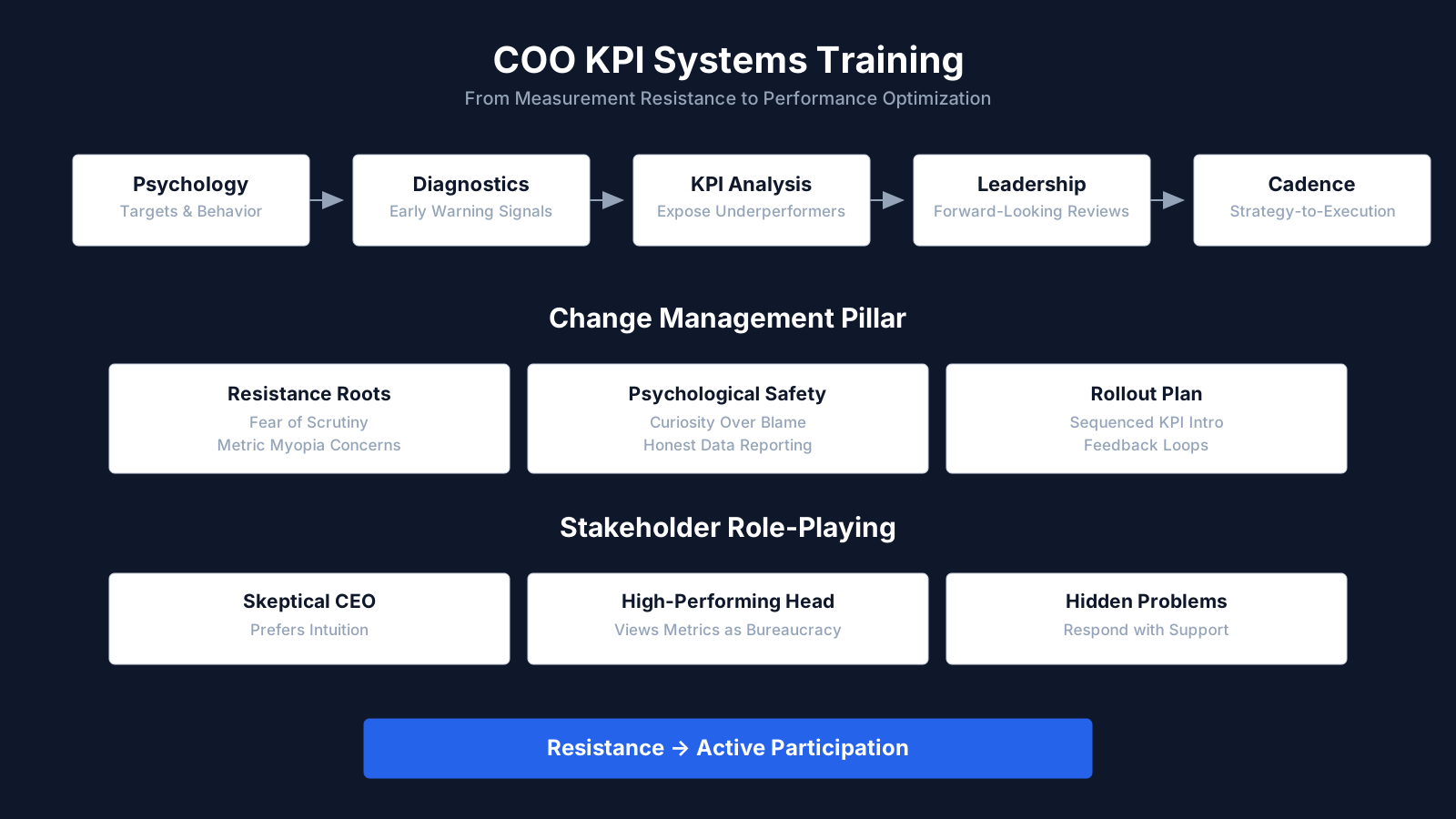
The most common failure point in KPI implementation occurs when operational metrics become disconnected from the strategic narrative. A COO might proudly report a six percent improvement in manufacturing throughput, only to discover that the resulting inventory buildup is now depressing cash flow and straining warehousing capacity. COO KPI Systems and Performance Optimization Training directly addresses this alignment gap by introducing structured cascading methodologies such as the Balanced Scorecard and the Objectives and Key Results framework. These approaches force a logical linkage: if the corporate objective is to be the most reliable supplier in the industry, then operational KPIs must reflect on-time delivery, defect rates, and supply chain resilience rather than standalone cost per unit.
Effective alignment also requires the COO to engage in a disciplined translation exercise, converting abstract strategic themes into tangible metrics for each function. A strategy pillar like “operational agility” needs to be broken down into measurable behaviors such as changeover time in manufacturing, deployment frequency in IT, or average time-to-fill for critical roles in HR. Training programs guide COOs through this decomposition, often using KPI trees that start with a top-level economic driver and branch out into the operational levers that influence it. The visual nature of a KPI tree helps the broader leadership team understand interdependencies and prevents sub-optimization where one department’s success metric becomes another’s bottleneck.
Beyond the design of the KPI cascade, COO KPI Systems and Performance Optimization Training emphasizes the governance required to maintain alignment over time. Markets shift, customer expectations evolve, and internal capabilities mature; a KPI system that was perfectly attuned to strategy three years ago may now be measuring the wrong things. The COO must institutionalize a regular cadence of review—not to constantly change metrics, which breeds confusion, but to challenge whether the existing indicators still capture the performance dimensions that matter most. This reflective practice separates operationally excellent companies from those that merely run fast in the wrong direction.
Integrating COO KPI Systems and Performance Optimization Training into Daily Operations
For KPI systems to influence behavior, they must be woven into the fabric of daily work rather than confined to monthly PowerPoint decks. COO KPI Systems and Performance Optimization Training explores the behavioral and cultural mechanisms that transform a measurement framework into a living management practice. Visual management boards, daily huddles, and real-time digital dashboards all serve to make performance salient, but the training emphasizes that the critical ingredient is the quality of the conversation that occurs around the data. When a team stands in front of a KPI board, the conversation must shift from reporting numbers to problem-solving and action planning.
One of the most effective techniques taught is the practice of “go and see” combined with KPI review. Instead of discussing a rising defect rate in a conference room, the COO and relevant managers go to the production line, the call center, or the software development pod to observe the context behind the number. This approach, rooted in Lean and Toyota Production System philosophy, ensures that KPIs remain connected to the actual work and that improvement ideas emerge from those closest to the process. Performance optimization training reinforces that the COO’s presence at the gemba signals that metrics are not tools for blame but catalysts for collective learning.
Digital tools have dramatically expanded the possibilities for integrating KPIs into daily workflows. Modern COOs can configure alerts that notify process owners when a leading indicator crosses a predetermined threshold, triggering a pre-planned response protocol. However, training underscores that technology is an enabler, not a substitute for managerial judgment. When every minor deviation triggers an alert, the organization risks alert fatigue, where people either ignore notifications or react impulsively without understanding root causes. COO KPI Systems and Performance Optimization Training equips leaders to set appropriate control limits and design escalation paths that preserve attention for the variances that genuinely threaten operational integrity.
Measuring the ROI of COO KPI Systems and Performance Optimization Training Initiatives
Executives frequently ask for a quantifiable return on investment before committing budget to KPI infrastructure and leadership training. This question is fair but requires nuance, because the benefits of a mature performance optimization capability multiply over time and often manifest in cost avoidance rather than immediate revenue gains. COO KPI Systems and Performance Optimization Training helps leaders articulate this ROI by connecting measurement maturity to specific operational improvements such as reduced downtime, lower employee turnover, faster project completion, and fewer customer escalations. The calculation typically involves comparing the trailing cost of operational failures before the system was implemented against performance after maturation.
One method for estimating the value of KPI and training investments is to map the cost of common operational blind spots. For instance, if an organization lacks a leading indicator for supply chain risk, it may discover a supplier failure only when inventory runs out, incurring expedited shipping fees and lost production hours. By implementing an on-time delivery KPI from tier-two suppliers and the training to interpret it, the COO can prevent such disruptions. The ROI is the avoided cost of those disruptions minus the investment in the KPI system and training. Over a two-year period, the cumulative effect of multiple such improvements often far exceeds the initial outlay.
Additionally, the ROI extends to intangible but critical assets such as organizational alignment and decision-making speed. When a leadership team shares a common set of operational metrics with agreed-upon definitions and targets, meetings become shorter and more decisive. Instead of debating whose data is correct, leaders use the time to solve problems. This efficiency gain can be partially quantified by surveying meeting effectiveness before and after the implementation of a standardized KPI system. More profoundly, the confidence that the board and investors gain from a transparent, data-driven operating rhythm can lower the company’s perceived risk and, in publicly traded entities, potentially influence valuation multiples. Performance optimization training helps COOs build this narrative for their stakeholders, transforming the KPI system from a cost center into a demonstration of operational maturity.
Designing a KPI Architecture that Covers the Full Operational Spectrum
A COO’s purview is exceptionally broad, and any KPI system that attempts to capture performance must reflect this diversity without becoming unwieldy. The art of COO KPI design lies in selecting a limited set of indicators that collectively represent the health of the entire operation. A common framework organizes KPIs across five domains: quality, speed, dependability, flexibility, and cost. Quality metrics might include first-pass yield or error rates in transaction processing. Speed is captured through lead times, cycle times, and time-to-market for new products. Dependability tracks on-time delivery and schedule adherence, while flexibility measures the organization’s ability to respond to demand fluctuations or to customize output for key clients. Cost metrics encompass unit cost, overhead ratios, and asset utilization.
This five-domain model prevents the common mistake of over-indexing on cost-based measures. When a COO focuses primarily on cost reduction, operational decisions may inadvertently degrade quality, extend lead times, or reduce the organization’s ability to serve variable customer needs. The resulting damage to brand reputation and customer loyalty can far outweigh the temporary margin improvement. A well-designed architecture acknowledges trade-offs explicitly. Performance optimization training often uses simulation exercises where COOs must make resource allocation decisions and then see the ripple effects across quality, speed, and dependability indicators, reinforcing the need for balanced perspectives.
Another essential design consideration is the time horizon of each KPI. Operational KPIs can be grouped into real-time, short-term, and long-term categories. Real-time KPIs such as machine throughput or website conversion rates enable immediate adjustments. Short-term KPIs, reviewed daily or weekly, include labor efficiency and project milestone achievement. Long-term KPIs, assessed quarterly or annually, cover employee engagement trends, safety culture indices, and progress on strategic initiatives. COO KPI Systems and Performance Optimization Training teaches leaders to build review rhythms that match the natural cadence of each metric, avoiding the trap of treating a long-term indicator like employee development with the same daily intensity as a production count, which would distort its meaning and lead to superficial interventions.
Essential Summary of KPI Architecture Design
- Five-Domain KPI Framework
- A robust KPI architecture distributes indicators across quality, speed, dependability, flexibility, and cost, ensuring that no single dimension, especially cost reduction, dominates strategic decision-making and distorts operational priorities.
- Avoiding Cost-Centric Bias
- Focusing exclusively on cost-based metrics often erodes product quality, lengthens delivery cycles, and stifles adaptability, inflicting lasting damage on brand equity and customer retention that far outweighs any short-term margin improvement.
- Explicit Trade-Off Acknowledgment
- An effectively designed KPI architecture explicitly acknowledges the inherent trade-offs among performance domains; simulation exercises then enable operations leaders to visualize how resource reallocation triggers cascading impacts on quality, speed, and dependability before decisions are locked in.
- Time Horizon Categorization
- Operational KPIs must be segmented into real-time, near-term, and long-range categories to reflect their natural feedback cycles, preventing the misapplication of daily performance pressure to indicators that require patience and strategic gestation.
- Matching Review Rhythms to Metrics
- Aligning review cadences with the temporal nature of each KPI preserves metric integrity and averts shallow interventions; examining a developmental metric such as employee capability growth on a daily basis would yield misleading signals and undermine genuine progress.
Leading and Lagging Indicators in the COO’s Toolkit
The distinction between leading and lagging indicators is one of the most powerful concepts a COO can deploy, yet it is frequently misunderstood or misapplied. Lagging indicators measure outcomes that have already occurred: quarterly revenue, customer churn rate, total recordable incident rate for safety, or month-end inventory accuracy. They are essential for accountability and historical performance evaluation, but they provide little opportunity for proactive course correction. Leading indicators, on the other hand, are predictive measures that signal future performance, such as the number of qualified leads in the sales pipeline, the percentage of preventive maintenance completed on schedule, or the results of employee pulse surveys that precede turnover trends.
COO KPI Systems and Performance Optimization Training devotes considerable attention to the process of identifying high-quality leading indicators for each critical operational function. The ideal leading indicator satisfies three criteria: it is measurable without excessive burden, it has a demonstrable and consistent statistical relationship with the lagging outcome, and it can be influenced by management action within a relevant time window. For example, in a call center, a leading indicator for customer satisfaction might be the average handle time of complex issue types or the first-contact resolution rate. If handle time drops too low because agents are rushing, it may predict a future decline in satisfaction scores. The COO can then intervene by adjusting coaching or staffing before the lagging metric reflects the damage.
The real power of this approach emerges when the COO maps causal chains across the enterprise. A dip in employee engagement survey scores in the engineering department may be a leading indicator for future quality escapes, which in turn is a leading indicator for customer warranty claims and, ultimately, revenue erosion. By training operations leaders to read these chains forward, the COO fosters a culture of prevention rather than firefighting. Performance optimization training includes exercises where participants trace historical failures backward through the chain of leading indicators that, had they been heeded, would have provided early warning. These retrospective analyses build the intuition for designing forward-looking measurement systems.
Performance Optimization: From Measurement to Continuous Improvement
Measurement alone does not improve performance. The true value of a COO’s KPI system is unlocked only when it is coupled with a disciplined improvement methodology that translates insights into action. Lean Six Sigma provides one of the most robust frameworks for this translation, with its structured DMAIC cycle and focus on reducing variation. However, the COO does not need to be a master black belt to lead performance optimization; rather, they need to create the conditions in which systematic problem-solving flourishes. This means ensuring that teams have clear problem statements derived from KPI data, access to appropriate analytical tools, and the authority to implement solutions within defined boundaries.
Performance optimization training for COOs emphasizes the role of the executive as a coach and enabler of improvement, not the primary problem-solver. When a COO personally dives into every operational issue, the organization becomes dependent on their individual brilliance and never builds the collective muscle of continuous improvement. The more scalable approach is for the COO to establish a standard problem-solving process, teach it to their direct reports, and insist that every KPI-based performance conversation culminates in a concrete countermeasure with an owner and a deadline. Over time, this habit compounds, and the organization develops a rapid-learning capability that competitors find difficult to replicate.
Technology plays an increasingly important role in accelerating the measurement-to-improvement loop. Advanced analytics and machine learning can detect patterns in KPI data that human reviewers might miss, such as subtle correlations between shift handover practices and quality deviations. However, COOs must be cautious about delegating the interpretation of data entirely to algorithms. Performance optimization remains a fundamentally human endeavor that requires contextual understanding, empathy for the people doing the work, and wisdom to discern which statistical correlations represent causal relationships worth acting upon. The COO’s training must therefore encompass not only the technical aspects of data analytics but also the critical thinking skills to question algorithmic outputs and to integrate them with on-the-ground observations.
Core Insights on Performance Optimization
- Measurement to improvement linkage
- A KPI system yields tangible business impact only when paired with a rigorous improvement methodology like Lean Six Sigma that transforms data insights into concrete, high-impact actions.
- COO as coach and enabler
- The COO’s greatest leverage comes from embedding a consistent problem-solving framework and empowering teams to create and execute solutions, rather than personally extinguishing every operational fire.
- Building collective improvement capability
- By insisting that every KPI discussion concludes with a specific countermeasure, a named owner, and a hard deadline, the COO builds a scalable, difficult-to-replicate capability for rapid organizational learning.
- Technology’s accelerating role
- Advanced analytics and machine learning can detect subtle patterns in KPI data, but the COO must ensure algorithmic outputs are critically examined and integrated with contextual human judgment to avoid blind spots.
- Critical thinking over automation
- Performance optimization remains a deeply human endeavor that demands empathy, contextual awareness, and the wisdom to distinguish genuine causal drivers from spurious statistical correlations.
Building a KPI-Driven Operating Culture Across the Organization
A sophisticated KPI system designed in the executive suite will fail if the broader organization views it as a surveillance mechanism or a bureaucratic burden. COO KPI Systems and Performance Optimization Training places culture at the center of the implementation strategy, recognizing that metrics shape behavior only to the extent that people trust the system and feel psychologically safe to share both good and bad results. The COO’s behavior sends the most powerful signal. If a COO reacts punitively when a KPI trends negatively, managers will quickly learn to game the numbers or to hide problems until they become crises. If instead the COO responds with curiosity and a genuine interest in learning, the organization will gradually embrace transparency.
Building this culture requires deliberate translation of the KPI system into terms that resonate at each level of the enterprise. A frontline technician may not be motivated by a corporate-level operating margin percentage, but they can engage deeply with a metric like “mean time between failures on my line” or “number of safety observations submitted by my team per week.” The COO must oversee a cascading communication campaign that connects every departmental and individual KPI back to the company’s purpose and strategic goals. When a warehouse associate understands that their pick accuracy rate directly affects a customer’s ability to serve their own clients, the metric ceases to be an abstract number and becomes a source of professional pride.
Recognition and ritual also play essential roles. Performance optimization training recommends that COOs institute regular forums where teams share improvement stories driven by KPI data, celebrating not just the outcomes but the disciplined thinking behind them. These forums create social reinforcement for the behaviors the KPI system is designed to encourage and provide a platform for cross-pollination of ideas. Over time, the organization develops a shared language of performance, where phrases like “what does the data say?” or “let’s check our leading indicators” become part of the natural conversation rather than imposed management jargon.
Training Methodologies for COO Performance Mastery
Developing the competencies to design, implement, and optimize KPI systems is not a one-time learning event but an ongoing developmental journey. Effective COO KPI Systems and Performance Optimization Training blends conceptual frameworks with intense experiential learning. Case-based simulations, drawn from the general patterns of manufacturing, services, and technology sectors rather than any single proprietary source, allow participants to grapple with the messy realities of incomplete data, conflicting stakeholder demands, and the behavioral consequences of poorly chosen metrics. These simulations compress years of operational experience into concentrated learning cycles, helping COOs recognize patterns they may later encounter in real organizations.
Executive coaching complements formal training by providing a confidential space to reflect on personal leadership challenges related to performance management. A COO might intellectually understand the importance of not overreacting to a single week’s variance, yet find themselves consistently sending anxious emails that undermine their team’s confidence. A skilled coach, drawing on evidence-based practices from behavioral psychology and organizational development, can help the COO recognize these triggers and develop alternative responses that align with their stated commitment to a learning-oriented culture. This integration of technical KPI design with leadership psychology is a hallmark of the most effective training approaches.
Peer learning communities also represent a powerful but underutilized resource. COOs from non-competing industries face remarkably similar challenges: balancing global standardization with local autonomy, transitioning from legacy metrics to real-time dashboards, or convincing a founder-led executive team to embrace data-driven decision-making. Structured peer forums, whether organized through industry associations or professional networks, enable COOs to share what has worked and, perhaps more importantly, what has failed, in a trusted environment. Performance optimization training programs that intentionally facilitate these peer connections yield sustained benefits long after the formal curriculum concludes, as COOs continue to support each other through implementation struggles and leadership transitions.
Core Takeaways on COO Training Methods
- Experiential learning via simulations
- Case-based simulations condense years of operational complexity into concentrated cycles, enabling COOs to refine decision-making when data is incomplete and priorities conflict, all within a safe setting.
- Executive coaching for leadership psychology
- A skilled coach guides COOs to recognize personal triggers, such as overreacting to variances, and to cultivate measured responses that reinforce a learning-oriented culture.
- Peer learning communities for sustained growth
- Structured peer forums bring together COOs from non-competing sectors to candidly exchange both successes and failures, forming a trusted support network that endures long after formal training ends.
Overcoming Common Pitfalls in COO KPI Implementation
Even well-intentioned KPI initiatives can produce negative consequences when underlying design flaws or behavioral dynamics go unaddressed. One of the most pervasive pitfalls is metric fixation, where the pursuit of a target number becomes an end in itself, divorced from the true operational outcome it was meant to represent. A COO might set a goal of reducing average call handling time in customer service, only to find that agents begin terminating calls prematurely or transferring complex issues to other departments, ultimately damaging the customer experience. COO KPI Systems and Performance Optimization Training teaches leaders to anticipate such distortions by pressure-testing metrics with the question, “If people optimize single-mindedly for this number, what might break?”
Another common trap is the proliferation of KPIs. As each function and manager adds their preferred indicators, the system bloats to the point where nothing is truly prioritized, and the operational review becomes a numbing recitation of hundreds of data points. COOs must exercise disciplined curation, limiting the organization to a vital few metrics at each level. The rule of thumb often cited in training programs is that any individual or team should be accountable for no more than five to seven KPIs at a time, with the understanding that other indicators may be monitored diagnostically but not tied to performance evaluation. This constraint forces rigor in selecting what truly matters and protects cognitive bandwidth for deep problem-solving rather than superficial reporting.
Data quality and integrity issues can silently undermine the entire system. If front-line managers do not trust the accuracy of the data feeding the KPI dashboards, they will revert to their gut instincts for decision-making, and the cultural shift toward data-driven operations will stall. COOs must therefore invest early in data governance structures, clear definitions for every metric, and audit processes that validate data integrity. This investment includes making it safe for employees to flag data anomalies without fear of being blamed for the underlying performance issue. When a production supervisor can say, “I don’t believe this scrap rate number because we had a sensor calibration error,” and be thanked for the diligence rather than reprimanded for the error, the KPI system gains credibility and becomes self-correcting over time.
The Future of COO KPI Systems and Performance Optimization
As artificial intelligence and automation reshape industries, the nature of operational performance measurement is evolving rapidly. The COO of the near future will oversee a hybrid workforce of humans and digital agents, requiring KPI systems that capture the performance of algorithms alongside people. Metrics such as model accuracy, data pipeline uptime, and algorithmic bias indicators will join traditional operational measures on the COO’s dashboard. This convergence demands that COO KPI Systems and Performance Optimization Training evolve to include digital ethics, algorithmic transparency, and the management of automated decision systems. The COO who can integrate these dimensions without losing sight of the human elements of culture and engagement will define the next generation of operational leadership.
Sustainability and environmental, social, and governance metrics are also moving from the periphery to the core of operational responsibility. A COO in a manufacturing firm must now track not only unit cost and quality but also carbon emissions per unit produced, water usage, and supplier compliance with labor standards. These metrics are often complex to measure and require collaboration across the entire value chain, far exceeding the scope of traditional internal KPI systems. Performance optimization training is adapting to equip COOs with the cross-boundary collaboration skills and the systems thinking needed to manage these multi-stakeholder metrics, which increasingly influence investor decisions and regulatory standing.
Ultimately, the COO who masters KPI systems and performance optimization does not just keep the organization running; they transform it into an adaptive, learning enterprise that can sense and respond to change faster than its competition. This transformation demands continuous personal development for the COO themselves—an ongoing commitment to refining their own data literacy, coaching skills, and strategic judgment. In an era where operational excellence can be the decisive competitive advantage, COO KPI Systems and Performance Optimization Training is not an item on a curriculum but a career-long discipline that separates truly outstanding operating leaders from those who merely manage the status quo.
Core Takeaways on Future COO Metrics
- Hybrid workforce performance metrics
- COOs need frameworks that blend algorithmic indicators like accuracy and bias audits with traditional human output data to accurately gauge blended workforce effectiveness.
- Sustainability as a core operational metric
- Carbon footprint tracking, supplier labor practices, and broader ESG metrics are now critical levers for securing investor trust and maintaining regulatory approval across markets.
- Cross-boundary collaboration skills
- Developing systems thinking enables COOs to navigate multi-stakeholder demands and align performance indicators that span from raw material sourcing through end-customer delivery.
- Career-long learning discipline
- Transforming an organization into an adaptive enterprise depends on the COO’s persistent investment in data literacy, coaching skills, and strategic acumen to keep KPI systems relevant.
Advance Your Career with Professional Certification
Professional project management certification provides a structured, measurable credential that accelerates career advancement by positioning individuals ahead of peers in recruitment and promotion decisions. Earning recognition as a certified project manager validates applied knowledge in scope control, stakeholder communication, and risk mitigation, which directly strengthens professional credibility with executives and clients who require assurance of methodical delivery. This verified competence translates into organizational performance gains—certified managers consistently reduce cost variances and schedule slippage, enabling teams to meet strategic targets with greater predictability and operational discipline.
Earning a professional product management certification validates your ability to drive product strategy with disciplined frameworks rather than intuition alone, which directly accelerates career progression into senior roles. Structured credentials like a product owner certification equip you with standardized backlog management, stakeholder alignment, and value-driven prioritization techniques that reduce costly missteps in delivery. This formal recognition not only strengthens your professional credibility during hiring and promotion decisions but also lifts organizational performance by embedding consistent, measurable product practices across teams.
Earning an HR management certification validates expertise in aligning talent strategy with operational metrics, ensuring that human capital initiatives directly support business-wide performance optimization. A certified HR manager can systematically connect workforce capability gaps to relevant KPIs, translating employee data into actionable insights that help COOs and senior leaders refine throughput, quality, and cost-efficiency targets. This integrated capability strengthens organizational agility and makes the HR function a credible driver of measurable operational improvements.