Every project eventually forces a choice about how the work should be organized, reviewed, and delivered. The debate between Agile vs Waterfall: Key Differences, Pros and Cons, and When to Use Each can shape budgets, team morale, and customer satisfaction long before the first deliverable appears. Some teams lean toward a linear, documentation-heavy sequence, while others prefer short cycles with feedback loops built into the working rhythm. This article explains what each approach actually looks like in practice, where they differ, and how to decide which one fits a specific piece of work.
Many project leaders first encounter these two terms through software development, but the underlying ideas apply far beyond technology. Marketing campaigns, manufacturing changes, organizational redesigns, and even event planning can be approached through either a structured sequence or an adaptive cycle. The real challenge is not choosing a label, but understanding the assumptions each method makes about uncertainty, people, and value delivery. Once those assumptions are clear, the choice becomes much easier to defend.
Agile vs. Waterfall: Key Differences at a Glance
| Dimension | Key Insight |
|---|---|
| Strategic Tradeoff | Selecting Agile or Waterfall shapes budget allocation, team engagement, and customer confidence well before delivery begins. |
| Waterfall Method | Waterfall follows a sequential, documentation-intensive lifecycle in which each phase produces formal artifacts that require approval from architects, security teams, and business owners. |
| Iterative Agile Delivery | Agile teams release small, functional increments in recurring iterations, embedding feedback loops that allow course correction rather than deferring all delivery to the final milestone. |
| Contextual Uncertainty | The comparison remains essential because projects vary widely in uncertainty, making a single framework unsuitable across all initiatives. |
| Audit and Oversight | Waterfall's linear structure creates a clear audit trail and simplifies progress reporting to executives and external stakeholders. |
| Common Failure Mode | A frequent failure occurs when stakeholders approve requirements without fully understanding downstream implications, then request substantial changes during user acceptance testing. |
| Agile Manifesto | The Agile Manifesto prioritizes individuals and interactions, working software, customer collaboration, and responsiveness to change over rigid processes and fixed plans. |
| Core Agile Practices | Sprint teams refine product backlogs, hold daily standups, demo completed work to stakeholders, conduct retrospectives, and apply practices such as test-driven development and continuous integration. |
Agile vs Waterfall: Key Differences, Pros and Cons, and When to Use Each
The core methodology differences between agile and waterfall start with how each approach treats change and time. Waterfall assumes that requirements can be understood well enough upfront to plan the work in phases, while Agile assumes that understanding evolves through delivery and feedback. Neither assumption is universally true, which is why the comparison remains useful. The two approaches also differ in how they measure progress, how they involve customers, and how they allocate responsibility across the team.
In a waterfall model, progress is measured by completing predefined stages such as requirements, design, development, testing, and deployment. Each stage typically has a formal sign-off before the next one begins. In an Agile model, progress is measured by working increments that can be reviewed by stakeholders at the end of short timeboxes. This difference sounds simple, but it changes nearly every conversation the team has about scope, quality, and risk.
Another foundational distinction is the role of documentation. Waterfall often treats documentation as a primary deliverable that locks in decisions and creates a contract between teams. Agile treats documentation as a support tool that should be just sufficient to maintain alignment without slowing down feedback. Both can produce excellent results, but they optimize for different kinds of failure. Waterfall optimizes against scope ambiguity and regulatory drift, while Agile optimizes against building the wrong product through delayed discovery.
The Basic Definitions Behind Both Approaches
Waterfall is a sequential project management method in which the project flows downward through a series of phases. The name comes from the idea that work cascades from one phase to the next, and reversing direction is costly once a phase is complete. Requirements are usually gathered early, then translated into design specifications, then built, then tested, and finally handed over to the customer or operations team. This structure creates predictability for teams that must coordinate with external dependencies, contracts, or compliance calendars.
Agile is an umbrella term for a family of iterative and incremental approaches. Instead of delivering the whole product at the end, Agile teams deliver small slices of functionality in recurring cycles, often called sprints or iterations. Feedback from each cycle informs the next one, allowing the team to adjust priorities and design choices without waiting for a final review. Agile values working software, customer collaboration, responding to change, and individuals and interactions over rigid processes and tools.
Why the Comparison Still Matters
Project leaders often feel pressure to choose one framework and apply it everywhere, but the comparison matters because different projects carry different levels of uncertainty. A highly regulated infrastructure upgrade may need the audit trail and phase gates that Waterfall provides. A consumer-facing web application may need the rapid feedback loops that Agile enables. Understanding the trade-offs prevents teams from applying a method as a default rather than as a deliberate choice.
The comparison also matters because hybrid models have become common in practice. Many organizations use Waterfall for high-level planning and budgeting, then use Agile practices for delivery within certain phases. That hybrid pattern is not a failure of either method, but a recognition that organizational governance and delivery rhythm often operate at different levels. The key is to avoid mixing them in a way that creates confusion about who decides what and when.
Summary of Methodology Differences
- Change and time assumptions
- Waterfall operates on the premise that requirements can be captured with enough certainty to support detailed upfront planning and linear phase execution, whereas Agile is built on the assumption that understanding emerges and sharpens through repeated delivery and feedback.
- Progress measurement approach
- Waterfall tracks progress by completing and approving predefined stages such as requirements, design, development, and testing, while Agile tracks progress through working increments that stakeholders inspect and validate at the end of each short timebox.
- Key optimization priorities
- Waterfall prioritizes control over scope ambiguity and regulatory drift by locking requirements early and managing formal change, whereas Agile prioritizes avoiding the risk of building the wrong product by accelerating discovery and adapting direction throughout delivery.
- Waterfall's sequential model
- Waterfall follows a strictly sequential project management approach in which work moves through defined phases, from initial requirements gathering to final handover to the customer or operations team, with each phase completed before the next begins.
- Agile's iterative delivery
- Agile teams deliver small, working increments of functionality in recurring cycles, typically sprints or iterations, enabling continuous value delivery rather than deferring the entire product to a single release at the end of the project.
What Is the Waterfall Model?
The waterfall project management methodology is best understood as a stage-gate process where each phase must be completed before the next one begins. In its purest form, the project moves through requirements analysis, system design, implementation, testing, deployment, and maintenance. Each phase produces specific outputs that serve as inputs for the next phase. This structure creates a strong audit trail and makes progress easy to report to executives or external stakeholders.
One of the defining characteristics of Waterfall is its emphasis on upfront planning. Teams spend considerable time at the beginning gathering requirements, clarifying assumptions, and documenting specifications. That investment is intended to reduce rework later, because changes become more expensive as the project moves downstream. The logic is sound when requirements are stable and the problem domain is well understood, but it becomes brittle when customers are still discovering what they need.
Another hallmark is the separation of roles by phase. Business analysts may own the requirements phase, architects own the design phase, developers own the build phase, and testers own the verification phase. This specialization can be efficient for large programs with hundreds of contributors, but it can also create handoff delays and communication gaps. Teams that succeed with Waterfall typically invest in strong documentation and formal review meetings to manage those handoffs.
Typical Phases in a Waterfall Lifecycle
The requirements phase focuses on capturing what the system or deliverable must do. Stakeholders are interviewed, current processes are analyzed, and a requirements document is produced. That document may go through several rounds of review before it is approved. The goal is to establish a baseline for scope, cost, and schedule before significant design work begins.
Design follows requirements and translates them into technical or operational specifications. For a software project, this might include system architecture, data models, interface designs, and security controls. For a business process change, this might include workflow diagrams, role definitions, and performance targets. The design phase often produces formal documents that require sign-off from technical architects, security teams, and business owners.
Implementation is where the actual construction or build happens. Teams follow the approved design and produce the product or service according to specifications. Because the design is expected to be complete, the implementation phase often runs with less ambiguity than in iterative methods. Testing then verifies that the built result matches the requirements and design. Deployment moves the finished product into the live environment, and maintenance handles issues that appear after release.
Waterfall in Practice
Waterfall remains common in industries where change control is formal and compliance evidence is required at each stage. Government contracts, aerospace engineering, construction, and medical device development often default to sequential processes for these reasons. A typical example is a payroll system replacement in a highly regulated environment, where every calculation rule must be approved before coding starts. In that context, the cost of discovering a payroll error after launch justifies the upfront documentation effort.
The method can also work well when the team is distributed across multiple vendors or time zones. Phase-based handoffs give each vendor a clear contract and acceptance criteria. However, the same structure can create a false sense of certainty when requirements are actually unstable. A common failure pattern occurs when stakeholders approve a requirements document without fully understanding the implications, only to request significant changes during user acceptance testing.
What Is Agile Project Management?
The agile project management framework is built on iterative delivery, continuous feedback, and adaptive planning. Agile teams break work into small increments that can be completed within a fixed timebox, typically one to four weeks. At the end of each increment, the team demonstrates working results to stakeholders and gathers feedback. That feedback shapes the priorities for the next increment, which means the plan is adjusted regularly instead of being fixed at the start.
Agile is not a single methodology but a set of principles defined in the Agile Manifesto. The manifesto emphasizes individuals and interactions over processes and tools, working software over comprehensive documentation, customer collaboration over contract negotiation, and responding to change over following a plan. Those values do not eliminate process, documentation, contracts, or planning. They simply shift the default emphasis toward faster learning and closer collaboration.
Teams often choose a specific Agile framework to operationalize those values. Scrum is the most common, with defined roles such as product owner, scrum master, and development team. Kanban focuses on visualizing work and limiting work in progress. Other approaches like Extreme Programming and Lean Software Development add specific engineering and flow practices. The choice of framework matters less than the team's ability to inspect and adapt continuously.
The Agile Manifesto and Values
The Agile Manifesto was written in 2001 by a group of software practitioners who wanted to find a better way to build software. It does not prescribe a process, which sometimes causes confusion. Instead, it describes a mindset that favors short feedback loops, frequent delivery, and close collaboration with customers. Many teams adopt Agile ceremonies without adopting the underlying values, which can lead to mechanical compliance rather than real agility.
The first value, individuals and interactions over processes and tools, means that communication problems cannot be solved simply by adding another tool or workflow. The second value, working software over comprehensive documentation, means that a demonstrable product increment is the primary measure of progress. The third value, customer collaboration over contract negotiation, encourages shared ownership of outcomes instead of adversarial handoffs. The fourth value, responding to change over following a plan, recognizes that plans are useful but must be treated as provisional.
Common Agile Frameworks
Scrum provides a structured yet lightweight framework with fixed roles, events, and artifacts. Teams work in sprints, plan a sprint backlog, hold daily standups, review completed work with stakeholders, and run retrospectives to improve their process. The product owner maintains the product backlog and prioritizes items based on value and risk. The scrum master facilitates the process and helps the team remove obstacles.
Kanban is often used when work arrives unpredictably or when the team needs flexibility around timeboxes. Work items move across a board from left to right, and the team limits how many items can be in progress at any given stage. This makes bottlenecks visible and encourages continuous flow. Kanban does not mandate sprints or specific roles, which makes it easier to adopt gradually in operations or support environments.
Extreme Programming, often abbreviated as XP, emphasizes technical practices such as test-driven development, pair programming, continuous integration, and frequent releases. Lean Software Development focuses on eliminating waste, amplifying learning, and delivering as fast as possible. Regardless of the specific framework, the shared goal is to reduce the time between making a decision and seeing the consequences of that decision.
Essential Agile Management Insights
- Iterative delivery with feedback
- Agile teams deliver work in short, timeboxed increments of one to four weeks, using structured stakeholder feedback at each review to reprioritize the backlog and adapt the next iteration's scope.
- Manifesto emphasis on collaboration
- The Agile Manifesto places greater value on individuals and interactions, working software, customer collaboration, and responsiveness to change than on rigid process adherence, extensive documentation, contract negotiation, and fixed project plans.
- Core agile team practices
- Agile teams work in fixed-length sprints that integrate backlog refinement, daily standup meetings for synchronization, stakeholder reviews to validate outcomes, and retrospectives to improve team processes, forming a continuous cycle of adaptation.
Key Differences Between Agile and Waterfall
The differences between agile and waterfall methodologies become most visible in planning, scope control, customer involvement, team structure, and risk management. Waterfall treats the project plan as a commitment that should be protected against unnecessary changes. Agile treats the plan as a living artifact that changes as new information emerges. This single difference cascades into every other aspect of the work.
Scope is another major point of divergence. In Waterfall, scope is typically fixed after the requirements phase, and time and cost are estimated from that fixed scope. In Agile, time and cost are often fixed through iterations and team capacity, while scope is variable and reprioritized continuously. That inversion is one of the hardest concepts for organizations to internalize when they transition from one method to the other.
Customer involvement also differs. Waterfall engages the customer heavily at the beginning and at the end, with less frequent involvement during the build. Agile engages the customer throughout the process, often through product demos, backlog refinement, and release planning. This continuous involvement can reduce the risk of delivering the wrong product, but it also requires a higher level of customer availability and decision-making capacity.
Scope and Planning Differences
Waterfall planning is often called predictive planning because it attempts to predict the full path of the project before execution begins. The work breakdown structure, schedule, and budget are derived from a detailed requirements baseline. Changes to that baseline go through a formal change control process. This works well when the cost of change is high and the team has high confidence in the initial requirements.
Agile planning is sometimes called adaptive planning because the near-term plan is detailed while the longer-term plan remains intentionally rough. Teams plan in layers, starting with a product vision, then a release plan, then iteration plans. The iteration plan is firm for the current timebox, but the release plan can shift as the team learns more. This layered approach balances the need for direction with the reality of uncertainty.
Customer Involvement and Feedback
In Waterfall, customer feedback is concentrated at the requirements review, design review, and user acceptance testing stages. Between those milestones, the customer may not see the product at all. That can be efficient for customers who have limited time, but it also increases the chance that the final product will not match their evolving expectations. The gap between initial requirements and final delivery can be months or even years.
In Agile, customer feedback is embedded into the rhythm of delivery. The product owner represents customer interests on a daily basis, and stakeholders are invited to sprint reviews to inspect working increments. This constant feedback loop helps the team correct course before small misunderstandings become large failures. The trade-off is that the customer must be willing to participate regularly and make timely decisions about priorities.
Change Management and Flexibility
Waterfall manages change through formal requests, impact analysis, and approval boards. This process protects the baseline and prevents uncontrolled scope creep. However, it can also slow down legitimate improvements and create an adversarial dynamic between the project team and the customer. When every change request feels like a negotiation, stakeholders may stop raising concerns until it is too late.
Agile assumes that change will happen and builds a mechanism for absorbing it. The product backlog is constantly revised, and new information can be prioritized in the next iteration. This does not mean Agile teams accept every change without cost. It means they make the trade-off visible and decide together which work should be deferred or replaced. The result is often a more realistic conversation about value and effort.
Team Structure and Collaboration
Waterfall often relies on specialized teams that hand work from one functional group to another. A business analyst may pass requirements to a designer, who passes specifications to a developer, who passes code to a tester. This structure can be efficient for large, stable organizations, but it can also create silos and delay feedback. Communication tends to be formal and document-centric to ensure the next team has enough detail to continue.
Agile favors cross-functional teams that include all the skills needed to deliver a working increment. Developers, testers, designers, and product experts work together daily. This reduces handoff delays and creates shared ownership of quality. It also requires team members to step outside narrow job descriptions and collaborate more closely than they might be used to in a traditional hierarchy.
Documentation and Communication
Waterfall treats documentation as a primary output. Requirements documents, design specifications, test plans, and user manuals are formal deliverables that must be approved and archived. That documentation can be valuable for auditing, training, and long-term maintenance. The downside is that documentation can become an end in itself, absorbing time that could be spent validating the actual product.
Agile treats documentation as a tool to support collaboration and continuity. Teams still document architectural decisions, APIs, and operational procedures, but they avoid producing documents that are unlikely to be read. The emphasis shifts from comprehensive documentation to just enough documentation, supported by direct communication and working software. This can reduce overhead, but it may create gaps for future maintainers if the team leaves or the product outlives the original crew.
Delivery Cadence and Risk Profile
Waterfall delivers value at the end of the project, or at major milestones if the project is broken into phases. This creates a long period during which stakeholders cannot see working results. The risk is that defects, misunderstandings, or changing market conditions remain hidden until late in the project. When problems appear at that point, the cost of fixing them is much higher than it would have been earlier.
Agile delivers value in small, regular increments. Each sprint or iteration should produce a potentially releasable piece of functionality. This cadence reduces the time between building something and getting feedback on it. Risk is discovered earlier, which allows the team to respond before the project has consumed its entire budget. The trade-off is that the product may feel incomplete for a longer period, and stakeholders must tolerate constant change.
Pros and Cons of the Waterfall Model
The advantages and disadvantages of waterfall are closely tied to its predictability and structure. On the positive side, Waterfall provides clear milestones, stable requirements, and a straightforward governance model. On the negative side, it can be slow to respond to change and may deliver a product that no longer fits the business need by the time it is finished. Understanding both sides helps project leaders avoid using Waterfall in the wrong context.
One of the most underappreciated advantages of Waterfall is its clarity for external stakeholders. Executives and customers often appreciate a defined schedule with phase gates and formal approvals. That clarity can make it easier to secure funding, coordinate with procurement, and manage contracts across multiple vendors. A sequential plan also makes it easier to estimate total cost early, even if those estimates carry their own uncertainty.
The main weakness of Waterfall is the assumption that requirements can be fully specified before the team starts building. In many domains, customers do not know what they need until they see something concrete. When that is the case, Waterfall can produce a perfectly executed solution to the wrong problem. The method also tends to push testing to the end, which concentrates risk at the worst possible moment.
Advantages of Waterfall
Waterfall offers a high degree of control over scope, time, and budget once the baseline is approved. The phase gate structure creates natural opportunities for governance and course correction before major investments are made. This is especially useful in regulated industries where evidence of review and approval must be preserved. A well-run Waterfall project can produce a stable, thoroughly documented product that is easy to hand over to an operations team.
The sequential approach also reduces the need for continuous customer involvement. Stakeholders can dedicate time during requirements gathering and then step away while the team builds. For organizations with limited business-side capacity, this can be a practical advantage. The formal documentation also supports knowledge transfer to new team members who join after the original requirements were written.
Waterfall can be effective for projects with fixed contracts or fixed-price agreements. Because the scope is defined upfront, vendors and clients can agree on deliverables and acceptance criteria before work begins. This reduces ambiguity in commercial relationships, though it also creates tension when either side discovers a gap in the original agreement.
Disadvantages of Waterfall
The most obvious disadvantage is the lack of flexibility once the project is underway. A change in market conditions, technology, or business priorities may require a formal change request, impact analysis, and renegotiation. That process can take weeks, during which the project continues building something that may already be outdated. Teams sometimes continue with the original plan because changing course feels more expensive than finishing.
Testing late in the lifecycle creates another risk. Defects found during user acceptance testing may require rework in requirements, design, and code, which is far more expensive than catching the same issue during an early sprint. Waterfall projects also tend to produce large batches of work, which means integration problems often appear when modules are finally combined. The longer the integration phase, the harder it is to isolate the root cause of a defect.
Waterfall can also create a false sense of progress. Teams may report that the design phase is 90 percent complete for weeks, even though no working product exists yet. That status reporting can hide schedule slippage and quality problems until the final phases. Psychologically, this is one reason some organizations have moved away from Waterfall, even for projects that might otherwise benefit from its structure.
Weighing Waterfall's Key Trade-offs
- Stable requirements and clear milestones
- Waterfall establishes a predictable schedule with phase gates and formal approvals, giving executives and customers clear control points for committing funds and aligning contract milestones.
- Early cost estimation advantage
- Because the full scope is defined upfront, Waterfall enables a preliminary total cost estimate early, though the fixed assumptions behind that estimate introduce inherent uncertainty.
- Slow response to change
- Waterfall's rigidity makes it slow to absorb new information, so a project can finish with a product that is already misaligned with shifting business priorities.
- Testing risk at the end
- By deferring testing until the final phase, Waterfall concentrates integration and quality risks at the end, when correcting defects is most expensive and disruptive.
- Strong control when baseline approved
- With an approved baseline, Waterfall gives project managers firm control over scope, schedule, and budget, while a well-executed initiative delivers a fully documented product that transitions smoothly to operations.
Pros and Cons of Agile Methodology
The pros and cons of agile methodology reflect its emphasis on speed, learning, and collaboration. Agile shines when requirements are uncertain and the team needs rapid feedback from real users. It is less effective when the organization cannot provide a dedicated product owner, when regulatory requirements demand heavy documentation, or when the team lacks the maturity to self-organize. The benefits are real, but they are not automatic.
Agile reduces the risk of building the wrong product by delivering small increments and validating them early. A team that releases a minimal version of a feature in the first sprint can gather feedback before investing in a full rollout. That early validation can save significant time and money compared to a Waterfall project that only reveals its product at the end. Agile also improves visibility, because stakeholders can see working results every few weeks instead of relying on status reports.
The trade-off is that Agile demands more from the team and the organization. It requires continuous collaboration, disciplined prioritization, and a willingness to change direction midstream. Some teams struggle with the lack of a fixed end state, while some managers struggle to accept variable scope. Agile also creates a different kind of documentation burden, where the team must maintain just enough documentation without falling back into heavyweight habits.
Advantages of Agile
Agile accelerates feedback, which is one of the strongest predictors of project success in uncertain environments. When a product owner sees a working increment every sprint, they can spot misunderstandings before they become costly defects. That rapid feedback loop also helps teams respond to competitive pressure or changing customer behavior. A feature can be reprioritized or dropped entirely if early results show it is not delivering value.
Continuous delivery also creates a natural rhythm of progress. Teams that consistently deliver working increments build trust with stakeholders and maintain momentum. That trust can be more valuable than any project plan, because it enables honest conversations about trade-offs. Agile also encourages cross-functional collaboration, which reduces the handoff delays that often plague large Waterfall projects.
Another advantage is the emphasis on continuous improvement through retrospectives. Agile teams regularly reflect on their process and adjust how they work. That structured reflection can uncover bottlenecks, communication breakdowns, and quality issues that would otherwise persist. Over time, a mature Agile team can improve both speed and quality simultaneously, something that is harder to achieve in a rigid sequential process.
Disadvantages of Agile
Agile can be exhausting if the organization expects constant velocity without adjusting priorities or capacity. The pressure to deliver working software every sprint can lead to technical shortcuts, accumulation of technical debt, and burnout if not managed carefully. Teams may also struggle when the product owner is not empowered to make decisions or when stakeholders expect a fixed list of features by a fixed date.
Agile is also less suitable for projects with strict regulatory requirements that demand extensive documentation before work begins. While Agile can incorporate documentation, the emphasis on working results over comprehensive specs can conflict with compliance processes that require formal approval gates. In such environments, a pure Agile approach may create audit gaps and expose the organization to regulatory risk.
Team maturity matters more in Agile than in Waterfall. Self-organizing teams need facilitation, trust, and clear boundaries to function well. Without those conditions, Agile ceremonies can become hollow rituals and the backlog can become a dumping ground for unrefined requests. Organizations that adopt Agile as a way to reduce management overhead often find that it requires more active leadership, not less.
When to Use Agile vs Waterfall
The question of when to use agile vs waterfall cannot be answered with a simple rule, but certain project characteristics point strongly toward one method or the other. High uncertainty, evolving requirements, and a need for frequent customer feedback favor Agile. Fixed scope, regulated environments, and low tolerance for midstream change favor Waterfall. Many projects fall between those poles, which is why hybrid approaches have become so common.
Project size and coordination complexity also influence the decision. Large programs with many interdependent workstreams may benefit from the phase gates and formal communication channels of Waterfall, even if individual workstreams use Agile internally. Small to medium projects with a dedicated product owner and a stable cross-functional team often run more smoothly with a pure Agile approach. The organizational context matters as much as the project itself.
The customer relationship is another factor. If the customer wants to be deeply involved and can provide rapid decisions, Agile creates a natural partnership. If the customer prefers to define requirements once and review the result at the end, Waterfall may be more comfortable. Imposing Agile on a customer who cannot or will not participate frequently often leads to frustration and a half-hearted implementation.
When Waterfall Is the Better Fit
Waterfall tends to be the better fit when the cost of change is very high and the requirements are well understood from the start. Infrastructure projects, physical construction, hardware manufacturing, and regulatory compliance initiatives often meet these criteria. A project to replace a core banking system, for example, may require extensive documentation and phase approvals before any code is written. In that environment, the sequential structure is not bureaucracy for its own sake, but a necessary control mechanism.
Waterfall also fits when the organization has a low tolerance for midstream scope changes. If the budget is fixed and the steering committee expects a stable baseline, a Waterfall plan provides the predictability they need. The formal change control process ensures that any deviation is visible and deliberate. This does not eliminate all surprises, but it creates a clear path for managing them.
Long-term maintenance and handoff requirements may also favor Waterfall. When the finished product will be supported by a separate operations team that was not involved in the build, comprehensive documentation becomes more important. Waterfall produces that documentation as a natural byproduct of its phases. Agile can also produce operational documentation, but it requires deliberate effort to capture what was learned during rapid iterations.
When Agile Is the Better Fit
Agile is usually the better fit when the product or service is still being discovered and customer feedback is essential to finding the right solution. Digital products, mobile applications, internal tools with evolving workflows, and innovation projects tend to benefit from iterative delivery. A team building a customer-facing mobile app may not know which features will drive retention until real users interact with early versions. Agile allows the team to test hypotheses quickly and invest only in what works.
Agile also fits when the competitive environment changes quickly and the cost of being late is higher than the cost of building iteratively. In fast-moving markets, a product that takes twelve months to reach customers may already be obsolete. Agile shortens the time between idea and deployment, which can be a strategic advantage even if the product is not perfectly polished on the first release.
Teams with strong collaboration skills and a motivated product owner are another signal for Agile. The framework works best when business and technical people work together daily, make decisions quickly, and share accountability for outcomes. When those conditions are present, Agile can produce higher quality, better alignment, and greater customer satisfaction than a sequential approach would typically allow.
When a Hybrid Approach Makes Sense
A hybrid approach can make sense when different parts of a project have different levels of uncertainty. An organization might use Waterfall for the high-level business case, budget, and compliance approvals, then use Agile for the actual software delivery. This pattern is often called water-scrum-fall in practice, where the front end and back end remain sequential but the middle uses iterative delivery. The hybrid works best when the interfaces between phases are clearly defined.
Another hybrid pattern uses Waterfall for hardware components and Agile for software components that interface with the hardware. The hardware team may need long lead times and fixed specifications, while the software team can iterate on user experience and functionality. Regular integration points between the two teams become critical to avoid a mismatch at the end. This requires strong coordination and a clear definition of done for each increment.
Hybrid models are also common in organizations that are transitioning from Waterfall to Agile but cannot change everything at once. They may run pilot projects with Agile while keeping the rest of the portfolio on Waterfall. That gradual rollout allows the organization to learn without putting a critical program at risk. The danger is that a poorly integrated hybrid can create the worst of both worlds, such as Agile sprints that still require waterfall-style change approvals for every decision.
Key Takeaways on Methodology Selection
- Agile fits evolving requirements
- Agile becomes the stronger choice when requirements are likely to shift and when rapid customer feedback loops directly shape product direction and reduce delivery risk.
- Waterfall suits fixed and regulated work
- Waterfall provides a controlled, predictable framework when scope is fixed, regulatory oversight is heavy, and midstream changes must be minimized or formally managed.
- Scale and structure guide the choice
- Large programs with tightly coupled workstreams gain stability from Waterfall's phase gates and structured reporting, whereas smaller initiatives with a dedicated product owner and an empowered, stable team tend to deliver faster under pure Agile.
Common Misconceptions About Agile and Waterfall
The myths about agile and waterfall often come from treating each method as a caricature rather than a realistic set of trade-offs. One persistent myth is that Agile means no planning. In reality, Agile teams plan constantly, but they plan at multiple levels and adjust the plan as they learn. Another myth is that Waterfall cannot accommodate any change. Waterfall can accommodate change, but it does so through a formal process that intentionally makes change more expensive and visible.
These misconceptions can damage credibility. A team that adopts Agile because they think it means no documentation will eventually create a product that no one else can maintain. A team that rejects Waterfall because they think it is outdated may lose the governance structure a critical project actually needs. The goal should be to understand the underlying logic of each approach rather than to repeat slogans.
Myth: Agile Means No Planning
Agile projects actually involve more frequent planning than Waterfall projects, but the planning is distributed throughout the project. Teams hold release planning, sprint planning, backlog refinement, and daily coordination sessions. What Agile changes is not the amount of planning, but the horizon of detail. Near-term plans are detailed, while longer-term plans are intentionally lightweight because the team knows they will change.
The confusion comes from the fact that Agile does not require a massive upfront plan before work begins. That does not mean the team is directionless. A product vision and a prioritized backlog provide the strategic context, while the short planning cycles ensure the work stays aligned with current information. Treating Agile as a lack of planning often leads to chaotic execution and low quality.
Myth: Waterfall Cannot Accommodate Any Change
Waterfall can accommodate change, but it does so through a formal change control process. The goal of that process is not to prevent all change, but to make the cost and impact of change explicit. A late change in a Waterfall project may require revising requirements, updating design documents, reworking code, and rerunning tests. The process exists because the method assumes that late changes are expensive and should be evaluated carefully.
The problem occurs when the change control process becomes so rigid that legitimate improvements are rejected simply to protect the baseline. That is a governance failure, not an inherent flaw of Waterfall. In well-run Waterfall projects, changes are assessed on their merits and the schedule or budget is adjusted when the change is justified. The key is to distinguish between unnecessary churn and necessary adaptation.
Myth: Agile Works for Every Team
Agile is not a universal solution. It works best when the team can be cross-functional, the product owner is available and empowered, and the organization supports iterative delivery. In environments where those conditions do not exist, Agile can create conflict and confusion. For example, a team that must obtain multiple external approvals before each release may find that sprint reviews do not lead to actual deployment. The reviews become a formality rather than a feedback loop.
Agile also assumes a certain level of emotional maturity and collaboration skill. Teams that are used to working in strict functional silos may struggle to self-organize. Managers who are used to commanding and controlling may struggle to lead through influence rather than authority. These challenges are not reasons to avoid Agile, but they do mean that adoption requires investment in training, coaching, and organizational change.
How to Choose Between Agile and Waterfall
The process of choosing between agile and waterfall should start with a clear-eyed assessment of the project context, not with a preference for a trendy label. Project leaders should evaluate the level of requirement uncertainty, the cost of change, the availability of customer involvement, and the organization's tolerance for iterative delivery. These factors usually point in one direction more strongly than any theoretical argument about methodology.
It is also useful to separate the governance layer from the delivery layer. An organization can maintain Waterfall gates for funding, compliance, and procurement while allowing Agile methods for the actual build. This separation helps avoid the false choice between complete flexibility and total rigidity. The decision is rarely all-or-nothing, even though the two methodologies are often presented as opposites.
Assess Project Characteristics
The first step is to understand how stable the requirements really are. If the team can write a detailed requirements document and stakeholders can commit to it with confidence, Waterfall becomes more viable. If the requirements are likely to change as the team learns more, Agile becomes more attractive. This assessment should be based on evidence from similar past projects, not on optimism.
The second step is to examine the cost of change. Physical products, large infrastructure, and regulated systems often have a high cost of change once construction begins. In those cases, predictive planning and formal change control are rational. Digital products and knowledge work often have a lower cost of change, especially when automated testing and continuous delivery are in place. In those cases, the cost of delaying feedback may be higher than the cost of rework.
Assess Team Maturity and Organizational Culture
Team maturity influences whether Agile can succeed. A team that has never worked cross-functionally may need time to build trust and shared skills. A team that has thrived under a clear command structure may need coaching to self-organize. These transitions are possible, but they take time and should not be underestimated. A phased adoption plan can help build capability without disrupting critical work.
Organizational culture also matters. If leaders expect a detailed Gantt chart and red-yellow-green status reports, an Agile team may be seen as out of control. If the organization celebrates rapid experiments and tolerates occasional failures, Agile will feel natural. The methodology choice is as much about aligning with decision-making norms as it is about project mechanics.
Decision Criteria and Trade-offs
A practical set of decision criteria includes regulatory constraints, customer availability, project size, team distribution, and time-to-market pressure. High regulatory constraints and low customer availability point toward Waterfall. Low regulatory constraints and high customer availability point toward Agile. Large programs with distributed teams may need a hybrid, where the overall roadmap is Waterfall but the sub-teams use Agile practices internally.
The trade-offs should be made explicit. Choosing Waterfall means accepting less flexibility for more predictability. Choosing Agile means accepting variable scope for faster feedback. Neither trade-off is inherently superior. The right choice is the one that best matches the specific risks the project faces.
Key Insights on Methodology Choice
- Context assessment drives methodology choice
- Project leaders should assess how fluid the requirements are, how costly late changes will be, how closely customers can collaborate, and how much iterative delivery the organization can absorb before selecting a methodology, rather than defaulting to a familiar framework.
- Hybrid approach combines both methods
- Organizations can preserve Waterfall stage gates for funding, compliance, and procurement while allowing Agile methods for the actual build, which avoids forcing a false choice between flexibility and control.
- Cost of change determines best fit
- Waterfall tends to be the stronger fit when requirements are stable and the cost of late change is high, whereas Agile delivers better results for digital products that rely on automated testing and continuous delivery, where inexpensive change makes iterative learning possible.
Hybrid Project Management Approaches
A hybrid project management approach blends sequential planning with iterative delivery to capture the benefits of both models. The most common pattern is to use Waterfall for the upfront business case, requirements baseline, and final release, while applying Agile inside the delivery phase. This allows the organization to maintain top-down control without sacrificing the feedback loops that Agile provides.
Hybrid models work best when the interface points between the two approaches are deliberately designed. The requirements baseline may be lighter than a traditional Waterfall document, and the Agile delivery may include formal release reviews that satisfy governance requirements. Without that design work, the hybrid can become confusing, with teams unsure whether they should follow the sprint plan or the phase gate.
Common Hybrid Patterns
The water-scrum-fall pattern is widely used in large enterprises that need to coordinate Agile teams with non-Agile functions such as procurement, legal, and infrastructure. The front end includes business case approval and high-level requirements. The middle uses Scrum or Kanban to deliver increments. The back end includes integration testing, security review, and formal deployment. Each handoff must have clear acceptance criteria to prevent rework.
Another pattern uses Agile for customer-facing digital products while keeping core transaction systems on a Waterfall release cycle. The digital team may release every two weeks, but the backend team only releases quarterly. The two teams must coordinate through API contracts and integration testing windows. This pattern is common in industries where legacy systems cannot be changed quickly, even though the customer experience can iterate faster.
Governance and Contracting in Hybrid Models
Hybrid models create a governance challenge because traditional funding and procurement processes assume a fixed scope and schedule. Agile teams may need rolling budgets or stage-based funding that allows reprioritization without reopening the entire contract. Some organizations solve this by funding a product team for a fixed period and holding them accountable for outcomes rather than a predefined feature list.
Contracting with external vendors also requires adjustment. Fixed-price contracts based on a detailed specification are compatible with Waterfall but often conflict with Agile discovery. Hybrid contracts may use a time-and-materials structure with success criteria tied to delivered value. The vendor agreement should clarify how changes will be prioritized and who decides when a feature is done. Without that clarity, the hybrid approach can create disputes over scope.
Implementation and Team Readiness
The decision to adopt either method is not complete until leaders address implementing agile or waterfall in the actual team environment. Waterfall implementation often focuses on templates, phase gates, and project control procedures. Agile implementation focuses on training, coaching, and creating the conditions for self-organization. Both require commitment from leadership and a realistic view of the change curve.
One common mistake is to treat methodology adoption as a purely technical change. Teams may be told to use sprints or phase gates without understanding why those practices exist. The result is mechanical compliance without the underlying mindset. Leaders who invest time in explaining the reasoning and involving the team in tailoring the approach usually get better results.
Transitioning from Waterfall to Agile
Organizations moving from Waterfall to Agile should start with a pilot project that has moderate risk and strong executive sponsorship. The pilot gives the team room to learn without the pressure of a mission-critical deadline. Coaches can observe, provide feedback, and help the team adapt the framework to the organization's culture. Once the pilot shows results, the lessons can be applied to larger programs.
The transition also requires changes in project governance, performance management, and reward systems. A team that is measured only on hitting a fixed date will not naturally embrace iterative reprioritization. Leaders may need to shift from tracking task completion to tracking delivered value and customer feedback. That shift can be uncomfortable, especially in organizations with a strong tradition of compliance.
Training and Coaching Requirements
Both methods benefit from formal training, but the type of training differs. Waterfall teams need training in requirements elicitation, work breakdown structures, schedule management, and change control. Agile teams need training in backlog management, iterative planning, retrospectives, and cross-functional collaboration. Coaching is especially important for Agile because the team must internalize new behaviors, not just learn new terminology.
Product owners and managers often need additional development. A product owner new to Agile may struggle to say no to stakeholders or to break features into small increments. A project manager moving from Waterfall to Agile may struggle to let go of task-level control. Executive coaching can help leaders understand their new role in enabling teams rather than directing them. Real change happens when the entire leadership system aligns with the chosen method.
Core Implementation Readiness Insights
- Team environment is decisive
- A methodology succeeds only when leaders explicitly reconcile its demands with the team's existing culture, communication patterns, and decision-making habits.
- Divergent implementation approaches
- Waterfall implementations rely on standardized templates, formal phase gates, and strict control procedures, whereas agile implementations invest in continuous training, active coaching, and the organizational conditions that enable genuine self-organization.
- Explain the reasoning
- Adoption efforts framed as purely technical rollouts tend to generate resistance, while leaders who articulate the rationale behind each practice and invite teams to adapt the approach consistently secure stronger commitment.
- Pilot projects ease transitions
- Organizations transitioning from Waterfall to Agile benefit from a moderate-risk pilot with visible executive sponsorship, which gives coaches the space to observe team dynamics, provide targeted feedback, and tailor the framework to the organization's cultural reality.
Final Decision Factors for Project Leaders
The decision factors for agile vs waterfall ultimately come down to uncertainty, cost of change, customer involvement, and organizational readiness. A project with stable requirements, a fixed budget, and a customer who wants to approve everything upfront is a natural fit for Waterfall. A project with evolving requirements, a need for rapid feedback, and a collaborative customer is a natural fit for Agile. Most real projects fall somewhere in between, which is why judgment matters more than dogma.
Project leaders should resist the pressure to choose a methodology for the sake of appearing modern or rigorous. The best method is the one that reduces the greatest risk in the current context. Sometimes that means sticking with Waterfall despite industry trends. Sometimes that means investing in Agile even when the transition feels uncomfortable. The methodology is a tool, not an identity.
The conversation should also include the team itself. People who will do the work often have the clearest picture of where handoffs break down, where feedback is missing, and where the current process creates waste. Asking them to help define the approach builds ownership and increases the likelihood of successful implementation. A methodology imposed from above without that input often becomes just another process burden.
Finally, the choice is rarely permanent. Teams can start with Waterfall, run a small Agile pilot, learn from it, and expand the approach over time. They can also combine methods to fit the reality of a specific program. The goal is not purity but effectiveness. When the team understands the key differences, pros and cons, and when to use each approach, the decision becomes a strategic conversation rather than a religious war.
Advance Your Career with Professional Certification
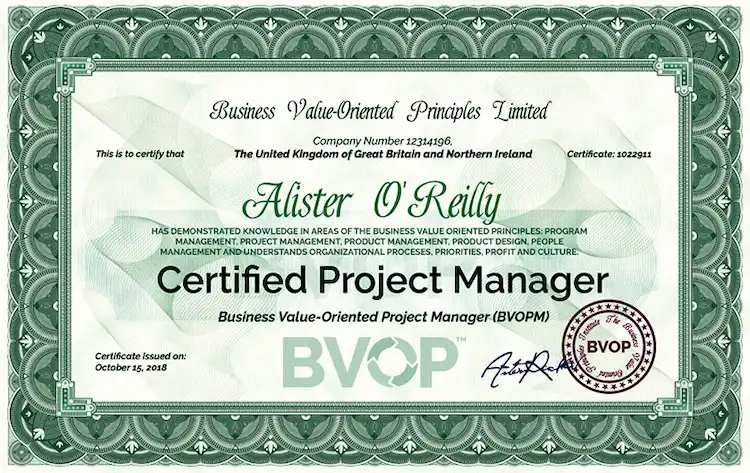
Selecting between Agile and Waterfall often hinges on how your team handles scope changes, and a certified project manager can help you match the methodology to stakeholder expectations. Earning credentials through certified project manager programs builds the scheduling and risk assessment skills needed to decide when strict phases outperform iterative sprints. Certification also signals to employers that you can manage budgets and timelines without forcing a one-size-fits-all framework.
Product teams facing uncertain requirements benefit from formal training that covers discovery, roadmapping, and release planning across both Agile and Waterfall contexts. A structured product management training course teaches you to evaluate user feedback loops and market timing before committing to a development approach. This practical knowledge reduces costly rework and helps you explain trade offs to engineering and marketing stakeholders.
Human resources departments often overlook how methodology choices affect workload, team morale, and performance reviews, which is why a certified HR manager can add real value during project transitions. Through certified HR manager study, you learn to align job descriptions, onboarding plans, and conflict resolution processes with the delivery cadence your teams actually use. That alignment prevents burnout in sprint based environments while keeping documentation compliant in regulated Waterfall settings.