For professionals in Hong Kong seeking to advance their careers in project management, the PMP Certification Training Course is a strategic investment that unlocks global recognition and higher earning potential. The Project Management Professional credential, awarded by the Project Management Institute, remains the gold standard for validating expertise in leading complex initiatives across industries such as finance, construction, information technology, and logistics. In Hong Kong’s hyper-competitive and densely networked business environment, holding this certification signals not only technical competence but also a commitment to international best practices, making it a decisive factor for project managers aiming to be a leader for cross-border teams and deliver results in one of Asia’s most dynamic economies. As organizations in the Greater Bay Area continue to expand, the demand for certified professionals who can navigate Agile frameworks and methods and stakeholder complexity has never been higher.
PMP Certification Training in Hong Kong: Key Topics at a Glance
| Key Concept | Summary |
|---|---|
| PMP Value | Obtaining the PMP certification in Hong Kong validates elite project leadership capabilities and a firm commitment to global best practices, leading to substantially higher compensation and instant credibility among multinational corporations and top-tier local enterprises. |
| Economic Context | Hong Kong’s unique position as the premier conduit between mainland China and international markets fuels acute demand for PMP-certified professionals to drive complex infrastructure projects, fintech innovation, and large-scale digital transformations that demand flawless cross-border execution. |
| Career Impact | PMP holders in Hong Kong secure a measurable salary premium and accelerated access to mid-level and senior-level leadership roles; the credential serves as a decisive differentiator for high-visibility assignments and regional opportunities across Asia-Pacific’s dynamic markets. |
| ESG Integration | Leading PMP courses now embed sustainability metrics directly into project charters and risk management plans, aligning with Hong Kong’s regulatory momentum toward green finance, mandatory ESG reporting, and smart city infrastructure, equipping managers to deliver compliant, future-ready projects. |
| Training Formats | To accommodate Hong Kong’s demanding professional schedules, training providers offer intensive weekend bootcamps, live virtual instructor-led classrooms, flexible self-paced online modules, and traditional in-person sessions, enabling uninterrupted career progression while preparing for the exam. |
| Course Quality | Exceptional training programs integrate authentic Hong Kong case studies from the infrastructure and financial sectors, combined with extensive, adaptive question banks and full-length simulated exams that replicate the PMP’s situational judgment style, building genuine exam-day readiness. |
| Eligibility Criteria | Candidates must possess 36 months of project leadership experience with a four-year degree, or 60 months with a diploma, plus 35 contact hours of formal project management education, ensuring a foundation of deep practical and theoretical competence. |
| Application Process | Premium training providers guide candidates through precisely articulating their experience against PMI’s process domains, equipping them to navigate the audit with specific, defensible project narratives and eliminating the common pitfall of vague or generic descriptions. |
| Exam Preparation | Robust exam preparation fully aligns with PMI’s latest content outline, focusing on adaptive scenario analyses that assess situational judgment and leadership agility rather than rote memorization, reflecting the exam’s real-world decision-making emphasis. |
| Global Standards | The PMP establishes a universal project management lexicon and methodology that bridges cultural and organizational divides, empowering managers to orchestrate high-performing multinational teams and drive seamless collaboration on complex cross-border initiatives. |
The strategic value of a PMP certification in Hong Kong’s economic landscape
Hong Kong’s economy is uniquely positioned as a gateway between mainland China and global markets, a reality that shapes the project management profession in profound ways. Major infrastructure projects such as the expansion of the airport’s third runway, the development of the Northern Metropolis, and ongoing MTR extensions require rigorous governance frameworks that align with international standards. Financial institutions implementing digital transformation initiatives , from blockchain-based trade finance platforms to regulatory technology rollouts, operate under intense compliance and time-to-market pressures. In these contexts, the PMP certification provides a common language and methodology that bridges cultural and organizational divides, enabling project managers to speak with authority to sponsors, regulators, and technical teams alike.
The Project Management Institute’s research consistently shows that certified professionals earn a premium over their non-certified peers, and Hong Kong is no exception. While salary data varies by sector and experience, recruitment firms in the city frequently cite PMP certification as a differentiator for mid- to senior-level roles, particularly for positions requiring end-to-end delivery accountability. Beyond immediate compensation, the credential opens doors to opportunities across Asia-Pacific, where multinational corporations often mandate PMP certification for project leadership. For Hong Kong-based professionals who compete in a talent pool that includes expatriates and mainland Chinese experts, the certification serves as an equalizer, demonstrating mastery of the PMBOK Guide and its application within diverse governance structures.
The growing emphasis on environmental, social, and governance criteria in project approval processes further amplifies the value of formal training. A comprehensive PMP certification training course in Hong Kong now typically addresses how to integrate sustainability considerations into project charters, risk registers , and benefit realization plans , reflecting the city’s regulatory push toward green finance and smart city development. By aligning project outcomes with broader societal goals, certified project managers are better equipped to secure stakeholder buy-in and navigate the increasingly complex approval processes characteristic of public-private partnerships in the region.
The PMP certification training course landscape in Hong Kong
Professionals exploring a PMP certification training course in Hong Kong will find a diverse ecosystem of providers, from global training companies with established local offices to boutique consultancies and university continuing education departments. The choice of training format has expanded significantly in response to the city’s demanding work culture. In-person classroom sessions, typically held in Central, Tsim Sha Tsui, or Causeway Bay, offer the benefit of direct interaction with instructors and peers, which can be particularly valuable for deep-diving into complex topics like earned value management or critical path analysis. Weekend bootcamps have long been popular among Hong Kong professionals who cannot spare weekdays away from their desks, though the intensity demands strong pre-reading discipline.
Virtual instructor-led training has gained substantial traction since the pandemic, providing flexibility for those who travel frequently to Shenzhen or other parts of the Greater Bay Area. These live online courses often replicate the classroom experience with breakout rooms, real-time Q&A, and digital whiteboards, while recordings allow for review of difficult concepts. Self-paced online modules, while less common as a standalone preparation method due to the PMP exam’s depth, serve as excellent supplements or refresher options for candidates who have already accumulated the required project management experience. The most effective training courses blend synchronous and asynchronous learning, using pre-work assignments to level-set foundational knowledge before interactive sessions focus on application and exam simulation.
When evaluating a training course, Hong Kong candidates should scrutinize the provider’s track record with the revised exam content outline. The PMI updates the exam periodically to reflect evolving practice, and a course that still leans heavily on memorizing inputs, tools, and techniques from the PMBOK Guide’s old editions will underprepare candidates for scenario-based questions that test judgment and adaptability. The best training providers incorporate real-world Hong Kong case studies—such as managing delays on a reclamation project or coordinating IT vendors across different regulatory jurisdictions—to ground theoretical concepts in familiar contexts. Additionally, they offer robust question banks with simulated exams that mirror the time pressure and cognitive load of the actual four-hour assessment.
Understanding the PMP exam requirements and eligibility in Hong Kong
Before enrolling in any PMP certification training course in Hong Kong, professionals must confirm they meet the eligibility criteria set by PMI, which are uniform globally but have local implications. The foundational requirement is a combination of formal education and project management experience. Candidates with a four-year degree, such as a bachelor’s from a University Grants Committee-funded institution or an equivalent international qualification, must document at least 36 months of leading projects within the last eight years, along with 35 contact hours of formal project management education. Those with a secondary school diploma or associate degree need 60 months of project leadership experience plus the 35 education hours. The key nuance is that “leading projects” is defined broadly enough to include roles where the candidate directed cross-functional efforts, managed budgets, and handled stakeholder communications, even if their job title did not explicitly include “project manager.”
Hong Kong professionals in construction, IT, and finance often face the challenge of mapping their daily activities to the PMI’s domains: initiating, planning, executing, monitoring and controlling, and closing. A quality training course will guide candidates through the application process, helping them articulate their experience in a way that survives the audit process that PMI randomly invokes. According to training instructors in Hong Kong, common pitfalls include using vague language, failing to specify the methodology used, or not quantifying project outcomes. Given that the application requires summarizing each project’s deliverables and objectives in concise paragraphs, many candidates benefit from drafting their experience summaries alongside the training, using real examples that align with the course’s modules.
The 35 contact hours can be earned through training providers accredited by PMI, such as those listed on the PMI.org website as Authorized Training Partners. Hong Kong candidates should verify that the course they select offers a certificate of completion that PMI will accept, as some informal workshops or internal corporate programs may not meet the standard. The contact hours must cover the three domains of people, process, and business environment as per the latest exam content outline, so a course that still focuses only on the five process groups without addressing leadership, team dynamics, and strategic alignment will be insufficient. Reputable providers in Hong Kong explicitly align their curriculum with the ECO and provide a detailed syllabus before registration.
Key Takeaways on PMP Value in Hong Kong
- Gateway economy demands PMP rigor
- Hong Kong's position as a linchpin between China and international commerce compels project managers to apply PMP rigor when steering complex infrastructure and digital transformation initiatives, ensuring alignment with cross-border regulatory demands and globally recognized governance frameworks.
- Certification boosts salary and mobility
- PMP certification in Hong Kong translates into tangible salary premiums and strengthens candidacy for mid- to senior-level project leadership roles, while also unlocking mobility across the Asia-Pacific region where multinational corporations frequently treat the credential as a prerequisite for cross-border assignments.
- ESG integration amplifies PMP relevance
- Contemporary PMP training in Hong Kong now weaves environmental, social, and governance criteria into the project lifecycle, equipping certified professionals to embed sustainability targets from initiation through closure, strengthen buy-in for public-private partnerships, and meet the growing ESG disclosure expectations of regulators and investors.
Structuring your PMP exam preparation in Hong Kong’s high-pressure work culture
Balancing preparation for the PMP exam with the demands of a typical Hong Kong workweek, which often stretches beyond standard hours and includes frequent business travel, requires deliberate planning and psychological stamina. Successful candidates treat the preparation period as a project in its own right, creating a study plan with clear milestones, resource allocation, and risk mitigation strategies. The study timeline typically spans eight to twelve weeks of concentrated effort, with an initial phase of knowledge acquisition, a middle phase of intensive practice, and a final phase of exam simulation and review. Shorter timelines are possible but demand an exceptionally disciplined daily routine that many professionals cannot sustain alongside family obligations and professional responsibilities.
The first step after enrolling in a PMP certification training course in Hong Kong is to integrate the course schedule with a self-study rhythm that prevents cognitive overload. Weekend workshops that condense material into four or five full days leave candidates with dense notes and a false sense of mastery unless followed immediately by spaced repetition. Research on learning science underscores that without retrieval practice, much of the information will be forgotten within days. Therefore, Hong Kong candidates should plan for at least one hour of focused study on weekdays, perhaps during the MTR commute using flashcard apps like Anki or Quizlet that target PMP terminology and formulas, and longer blocks on weekends for practicing full-length mock exams.
A common mistake is to postpone mock exams until the final week, which robs candidates of the opportunity to identify weak areas and acclimate to the exam’s stamina requirements. The PMP exam contains 180 questions, a mix of multiple-choice, multiple-response, drag-and-drop, and hotspot items, administered over 230 minutes with two optional ten-minute breaks. This format is cognitively exhausting, and the only way to build the mental endurance necessary is through repeated simulation. Training courses that provide a system of progressively longer quizzes, from 60-question domain-specific tests to full-length simulations with timed conditions, allow candidates to diagnose whether they are losing focus in the final hour or misreading questions under pressure.
Selecting the right learning format for PMP certification training in Hong Kong
The decision between classroom-based, virtual live, and self-paced online training for the PMP certification training course in Hong Kong is not a matter of one-size-fits-all but a function of individual learning preferences, schedule constraints, and the depth of prior project management knowledge. Classroom training in a physical location such as a learning center in Wan Chai or Kwun Tong offers immersive learning with fewer distractions than a home office, and the social dynamics of group discussions can surface insights that one might not encounter alone. For many, the accountability of showing up at a fixed time and place is the strongest safeguard against procrastination. Yet, the time lost to Hong Kong’s notorious traffic and the rigidity of fixed schedules make this format challenging for consultants or those in client-facing roles with unpredictable calendars.
Virtual instructor-led training bridges the gap by providing structured interaction without the commute. Platforms used by reputable providers in Hong Kong include features like digital polling, chat, and integrated lab environments where participants can collaboratively build a work breakdown structure or assign risks in a risk register. The effectiveness of this format hinges on the instructor’s skill in maintaining engagement and the participant’s discipline to create a distraction-free environment at home or in a private office. Candidates who thrive in this setting often use dual monitors—one for the training interface and one for note-taking or looking up references—and they treat the virtual session with the same seriousness as an in-person meeting. The ability to replay sessions is particularly helpful for reviewing complex earned value management calculations or the nuances of the PMI’s code of ethics.
Self-paced online courses, while the most flexible, require the highest level of intrinsic motivation and are best suited as supplementary resources alongside a more interactive training approach. For experienced project managers who already hold certifications like PRINCE2 or Six Sigma, a self-paced review might suffice to cover gaps in agile and hybrid methodologies that the latest PMP exam emphasizes. However, given that nearly half of the exam now addresses agile or hybrid approaches, candidates whose experience is primarily in traditional waterfall environments will benefit from instructor-led discussions that contextualize Scrum, Kanban, and scaled agile frameworks within the PMP’s process-based language. The Hong Kong market increasingly demands this hybrid fluency, as organizations shift from rigid stage-gate models to more iterative delivery, even in sectors like construction where lean principles are gaining ground.
Mastering the PMP exam content domains through focused study
The current PMP exam content outline, in effect since early 2021, organizes questions into three domains: People, which accounts for 42% of the exam; Process, 50%; and Business Environment, 8%. This structure signals PMI’s intent to test not only technical project management skills but also leadership and strategic thinking. For Hong Kong professionals, the People domain can be deceptively challenging because it requires nuanced understanding of conflict resolution, team development, and servant leadership—concepts that may be interpreted differently across hierarchical Asian organizational cultures. A PMP certification training course in Hong Kong that acknowledges these cultural dimensions helps candidates avoid selecting technically correct but culturally misaligned answer choices, such as those that assume fully self-organizing teams without consideration of the manager-as-facilitator reality common in local corporations.
The Process domain remains the core of traditional project management knowledge, covering the entire lifecycle from scope definition to closure. Candidates must be adept at selecting the appropriate predictive, agile, or hybrid approach based on project characteristics, regulatory constraints, and stakeholder expectations. In Hong Kong, where many projects operate under strict contractual frameworks and government oversight, questions that test tailoring—the deliberate adaptation of processes to suit the context—are particularly relevant. For example, a candidate might need to decide when to replace a formal change control board with a more lightweight backlog prioritization process or how to manage procurement in an environment where relationships with mainland Chinese suppliers require a different communication cadence than with European vendors.
The Business Environment domain, though the smallest portion, demands that candidates connect projects to organizational strategy and external factors. This includes understanding benefit realization management, compliance, and the impact of market conditions on project justification. Hong Kong’s status as a Special Administrative Region introduces unique considerations: currency peg stability, cross-border data flow regulations, and the interplay between common law traditions and mainland practices. A training course that neglects to ground these business environment discussions in local context risks leaving candidates unprepared for questions that require strategic reasoning beyond textbook definitions. Experienced instructors often draw on examples like a bank’s core system upgrade that must comply with both Hong Kong Monetary Authority guidelines and People’s Bank of China requirements, illustrating how business environment factors drive project decisions.
Navigating the PMI PMP application and audit process in Hong Kong
Once a candidate has completed their PMP certification training course in Hong Kong and accumulated the required project management experience, the next step is to submit the formal application through the PMI website. This process involves documenting education, project experience, and the 35 contact hours. For each project, the candidate must provide a brief description emphasizing their leadership role, deliverables, and the months of experience across the five process groups. While PMI does not require granular hourly breakdowns, the description must convincingly demonstrate active leadership, not just participation. In Hong Kong, where job scopes can be fluid and titles ambiguous, candidates should work with their training provider to refine these descriptions, ensuring they reflect PMI’s terminology without fabricating responsibilities.
PMI randomly selects a percentage of applications for audit, a process that can cause anxiety but is straightforward if the documentation is in order. An audited candidate must provide verification of their degree (copies of diplomas and transcripts), verification of the 35 contact hours from the training provider, and signed experience verification forms from supervisors or project clients for each project listed. In Hong Kong’s corporate culture, where changing jobs frequently is common, securing these signatures for past projects can be logistically challenging. It is prudent to identify the verifier for each project before submitting the application and to confirm their willingness to sign. Many training providers offer audit support services, reviewing the documentation and advising on how to handle situations where a former supervisor is uncontactable, such as through escalation to human resources or provision of supplementary evidence like performance reviews and organizational charts showing the candidate’s role.
The application fee, plus subsequent exam fee, is payable online, and candidates in Hong Kong can schedule their exam at Pearson VUE test centers located in areas like Lai Chi Kok and Wan Chai, or opt for the online proctored exam from home. The online option requires a stable internet connection, a private quiet room free of interruptions, and a computer that passes the system test. Given Hong Kong’s small living spaces and the possibility of background noises, many candidates prefer the controlled environment of a test center, even if it means traveling across the city. Scheduling should account for typical preparation completion dates, with the exam booked for a window when the candidate’s mock exam scores consistently reach the target threshold, usually above 70% on reputable simulation platforms.
Aligning PMP certification with career progression in Hong Kong industries
The return on investment for a PMP certification training course in Hong Kong materializes differently across sectors, though common threads include expanded job scope, eligibility for senior leadership roles, and access to a global professional network. In the construction and real estate sector, which employs a significant proportion of Hong Kong’s project managers, the PMP credential complements local statutory qualifications like Authorized Person registration under the Buildings Ordinance. Major developers and engineering consultancies often list PMP as a preferred or required qualification for project director roles, especially for integrated resort developments, data center construction, and large-scale residential projects that demand sophisticated scheduling and risk management.
Financial services, particularly the investment banking and insurance segments, have seen a marked shift toward requiring project management certifications as they undergo massive regulatory and digital transformations. A PMP certification signals to hiring managers that a candidate can manage the triple constraints of scope, time, and cost while also navigating the political landscape of stakeholder management in risk-averse institutions. For compliance technology projects, where failure can result in censure from the Securities and Futures Commission, certified project managers offer traceable governance and clear escalation pathways. The demand is further fueled by Hong Kong’s ambition to remain a premier wealth management hub, driving complex platform integrations that demand rigorous project discipline.
The information technology sector, encompassing both in-house IT departments and technology vendors, values the PMP alongside agile certifications like Certified ScrumMaster or SAFe Agilist. Hong Kong’s smart city initiatives, such as the Smart Identity Card replacement project and various e-government services, blend traditional procurement processes with iterative development, creating a strong fit for the PMP’s hybrid approach. Startups and scale-ups in Cyberport and Science Park, while often initially skeptical of heavy-weight certifications, increasingly recognize that as they grow and must deliver on investor commitments, structured project management becomes essential. A PMP certified manager in these environments serves as a bridge between the creative, fast-paced development teams and the governance demands of board-level reporting.
Integrating agile and hybrid methodologies in PMP certification training courses
One of the most significant recent evolutions in PMP certification training courses in Hong Kong is the integration of agile, adaptive, and hybrid principles into what was once a predominantly predictive, plan-driven framework. The PMP exam now dedicates a substantial portion of its questions to agile and hybrid lifecycles, reflecting the reality that many Hong Kong projects cannot be fully scoped at the outset due to changing market conditions or emerging technologies. Training providers have responded by incorporating modules on the Agile Practice Guide, Scrum roles and ceremonies, Kanban flow management, and scaled frameworks. This is not a superficial addition; courses must now teach candidates how to assess a project’s volatility and select the appropriate development approach on a continuum rather than as a binary choice.
In practice, this hybrid focus is directly applicable to Hong Kong’s typical projects. Consider a supply chain digitization initiative for a Hong Kong-based logistics firm with operations spanning Asia. The hardware deployment to warehouses may follow a predictive waterfall plan with clear milestones and contractual obligations, while the software integration layer may employ a Scrum approach with two-week sprints to accommodate evolving user stories from warehouse staff. A PMP certified project manager must harmonize these approaches, maintaining a consolidated risk register, ensuring that contractual deliverables align with sprint outputs, and communicating progress to stakeholders who may only be familiar with Gantt charts. A well-structured training course will simulate these complex scenarios through case studies that challenge candidates to justify their tailoring decisions.
Hong Kong professionals who seek PMP certification today must also understand that agile is not synonymous with an absence of governance. The training covers how to embed agile practices within a stage-gate funding model, a common requirement in large corporations where capital expenditure approval is tied to gated reviews. Tools such as the agile suitability filter, the Cynefin framework for complexity assessment, and the use of cadence-based reporting are now standard curriculum elements. Candidates who can articulate these concepts in an interview demonstrate that they are not ideologically attached to a single methodology but can instead act as a pragmatic integrator—a skill set that is highly sought after by Hong Kong’s multinational employers who juggle diverse process standards across their global and regional portfolios.
Developing leadership competencies through PMP certification training
The People domain of the PMP exam compels training courses to delve deeply into interpersonal skills that are critical for Hong Kong’s multicultural project environments. Effective leadership in this context requires navigating the intersection of Western management philosophies and Confucian values that emphasize hierarchy, harmony, and face-saving. For instance, the training teaches that when a conflict arises between a project manager and a senior stakeholder, the appropriate response is not always direct confrontation; it may involve indirect communication, leveraging a third party, or framing the issue in terms of collective benefit rather than individual performance. This nuanced application of emotional intelligence is what distinguishes a competent project manager from an exceptional one.
Team development models such as Tuckman’s stages of forming, storming, norming, performing, and adjourning take on specific dimensions in Hong Kong. Rapid team formation across geographically dispersed offices, including those in Shenzhen, Singapore, and London, is the norm, yet the storming phase may be suppressed or channeled through private channels rather than open meetings. A PMP certification training course that incorporates role-playing exercises based on these dynamics helps managers recognize underlying tensions and address them before they undermine productivity. Similarly, the training covers motivational theories like Herzberg’s two-factor theory and McClelland’s needs theory, but it contextualizes them by discussing how recognition and autonomy manifest differently in collectivist versus individualist cultures.
Servant leadership, a concept that PMI heavily emphasizes in the exam, can sometimes feel counterintuitive in Hong Kong’s traditionally top-down corporate structures. Candidates must learn that the role of the project manager is to remove impediments, facilitate and support, and empower the team to self-organize within the boundaries set by organizational policies. This does not mean abdicating authority; it means practicing situational leadership where the manager directs when necessary and delegates when appropriate. Training courses that weave these paradoxical leadership demands throughout the curriculum, rather than treating them as a separate soft-skills module, prepare candidates to answer exam questions that require selecting the best leadership style for a given scenario, as well as to lead effectively in real life.
Strategic project management and the business environment for Hong Kong projects
The Business Environment domain of the PMP exam is the smallest in terms of question count, but its weight in career impact is substantial. Hong Kong projects do not exist in a vacuum; they are initiated, funded, and evaluated based on their contribution to strategic objectives, whether those are increasing market share in the Greater Bay Area, achieving regulatory compliance, or enhancing operational resilience. Training courses that excel in this area teach candidates to think beyond the iron triangle and consider the project’s alignment with the organization’s strategy, the management of benefits, and the external factors that could derail even a perfectly executed plan. This includes environmental scanning, PESTLE analysis, and the ability to connect project deliverables to key performance indicators at the portfolio level.
Compliance and governance are particularly weighty topics in Hong Kong due to the city’s status as a global financial center and its complex regulatory landscape. Project managers in banking must be conversant with the Hong Kong Monetary Authority’s Supervisory Policy Manual modules that relate to project management and operational risk. Those in pharmaceuticals and medical devices must navigate Department of Health regulations that impact product launch timelines. The PMP certification training course should provide frameworks for integrating these compliance requirements into the project management plan without creating bureaucratic bottlenecks. For example, a quality management plan for a fintech project must specify the required approvals from compliance, legal, and risk management, and these approvals must be embedded into the schedule as gating activities with appropriate lead times.
Another critical business environment topic is organizational change management, which is distinct from project management but tightly coupled with it. In Hong Kong, where resistance to change can be amplified by job security concerns and indirect communication norms, project managers must proactively plan for stakeholder engagement, training, and transition. The PMP exam expects candidates to recognize that delivering a technically sound output is insufficient if users are not prepared to adopt it. Therefore, training courses cover the principles of change management, including the ADKAR model and Kotter’s eight-step process, and they illustrate how project managers can collaborate with change management specialists to ensure smooth handovers to operations. This holistic view aligns with the PMI’s growing emphasis on benefit realization, which extends the project manager’s responsibility beyond handover to the point where business value is actually achieved.
Key Insights on PMP and Career Alignment
- Sector-specific PMP value
- In Hong Kong, the PMP accelerates career mobility in distinct ways: it validates authority alongside statutory roles in construction, signals governance proficiency demanded by financial regulators, and equips IT professionals to translate agile progress into board-level narratives.
- Hybrid methodology integration
- PMP training equips professionals to apply hybrid delivery models that seamlessly combine waterfall milestones and iterative development in multi-faceted projects like supply chain digitization, where contractual phases demand stage gates while technical workstreams require adaptive sprints.
- Governance within agile frameworks
- PMP practitioners employ complexity-based models such as Cynefin to integrate iterative delivery into cadenced funding approvals, preserving disciplined governance even as they pivot project direction to capture emergent opportunities in Hong Kong's volatile business environment.
Leveraging the PMI Hong Kong Chapter and local professional networks
Earning the PMP certification is only the beginning of a lifelong professional journey, and the PMI Hong Kong Chapter plays a vital role in sustaining and enhancing the credential’s value. The chapter, one of the largest in Asia with thousands of members, organizes a robust calendar of events including monthly seminars, workshops, mentorship programs, and an annual conference that draws thought leaders from across the region. For newly certified professionals, these events offer immediate opportunities to earn the Professional Development Units required to maintain the certification, but more importantly, they provide a platform for learning from peers who manage projects in the same regulatory and cultural environment. The chapter’s active volunteer community enables members to develop leadership skills outside their day jobs, which can accelerate career progression.
Networking within the Hong Kong Chapter often leads to informal knowledge sharing that cannot be obtained from textbooks or online forums. A lunchtime gathering of members from the construction sector might yield practical insights on managing claims in NEC contracts, while a fintech special interest group might discuss lessons learned from migrating core banking systems to the cloud under HKMA’s new cloud computing guidelines. This localized wisdom, combined with the global perspective provided by PMI’s research publications and standards committees, enables PMP holders in Hong Kong to remain at the cutting edge of practice. Many training providers collaborate with the chapter to offer alumni events, creating a seamless transition from exam preparation to active professional community participation.
Maintaining the PMP certification requires 60 PDUs every three years, and the Hong Kong Chapter provides a convenient pathway to accumulate these units through activities that have direct professional relevance. Beyond attending events, members can earn PDUs by writing articles for the chapter newsletter, presenting at conferences, or serving on the board of directors. The chapter also facilitates study groups for those pursuing additional PMI certifications, such as the PMI Agile Certified Practitioner or the Portfolio Management Professional. For Hong Kong professionals who understand that career resilience depends on continuous learning, this ecosystem transforms the initial certification into a platform for sustained professional development and thought leadership.
Evaluating PMP certification training course quality and instructor expertise
Given the significant investment in time and money that a PMP certification training course in Hong Kong represents, candidates must apply due diligence to select a provider that delivers true value, not just a certificate of attendance. The instructor’s credentials are paramount: at a minimum, they should themselves hold the PMP and preferably additional advanced certifications. However, a long list of certifications is less important than real-world project management experience, especially in industries relevant to Hong Kong’s economy. An instructor who has managed cross-border IT rollouts, hotel construction projects, or financial system implementations can ground theory in concrete examples, answer impromptu questions with practical stories, and highlight pitfalls that are not covered in the PMBOK Guide. Candidates should look for instructors who are not just trainers but practitioners who regularly manage projects or consult for organizations, ensuring their knowledge remains current.
The course materials also warrant close inspection. A high-quality provider will offer a comprehensive set of resources that goes beyond slide decks and includes a physical or digital copy of the PMBOK Guide and the Agile Practice Guide, a study guide that maps precisely to the exam content outline, flashcards for key terms and formulas, and a question bank with detailed explanations for every answer choice, both correct and incorrect. The question bank should contain several thousand items to prevent memorization, and it should include the new question types introduced by PMI. Some providers have mobile apps that allow candidates to practice on the go, which is particularly useful for MTR commutes or while waiting for meetings in Hong Kong’s efficient but time-consuming business districts. The warranty policy is another signal: many reputable training companies offer a free retake of the course if the candidate does not pass the exam on the first attempt, though conditions apply.
Accreditation and affiliations provide a baseline quality assurance. Authorized Training Partners, as designated by PMI, have met specific criteria for curriculum design, instructor qualification, and student support. Other providers may be accredited by global examination bodies or hold ISO 9001 certification for their training operations. While accreditation alone does not guarantee a superior learning experience, it indicates a commitment to quality management. Candidates in Hong Kong should also seek out independent reviews through sources like networking referrals, professional forum discussions, and their company’s human resources department, which may have experience with specific providers. A trial class or information session, offered by many providers at no cost, allows candidates to sample the instructor’s style and the learning platform before committing.
Preparing for the PMP exam amid Hong Kong’s cost of living and time pressures
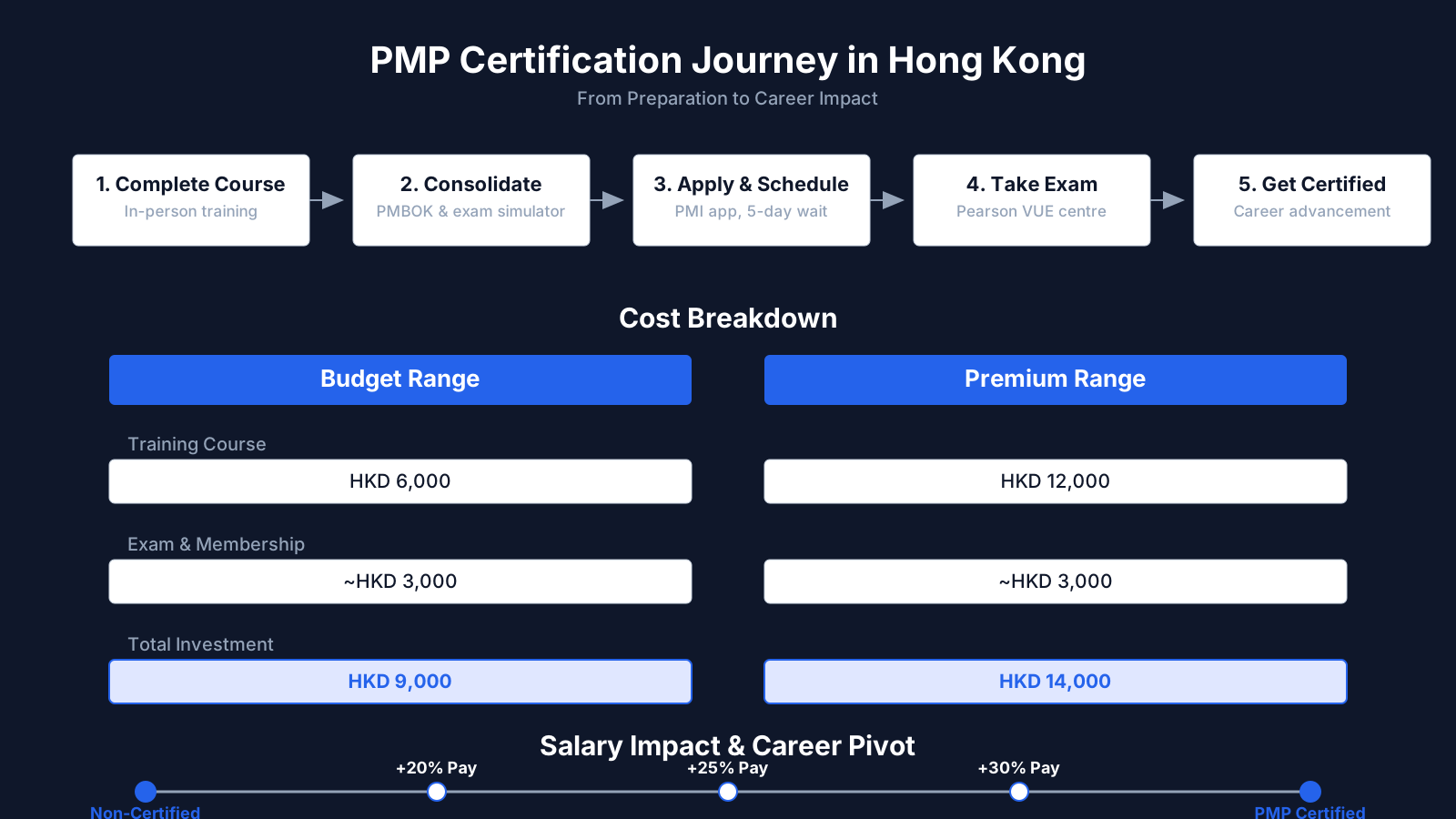
The financial cost of pursuing PMP certification in Hong Kong includes the training course fee, PMI membership, the exam fee, and study materials, which typically ranges from several thousand to over ten thousand Hong Kong dollars depending on the provider and package. This is a non-trivial investment for a mid-career professional, but it should be evaluated against the potential salary increment and expanded job opportunities. Many Hong Kong companies offer education subsidies or professional development allowances that can cover part or all of the costs, especially if the candidate can demonstrate how the certification aligns with current or future project responsibilities. Preparing a business case for employer sponsorship is a worthwhile exercise in itself, as it requires the candidate to articulate the benefits in terms of improved project outcomes, risk reduction, and professional credibility with clients.
Time, more than money, is the scarcest resource for most Hong Kong candidates. The typical advice is to allocate 100 to 150 hours of total study time, but this must be distributed realistically across a calendar marked by Chinese New Year preparations, quarterly reporting cycles, and typhoon season disruptions. Effective study plans build in buffer weeks and acknowledge that some weeks will yield zero productive hours due to work crises. The “little and often” principle is more sustainable than weekend marathons that lead to burnout. Many successful candidates report using audio summaries of PMP concepts during their commute and spending focused lunch breaks on practice questions. The key is to make study a non-negotiable habit integrated into daily life, rather than a separate burdensome activity that competes with work and family.
Psychological preparation is equally important. The PMP exam is designed to induce a degree of uncertainty; many questions will present scenarios where multiple answers appear plausible, and the candidate must select the “best” option according to PMI’s philosophical framework, not necessarily their own experience. This can be disorienting, particularly for experienced managers who have developed successful practices that deviate from PMI’s ideal processes. Training courses in Hong Kong must address this cognitive dissonance early, guiding candidates to understand when to apply their real-world judgment and when to follow the PMI standard. Techniques such as mindfulness, strategic breaks during the exam, and positive self-talk are often recommended by instructors who have seen competent professionals fail simply due to test anxiety or overconfidence.
Post-certification pathways and continuing professional development
After achieving the PMP certification, Hong Kong professionals enter a phase of continuous learning that determines how effectively the credential translates into career advancement. The first priority is to update one’s resume, LinkedIn profile, and internal talent management records to reflect the new qualification. The PMI provides a digital badge that can be shared on social media and verified online, allowing recruiters to confirm the certification’s authenticity instantly. More substantively, the certified professional should seek opportunities to apply the newly acquired knowledge in ways that are visible to senior leadership, such as volunteering to lead a project retrospective, redesigning the risk management template for their department, or mentoring junior project coordinators who aspire to certification themselves.
The next career milestone for many PMP holders is to pursue additional certifications that complement their domain expertise. For those in agile environments, the PMI-ACP builds on the PMP’s agile content with deeper coverage of lean, Kanban, and extreme programming. For portfolio and program managers, the PfMP and PgMP credentials signal readiness for enterprise-level governance. Some Hong Kong professionals combine the PMP with industry-specific certifications, such as the Chartered Financial Analyst designation for banking project managers or the Certified Information Systems Auditor for those in technology audit. The choice should be strategic, based on a realistic assessment of career aspirations and market demand, rather than a collection of badges that have no cumulative brand value.
Beyond formal certifications, PMP holders in Hong Kong can deepen their expertise through advanced workshops in areas like negotiation, design thinking, and data analytics for project decisions. The Hong Kong Polytechnic University, the University of Hong Kong’s School of Professional and Continuing Education, and private providers offer short courses that earn PDUs while building practical skills. The PMI Talent Triangle, which emphasizes technical project management, leadership, and strategic and business management, provides a framework for selecting activities that develop well-rounded capabilities. As Hong Kong’s economy evolves toward high-value services and innovation, the project manager who pairs deep technical delivery skills with strategic business acumen and inclusive leadership will be the one who earns a seat at the C-suite table. The PMP certification, backed by rigorous training and sustained professional development, is the foundation on which that career trajectory is built.
Advance Your Career with Professional Certification
Earning a project management certification validates your ability to lead complex initiatives, manage budgets, and meet stakeholder expectations using standardized methodologies. In hubs like Hong Kong, where multinational firms demand consistent delivery and risk control, a project management certification distinguishes your profile and signals readiness for senior roles. Employers value the verified competence and governance it brings, directly linking certified leadership to fewer cost overruns and stronger team alignment. The credential often accelerates salary growth and opens international career paths, while organizations gain faster ROI on strategic programs through disciplined execution.
Product management certification equips professionals with disciplined methods for prioritization, stakeholder communication, and lifecycle oversight, which translate directly into more predictable product outcomes. Organizations value a certified product manager because the credential signals both practical competence and a commitment to continuous improvement in strategic roles. This certification often becomes a decisive factor in hiring and promotion decisions, as it demonstrates that an individual can navigate complex cross-functional environments without relying solely on intuition. For managers, the structured frameworks gained through certification reduce costly misalignments between business goals and development efforts, strengthening their credibility with executive teams.
Earning a professional HR management certification demonstrates mastery of workforce planning, compliance, and strategic talent development, setting candidates apart in competitive job markets. Many employers now require or prefer credentials such as SHRM-CP or PHR, and structured HR training and certification provides the rigorous preparation needed to pass these exams while building practical skills. Certified professionals consistently report higher salaries and faster career progression, and their organizations benefit from reduced turnover and better alignment of HR initiatives with business goals. This investment in expertise also deepens a practitioner’s ability to navigate complex employee relations and regulatory environments.