In an increasingly competitive business landscape, professionals in Singapore are constantly seeking high-impact strategies to accelerate their career trajectory, and few credentials carry the weight of the Project Management Professional (PMP) certification. For ambitious managers, engineers, and consultants, PMP training in Singapore represents a carefully structured pathway to mastering globally recognized project management standards while unlocking new salary brackets and leadership roles. This article explores how PMP training in Singapore can serve as a catalyst for professional growth, delving into the exam preparation process , the local business context, the evolving nature of project delivery frameworks , and the long-term return on investment. We will examine real-world applications, debunk common myths, and provide an evidence-based perspective on why this certification remains a cornerstone for career acceleration in one of Asia's most dynamic economies.
PMP Training in Singapore: Key Takeaways at a Glance
| Key Concept | Summary |
|---|---|
| PMP Value | Globally recognized PMP certification validates advanced project leadership competencies and adherence to industry standards, commanding average salary increments of 15% to 25% across markets. |
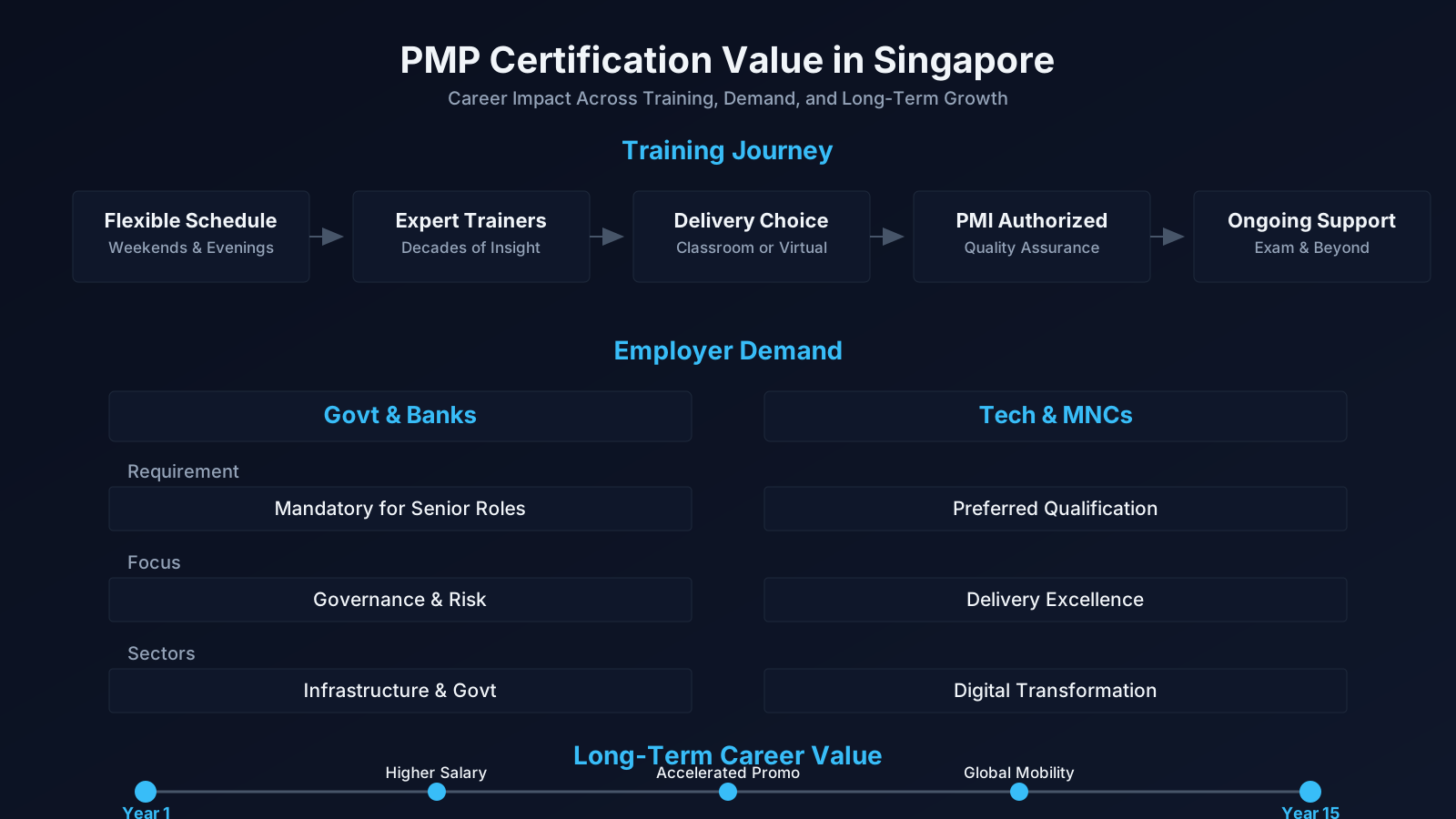
| Market Demand | Singapore’s thriving finance, technology, logistics, and biomedicine sectors consistently seek certified project managers to steer capital-intensive deliverables and meet aggressive timelines. |
| Career Impact | Structured training couples peer collaboration and real-world casework with consistent accountability, reducing certification lead time and unlocking faster promotion pathways. |
| Training Focus | Contemporary programs centre on People, Process, and Business Environment domains, equipping leaders with the scheduling, budgeting, and interpersonal skills essential for complex project ecosystems. |
| Employer Preference | Organizations treat PMP as a preferred or mandatory credential because it reliably identifies professionals who embed structure, governance, and process discipline into project delivery. |
| Government Alignment | Singapore’s Smart Nation blueprint and public-sector transformation initiatives align with the PMP framework, creating high-visibility roles for certified talent in nationwide digital programmes. |
| Adaptive Skills | PMP curricula integrate hybrid and agile methodologies to build resilience, enabling project leaders to coordinate remote, cross-border, and rapidly shifting team configurations. |
| Shared Language | A unified project management lexicon, introduced through PMP standards, fundamentally reduces miscommunication and accelerates reporting precision across multinational project teams. |
| Training Selection | Ideal programme selection hinges on provider accreditation, instructional depth, mock exam rigour, and compatibility with personal learning rhythms, balancing exam readiness with practical mastery. |
| Signal Value | Pursuing PMP certification visibly signals professional ambition, often earning sponsors’ confidence, higher-stakes assignments, and priority consideration during succession planning. |
The Strategic Value of PMP Certification in Today's Economy
Organizations across industries are grappling with digital transformation, supply chain disruptions, and the need for agile decision making , all of which place project management at the center of business success. The PMP certification, administered by the Project Management Institute (PMI), validates that a professional possesses the experience, education, and competency to lead projects in a structured and outcome-driven manner. In Singapore, where the government actively promotes upskilling through SkillsFuture and other initiatives, a PMP credential signals a commitment to international best practices and aligns with the national narrative of productivity and innovation.
The value of PMP certification transcends a simple line on a resume. It is a rigorous assessment of one's ability to navigate the complexities of scope, schedule, budget, risk , and stakeholder communication within a defined governance framework. Research from PMI's own salary surveys consistently shows that PMP holders earn a significant premium over their non-certified peers, often ranging between 15 and 25 percent depending on the region and industry. In the context of Singapore's knowledge-based economy, where competition for senior roles is intense, that differential can translate into tens of thousands of dollars annually over the course of a career.
Beyond the immediate financial uplift, the strategic value lies in the common language that PMP introduces. When a project team in a multinational corporation in Singapore uses terms like work breakdown structure, critical path, and earned value management, there is no ambiguity. This shared lexicon reduces miscommunication, streamlines reporting, and enhances the ability to manage cross-border initiatives. For the individual professional, fluency in this language is a signal of readiness to step into roles that require orchestrating complex deliverables, often across multiple time zones and cultural contexts.
The Growing Demand for Certified Project Managers in Singapore
Singapore's strategic position as a regional hub for finance, technology, logistics, and biomedicine generates a steady demand for experienced project managers who can deliver capital-intensive and time-sensitive initiatives. The construction of data centers, the rollout of fintech platforms, the scaling of biopharmaceutical production, and the implementation of enterprise resource planning systems all require disciplined project leadership. Employers in these sectors frequently list PMP certification as a preferred or mandatory qualification, recognizing that the credential serves as a reliable filter for candidates who have internalized a process-oriented mindset.
Government agencies and statutory boards in Singapore are themselves significant employers of project management talent, often leveraging the PMP framework for public sector infrastructure and IT projects. The Smart Nation initiative, for example, encompasses a wide array of interlinked projects where delays or budget overruns could have national repercussions. Professionals who have completed PMP training in Singapore and have obtained the certification are therefore well-positioned to contribute to these high-visibility programs, gaining experience that further accelerates their career growth.
The COVID-19 pandemic reinforced the importance of adaptive project management, as organizations pivoted rapidly to remote work, digital service delivery, and new health and safety protocols. This period underscored the fact that project managers must be adaptable, resilient, and capable of leading without co-location. PMP training has evolved to incorporate hybrid and agile considerations, making certified professionals more relevant than ever. In Singapore, the ability to manage hybrid teams across the region is a distinct competitive advantage that employers recognize and reward.
How PMP Training in Singapore Accelerates Career Progression
Enrolling in a structured PMP training program in Singapore offers a focused and immersive learning experience that self-study often cannot replicate. A well-designed classroom or live virtual course provides not just content delivery but also peer interaction, case study discussions, and the accountability that helps busy professionals stay on track. The discipline of attending sessions, engaging with instructors who are seasoned project managers themselves, and simulating exam conditions can drastically shorten the time from registration to certification.
Training programs in Singapore are typically aligned with the latest PMI Examination Content Outline (ECO), which now emphasizes three domains: People, Process, and Business Environment. This shift reflects the reality that project management is as much about leadership, emotional intelligence, and strategic alignment as it is about scheduling and budgeting. When professionals undergo PMP training in Singapore, they are exposed to real-world scenarios that illustrate how to handle team conflicts, negotiate with difficult stakeholders, and ensure that project outcomes deliver tangible business value. This immediately applicable knowledge can begin to influence their day-to-day work even before they sit for the exam.
Furthermore, the career acceleration effect stems from the signal value of being in training itself. Managers notice when a team member invests personal time and resources into professional development. It often leads to greater trust, more challenging assignments, and a faster track to promotion. The credential then serves as a formal confirmation of capabilities that may have already been demonstrated on the job. In Singapore's competitive talent market, where many professionals hold undergraduate and postgraduate degrees, the PMP stands out as a practice-oriented certification that distinguishes someone who can execute from someone who merely understands theory.
Core Takeaways on PMP Strategic Value
- Validates structured project leadership
- Earning the PMP signals a professional’s capacity to steer projects toward measurable results, a skill essential for tackling digital transformation initiatives and volatile supply chain dynamics.
- Significant salary premium
- Rigorous salary surveys consistently report that PMP holders earn 15 to 25 percent more than non-certified peers, amounting to significant cumulative financial returns over a career, particularly in high-cost, competitive markets such as Singapore.
- Creates a common project language
- By embedding a standardized vocabulary that includes work breakdown structure and earned value management, the certification minimizes misinterpretation and accelerates collaboration on cross-border initiatives.
- Preferred qualification across sectors
- Across Singapore’s finance, technology, logistics, and biomedicine industries, employers routinely mandate PMP certification, relying on it as a dependable filter for process-oriented talent.
- Enhances adaptability and resilience
- Today’s PMP curriculum integrates hybrid and agile methods with traditional predictive techniques, equipping certified professionals to lead distributed and cross-regional teams adeptly in a post-pandemic environment that prizes adaptability.
Choosing the Right PMP Training in Singapore
Not all PMP training programs in Singapore are created equal, and the selection process should be guided by factors such as the training provider's reputation, the instructional methodology, the inclusion of mock exams and study aids, and the alignment with one's learning style. Some courses are conducted intensively over four or five consecutive days, while others are spread across weekends or offered in evening formats to accommodate working professionals. There are also fully online, self-paced options that provide flexibility for those with unpredictable schedules.
Comparing Classroom and Online PMP Training in Singapore
Traditional classroom-based PMP training in Singapore offers the benefit of face-to-face interaction, which can be particularly valuable when grappling with complex topics such as critical path method calculations or earned value analysis. The ability to ask an instructor a question in real time, observe body language during role-play exercises, and network with other project managers from diverse industries creates a rich learning environment. Many classroom programs in Singapore are held in central business district locations, making them accessible for professionals who work nearby.
Online live virtual PMP training in Singapore, on the other hand, has gained widespread acceptance and can provide an equally rigorous experience. These courses typically use video conferencing platforms with breakout rooms, digital whiteboards, and instant polling to maintain engagement. They eliminate commute time and allow participants to join from home or office, which can be a deciding factor for those with caregiving responsibilities. The key is to ensure that the online program offers sufficient interaction and that technical support is available to prevent disruptions.
A self-paced recorded course can be a cost-effective supplement to live instruction, but it generally requires a high degree of self-discipline. Professionals who choose this route for their PMP training in Singapore should still plan to join study groups, participate in online forums, and regularly assess their knowledge through simulation exams. The risk of isolation and procrastination is real, and the most successful candidates typically blend self-paced learning with some form of live engagement, whether through instructor office hours or peer coaching sessions.
Key Features to Look for in a Quality Training Provider
Reputable training providers in Singapore will be PMI Authorized Training Partners (ATPs), a designation that ensures the course content has been validated and the instructors have met rigorous standards. This status also guarantees that participants are learning from materials aligned precisely with the PMBOK Guide and the PMP exam content. It is advisable to verify a provider's ATP status directly through PMI's website before committing to a program.
Instructors who possess extensive real-world project management experience, and who can move beyond theory to share anecdotes of project failures and recoveries, add immense value. A great trainer can demystify abstract concepts by grounding them in everyday Singapore-related examples, such as managing a HDB upgrading project or rolling out a new mobile banking feature. Look for trainers who hold not just the PMP but also additional certifications like PMI-ACP or PRINCE2, as this indicates a broad perspective on project management methodologies.
Comprehensive PMP training in Singapore should include a robust set of practice exams that mirror the difficulty and style of the actual PMP exam. A bank of at least a thousand questions, with detailed explanations for both correct and incorrect answers, is a good benchmark. The exam simulation environment should be as close to the real testing interface as possible, allowing candidates to build stamina for the four-hour, 180-question format. Additionally, post-training support such as exam application review, study plan templates, and alumni discussion groups can make a significant difference in first-attempt success rates.
Understanding the PMP Exam and Eligibility Requirements
Before embarking on PMP training in Singapore, it is essential to understand the certification prerequisites, which are designed to ensure that candidates have a substantive foundation of project management experience. The PMI requires either a four-year degree, 36 months of leading projects, and 35 hours of project management education, or a secondary degree, 60 months of leading projects, and 35 hours of project management education. The 35 education hours are precisely what a formal PMP training course provides, so completing a recognized program fulfills that requirement while preparing you for the exam.
The application process itself involves documenting your project leadership experience across the five process groups or the newer domains, and some candidates find this intimidating. However, a good training program will guide you through how to write clear, concise project descriptions that satisfy PMI's audit criteria without disclosing confidential information. Training providers in Singapore often have sample applications and templates that illustrate how to translate local project work into PMI terminology, which can greatly reduce the stress of submission.
The PMP exam is a psychometrically developed assessment that tests knowledge, application, and analysis across the three domains of People (42%), Process (50%), and Business Environment (8%). About half of the exam questions pertain to predictive project management approaches, while the other half address agile or hybrid methods. This balanced distribution reflects the real-world need for project managers to be versatile. Candidates should expect scenario-based questions that present a project situation and ask for the best course of action, rather than simple recall of definitions or formulas.
Core Takeaways on PMP Eligibility and Exam
- Two eligibility pathways exist
- Candidates must hold either a four-year degree with 36 months of project leadership experience or a secondary degree with 60 months of experience, along with completing 35 hours of project management education.
- Training fulfills education requirement
- Completing a formal PMP training course satisfies the 35-hour education prerequisite while equipping candidates with targeted strategies and a deep familiarity with the exam blueprint.
- Application requires documented experience
- The application process demands project descriptions mapped to PMI’s process groups or domains; reputable training providers supply structured templates that help candidates navigate audit requirements with confidence.
- Exam covers three domains
- The PMP exam evaluates proficiency across three domains: People (42%), Process (50%), and Business Environment (8%), with an even split between predictive methods and agile or hybrid approaches.
- Scenario-based questions dominate
- Candidates encounter realistic project situations that require determining the best course of action, testing applied judgment rather than mere recall of definitions or formulas.
Preparing for the PMP Exam: Methodologies and Study Approaches
Effective preparation for the PMP exam typically requires between 100 and 200 hours of dedicated study, including the formal training hours, self-review, and practice testing. The wide range depends on an individual's prior experience, familiarity with the terminology, and learning speed. PMP training in Singapore often follows a structured curriculum that covers each of the 12 project management principles and the eight performance domains from the PMBOK Guide, but candidates must supplement this with independent study to internalize the knowledge.
Developing a Personalized Study Plan During PMP Training in Singapore
One of the first outputs of a good PMP training program in Singapore should be a personalized study plan that maps out the weeks or months leading up to the exam date. This plan needs to be realistic, accounting for work commitments, family obligations, and the need for periodic rest to prevent burnout. A typical approach involves dedicating an hour each weekday evening to reading and note-taking, with longer blocks on weekends for practice exams and review of weak areas.
Within the study plan, it is useful to cycle through content rather than trying to master one domain completely before moving to the next. Interleaved practice has been shown to enhance retention in professional certification contexts. Candidates might spend Monday on People domain scenarios, Tuesday on Process flow, and Wednesday on Business Environment, returning to reinforce earlier topics as the weeks progress. This method also aligns well with the PMP training in Singapore that uses modular curriculum design.
Accountability mechanisms can make the difference between a plan that is followed and one that is abandoned. Study groups, whether formed organically during a classroom course or organized virtually through messaging platforms, provide mutual encouragement and a venue for clarifying difficult concepts. Many training providers in Singapore facilitate such groups or maintain online communities where alumni share tips and resources. Having a peer who can quiz you on the 49 processes or the tailoring considerations for different project life cycles keeps the preparation dynamic and social.
Mastering the People Domain for Real-World Leadership
The People domain, which constitutes 42 percent of the exam, examines your ability to lead teams, manage conflict, engage stakeholders, and support virtual and diverse work environments. This is where the PMP training in Singapore can profoundly impact your day-to-day effectiveness as a manager, because it goes beyond process mechanics into the realm of emotional intelligence and team psychology. Questions in this domain will often present a scenario where a team member is underperforming, or two stakeholders have conflicting priorities, and ask for the servant leader's response.
Practical application of this domain can be seen in how a project manager handles a distributed team spread across Singapore, India, and the Philippines. The PMP framework encourages establishing clear ground rules for communication, building shared understanding through team chartering, and proactively removing obstacles rather than micromanaging. When professionals in Singapore undergo PMP training that emphasizes these concepts, they are better equipped to foster psychological safety and high performance without relying on positional authority.
Conflict management is a core skill tested heavily, and the PMP exam expects candidates to favor collaboration and problem-solving over forcing, withdrawing, or smoothing. In the Singaporean workplace, where cultural norms may sometimes discourage open confrontation, a project manager who can skillfully facilitate a constructive dialogue between disagreeing parties is worth their weight in gold. The training provides scripted approaches and frameworks for these situations, which can be rehearsed and then applied in real project environments, building the reputation of the project manager as a trusted facilitator.
The Singapore Business Landscape and the Demand for PMP Professionals
Singapore's economy is characterized by a high density of multinational corporations, government-linked companies, and a vibrant small and medium enterprise sector, all of which run projects that benefit from standardized management methodologies. The maritime, aerospace, pharmaceutical, and infocomm technology clusters are particularly project-intensive, often requiring compliance with regulatory standards that demand meticulous documentation and risk management. PMP-certified professionals are naturally aligned with these requirements because the certification emphasizes governance, traceability, and consistent reporting.
The nation's ongoing investment in infrastructure, from the expansion of the Thomson-East Coast MRT line to the development of the Tuas Mega Port, creates a pipeline of complex projects that span years and involve thousands of stakeholders. Public and private entities involved in these megaprojects frequently mandate that senior project engineers and managers hold a PMP or equivalent credential. This creates a structural demand pull for PMP training in Singapore, as professionals seek to qualify for roles that offer not just higher pay but also the chance to shape the physical and digital future of the country.
In the tech startup ecosystem, which has grown significantly in Singapore, there was initially some skepticism about whether formal project management certification was necessary for small, agile teams. However, as startups mature, raise larger funding rounds, and face scrutiny from investors and regulators, the need for structured project governance becomes apparent. A founder or early employee who has undergone PMP training in Singapore can bring order to chaos, implementing just enough process to ensure that product launches happen predictably without stifling innovation. This balanced approach is increasingly valued by venture capital firms that look for operational maturity in their portfolio companies.
Key Takeaways on Singapore's PMP Demand
- Project-intensive industries drive demand
- Singapore’s maritime, aerospace, pharmaceutical, and infocomm technology sectors rely on PMP-certified professionals to steer complex initiatives where strict regulatory compliance, precise documentation, and systematic risk management are non-negotiable.
- Megaprojects create structural demand
- Major infrastructure efforts such as the Thomson-East Coast MRT line and Tuas Mega Port mandate PMP certification for senior roles, sustaining a reliable pipeline of professionals who earn the credential to secure high-impact assignments.
- Startups adopt formal project governance
- As Singapore’s technology startups mature and secure larger funding rounds, they increasingly seek PMP-trained professionals who can embed structured project governance, delivering predictable product launches while preserving the agile, innovative culture.
- Venture capital demands operational maturity
- Venture capital firms now emphasize operational maturity, turning PMP certification into a distinct advantage for founders and early team members who can install governance structures and scalable workflows in rapidly expanding startups.
Integrating Agile and Hybrid Methodologies with PMP Training
The PMP certification has evolved to embrace agile and hybrid approaches, a reflection of the fact that few organizations today run purely predictive waterfall projects. The inclusion of the agile practice guide and the emphasis on adaptive life cycles means that PMP training in Singapore now equips professionals to choose the right development approach for each unique project and phase. This is a critical capability because Singaporean companies, like their global counterparts, are increasingly adopting scrum, kanban, and lean methodologies in software development, marketing campaigns, and even business process reengineering.
Hybrid project management, which combines elements of both predictive and adaptive approaches, is especially relevant in regulated industries like banking and healthcare, where upfront planning and documentation are required for compliance, yet iterative development is needed to respond to user feedback. A project manager who understands how to create a hybrid governance model, establishing which deliverables will follow a sprint cycle and which will go through a formal change control board, is a strategic asset. The PMP exam tests this tailoring competency, and the best training courses dedicate significant time to case studies that explore these nuanced decisions.
The integration of agile concepts into PMP training has also broadened the certification's appeal to technology professionals who may have previously viewed it as too traditional. In Singapore's thriving fintech and e-commerce sectors, technical leads, product owners, and scrum masters are now pursuing PMP credential to complement their hands-on agile experience. This combination signals both tactical proficiency and strategic vision, a blend that technology consultancies and in-house IT departments reward with accelerated promotion and expanded role scopes that bridge product management and project delivery.
The ROI of PMP Certification on Salary and Career Progression
The financial return on investment for PMP training in Singapore is best analyzed by examining both direct salary increments and the indirect benefits of expanded career optionality. While exact figures fluctuate with economic cycles, PMI's global salary surveys consistently place PMP holders' median salaries significantly above their non-certified counterparts. In Singapore, where the cost of living is high and compensation packages are competitive, this premium can mean the difference between a comfortable lifestyle and a constrained one, especially for mid-career professionals supporting families and mortgages.
However, the true ROI manifests over a multi-year horizon and is amplified by the roles that PMP certification enables. A project coordinator or junior project manager who obtains the PMP can often transition into a full project manager role, overseeing larger budgets and more complex stakeholder landscapes. From there, the progression to program manager, portfolio manager, or even a director-level position becomes feasible. Each rung on this ladder typically carries compounded salary increases, as well as greater job security and professional network effects.
It is also important to consider the opportunity cost of not investing in PMP training in Singapore. In a market where certification is becoming a baseline expectation rather than a differentiator, professionals who lack the credential may find themselves screened out of applicant tracking systems before a human recruiter ever sees their resume. Recruiters and hiring managers, faced with hundreds of applications for a single opening, use PMP as a quick proxy for proven project management competence. The cost of a training course and exam fee is therefore an insurance policy against being overlooked for roles you are otherwise qualified to fill.
Core ROI Insights on PMP Certification
- Direct salary premium in Singapore
- PMP holders consistently command median salaries well above their non-certified counterparts, cementing the certification as a decisive financial advantage in Singapore's high-cost, competitive market.
- Multi-year career progression boost
- The certification charts a clear upward path from project coordinator to full project manager, and onward to program manager, portfolio manager, or director, with each step delivering compounded salary growth.
- Expanded career optionality
- Beyond an immediate salary lift, PMP certification opens doors to larger-scale initiatives, more intricate stakeholder environments, and stronger job security through the amplifying effects of a professional network.
- Opportunity cost of non-certification
- In Singapore, the absence of a PMP credential often screens professionals out of applicant tracking systems long before a human recruiter reviews their resume, imposing a hidden opportunity cost.
- Certification as career insurance
- Hiring managers rely on the PMP as a rapid signal of demonstrated competence, making the investment in training and exam fees an insurance policy against being passed over for roles you are qualified to fill.
Common Myths About PMP Certification Debunked
Despite its widespread recognition, PMP certification is sometimes surrounded by misconceptions that can deter qualified professionals from pursuing it. One persistent myth is that PMP is only relevant for construction or heavy engineering projects. While the certification's roots are in traditional industries, the modern PMP curriculum is industry-agnostic and heavily incorporates IT, healthcare, finance, and professional services case studies. Project management as a discipline is about delivering value through temporary endeavors, a description that fits everything from an advertising campaign to a merger integration.
Another myth is that PMP training in Singapore is too time-consuming and will detract from work performance. In reality, many employers sponsor their staff for such training precisely because they expect a net positive impact on productivity. The frameworks learned for risk identification, resource optimization, and stakeholder communication can be applied immediately to current projects, often leading to better outcomes before the exam is even taken. The time invested is an upfront cost that pays ongoing dividends in efficiency.
Some professionals believe that their years of practical experience are sufficient and that a certification adds no value. Experience is undoubtedly crucial, but it can also create blind spots. Without exposure to a structured body of knowledge, a manager may rely on a narrow set of techniques that work well in familiar contexts but fail in novel situations. The PMP forces a systematic review of all knowledge areas, including those an experienced manager seldom encounters, such as procurement negotiations or quantitative risk analysis. The certification validates experience, but it also fills in the gaps that unmanaged careers leave behind.
Addressing Concerns About Exam Difficulty and Failure Rates
It is true that the PMP exam is challenging, with a first-time pass rate that many estimate to be in the range of 60 to 70 percent globally. However, this statistic is somewhat misleading because it includes candidates who rely solely on self-study with inadequate preparation resources. When professionals undertake a rigorous PMP training in Singapore, complete all practice assignments, and follow a disciplined study schedule, the pass rate jumps considerably. Many training providers boast first-attempt pass rates above 90 percent among their dedicated students.
The exam's difficulty is often a function of its situational nature, where multiple answers may seem plausible but only one reflects the PMI mindset. This mindset prioritizes proactive risk management, adherence to a code of ethics, servant leadership, and strict process discipline. Internalizing this perspective is a core objective of any good training program, and it is not something that can be crammed in a weekend. The process of shifting one's instinctual responses to align with PMI's philosophy is what makes the preparation period intense, but it also makes the certification meaningful.
For those who do not pass on the first attempt, there is no stigma and the learning is not wasted. The diagnostic report provided by PMI highlights areas of weakness, enabling targeted restudy. Many successful PMP holders in Singapore will admit that the extra study time deepened their understanding and made them better project managers in the long run. The exam is a gatekeeper, not a punishment, and the resilience built through conquering it is a quality that employers respect.
Long-Term Career Development After Achieving PMP Certification
Obtaining the PMP credential is not the end of a learning journey but the beginning of a new phase of professional identity. Certified professionals must earn 60 professional development units (PDUs) every three years to maintain their certification, a requirement that encourages continuous learning. PMP training in Singapore often includes guidance on how to earn these PDUs efficiently through activities that align with career growth, such as attending conferences, delivering presentations, writing articles, or mentoring aspiring project managers.
The PMP certification also serves as a foundation for stacking additional credentials that signal specialized expertise. A PMP holder in Singapore might later pursue the PMI-ACP for agile, the PgMP for program management, or the PMI-RMP for risk management. These stackable credentials create a comprehensive narrative of professional development that is attractive to multinational corporations seeking to fill senior leadership positions. The ecosystem of PMI certifications is designed to map onto a career trajectory from practitioner to executive.
Perhaps the most underappreciated long-term benefit is the global community that comes with PMP certification. In Singapore, PMI has an active chapter that organizes events, webinars, and volunteer opportunities. Engaging with this community expands one's professional network beyond the immediate employer, opening doors to mentorships, speaking engagements, and even board positions. For professionals who aspire to influence the practice of project management beyond their own desk, PMP training is the gateway to a vibrant and supportive ecosystem that spans borders and industries.
Core Takeaways on PMP Career Growth
- Mandatory Continuous Learning Requirement
- By requiring 60 professional development units every three years, the PMP renewal cycle drives professionals to consistently enhance their expertise through activities such as attending conferences, publishing insights, and mentoring others, reinforcing lifelong learning.
- Stackable Credentials for Specialization
- By stacking credentials such as PMI-ACP, PgMP, or PMI-RMP on top of PMP, professionals cultivate a deeply specialized skill set that makes them particularly attractive to multinational companies seeking senior project leadership.
- Pathway to Executive Leadership
- PMI's structured certification framework charts a deliberate upward path from hands-on practitioner to executive-level leadership, positioning it as a strategic launchpad for sustained career progression.
- Global Community and Networking Opportunities
- Active participation in PMI’s local chapters and global community unlocks mentorship opportunities, speaking roles, and board positions, enabling professionals to amplify their influence well beyond their current organization.
Leveraging PMP Credentials in Singapore's Talent Market
Singapore's Ministry of Manpower and various industry bodies have emphasized the importance of professional certifications in maintaining the nation's competitive edge. The PMP credential is explicitly recognized in many sectoral manpower plans and is often a factor in Employment Pass and S Pass assessments because it demonstrates a specialized skill set that contributes to the economy. For expatriate professionals seeking to work in Singapore, holding a PMP obtained through rigorous training and examination can strengthen their visa application and signal readiness to contribute from day one.
Local professionals, too, benefit from the credential's portability across industries. A project manager in the oil and gas sector who has undergone PMP training in Singapore can transition into a technology firm or a financial institution with relative ease, because the core project management language and processes remain the same. This career mobility is particularly valuable in an economy prone to cyclical shifts, where entire industries can restructure. The PMP provides a transferable competency that insulates professionals from sector-specific downturns.
Recruitment agencies in Singapore frequently remark that PMP-certified candidates are more confident in interviews, better able to articulate their project leadership experience, and more likely to ask insightful questions about the hiring organization's project management maturity. This is a direct outcome of the training process, which teaches candidates to view projects through a structured lens and to communicate about them with precision. In a behavioral interview situation, this translates into strong, compelling narratives that resonate with hiring panels composed of senior business leaders.
How Employers Perceive PMP Training and Certification
Human resource leaders and line managers in Singapore generally view PMP certification as a reliable indicator of a candidate's commitment to the profession and their ability to deliver results within constraints. It is not seen as a substitute for experience, but rather as a formal validation of experience that reduces the risk of a bad hire. In competitive sectors like IT consulting, where firms bill clients based on the qualifications of their consultants, having PMP-certified staff on the bench directly affects the ability to win contracts and command premium billing rates.
Organizations that invest in PMP training for their Singapore-based employees often do so with a specific business case in mind: reducing project failure rates, improving schedule adherence, or enhancing customer satisfaction scores. These firms track metrics before and after certification initiatives and frequently report measurable improvements in project performance. When project managers adopt standardized risk registers, change logs, and communication plans, the organization benefits from greater predictability, which in turn enables more accurate strategic planning and resource allocation.
Some employers go further by building their entire project management methodology around the PMBOK Guide framework, creating internal career ladders that explicitly require PMP certification for progression beyond a certain grade. In such environments, PMP training in Singapore becomes not just an individual aspiration but an expected part of the employee development plan. The organization may negotiate corporate rates with training providers, offer study leave, and even reimburse exam fees upon successful completion, all of which signal a culture that values professional excellence.
Core Insights on PMP Certification Value
- Reliability indicator for hiring
- Employers rely on PMP certification as a formal, risk-reducing validation of project management experience; in competitive sectors such as IT consulting, certified staff directly contribute to contract wins and premium rate structures.
- Measurable business performance gains
- Organizations that invest in PMP training often track project metrics before and after certification, documenting clear improvements in on-time delivery, budget adherence, and client satisfaction scores.
- Integration into career development
- Some employers build their entire methodology around the PMBOK Guide and require PMP certification for career progression while offering subsidized training, paid study leave, and exam fee reimbursement to foster a culture of professional excellence.
Overcoming the Challenges of Pursuing PMP Training While Working
Balancing a full-time job with the demands of PMP training in Singapore is a genuine challenge that requires careful planning and support from both employers and family members. Many candidates underestimate the mental fatigue that accumulates after a full day of work, followed by an evening training session or a weekend devoted to practice exams. Effective time management and boundary setting become critical during this period, and it may be necessary to temporarily reduce social engagements and delegate certain household responsibilities.
Communication with one's immediate supervisor is essential. A proactive conversation about why you are pursuing the PMP, how it will benefit the team, and what adjustments you might need in terms of flexible hours or a lighter travel schedule can prevent misunderstandings. Enlightened managers will often champion the effort, recognizing that a more skilled employee is an asset to the department. Some may even assign the candidate to a current project where PMP concepts can be directly applied, creating a virtuous cycle of learning and doing.
Physical and mental well-being should not be neglected during the preparation period. Regular exercise, adequate sleep, and mindful breaks improve cognitive function and retention. The intensity of PMP exam preparation is temporary, but the habits of self-care developed during this time can endure throughout a career. Many PMP holders in Singapore reflect on the training period as a transformative experience that not only imparted project management knowledge but also taught them how to manage their own energy and priorities under pressure.
Tailoring Your PMP Training Experience for Maximum Impact
To extract the maximum value from PMP training in Singapore, candidates should actively participate rather than passively consume information. This means coming to each session with questions derived from real workplace challenges, volunteering for role-play exercises, and contributing personal anecdotes during discussions about stakeholder engagement or risk management. The more you connect the theory to your own context, the deeper the neural pathways of understanding become and the more likely you are to recall the correct answer under exam conditions.
A deliberate practice approach, which involves repeatedly testing oneself on the most difficult topics and analyzing mistakes in detail, yields better results than simply rereading materials. After attempting a mock exam, spend at least as much time reviewing the answers, whether right or wrong, as you spent taking the test. For each incorrect question, trace back to the knowledge area, process group, and principle that should have guided your reasoning. This methodical review transforms a simple score into a roadmap for improvement.
Finally, consider supplementing PMP training in Singapore with adjunct resources such as the PMBOK Guide, the Agile Practice Guide, and reputable online forums where certified professionals discuss nuanced exam topics. However, be cautious of outdated or non-PMI materials that may introduce conflicting information. The most effective preparation is aligned tightly with the source documents that the exam is based upon, and a quality training provider will curate these resources for you, saving time and reducing confusion.
Core Insights for Maximized PMP Training
- Active participation over passive learning
- Bringing real workplace challenges to sessions, volunteering for role‑plays, and sharing personal anecdotes deepens comprehension and strengthens recall under exam conditions.
- Deliberate practice and mistake analysis
- Allocate equal time to reviewing mock exam answers, tracing each incorrect response to its knowledge area and process group in order to build a targeted improvement roadmap.
- Supplement with curated resources
- Rely on the PMBOK Guide, Agile Practice Guide, and reputable forums to enhance learning, while steering clear of outdated or non‑PMI materials that can introduce confusion.
- Align preparation with source documents
- Verify that your study materials align closely with PMI source documents, and depend on a quality training provider to curate resources and save valuable preparation time.
The Role of Continuous Education in Maintaining Career Momentum
After the intense period of PMP exam preparation and the celebration of success, there is a natural temptation to pause and simply enjoy the credential. However, the project management field continues to evolve, with new technologies such as artificial intelligence, advanced data analytics, and robotic process automation reshaping how projects are planned and monitored. PMP holders who engage in continuous education, not just for PDU compliance but out of genuine curiosity, will stay ahead of the curve and continue to accelerate their careers long after the initial certification.
Attending industry-specific conferences, such as those organized by PMI Singapore Chapter or regional technology summits, exposes professionals to emerging trends and valuable networking opportunities. Volunteering to speak at these events or write case studies for publication solidifies one's reputation as a thought leader. These activities can be documented as PDUs, but more importantly, they open doors to consulting engagements, board advisory roles, and even teaching positions as adjunct faculty at local polytechnics and universities.
Mentoring others pursuing PMP training in Singapore is another powerful way to deepen your own mastery. Explaining complex concepts like critical chain method or decision tree analysis to someone else forces you to clarify your understanding and often reveals nuances you had not previously considered. Furthermore, mentoring builds leadership skills that are transferable to any project role, and it contributes to a culture of giving back to the profession that strengthens the entire project management community in Singapore.
Conclusion
Accelerating your career with PMP training in Singapore is a strategic decision that aligns personal ambition with the structured rigor of a globally respected certification. The journey demands dedication, a willingness to examine one's own practices critically, and the stamina to balance studying with professional responsibilities. However, the rewards extend far beyond a certificate hanging on a wall, encompassing tangible salary growth, expanded career options, and the deep satisfaction of mastering a discipline that drives organizational success. In a city-state that prizes efficiency, capability, and continuous improvement, the PMP credential stands as a definitive marker of a professional who can deliver results in a complex and uncertain world. By choosing a high-quality training program, committing to a thorough study plan, and leveraging the post-certification opportunities for lifelong learning and community engagement, you position yourself not merely as a participant in Singapore's project economy but as a leader who shapes its future.
Core Takeaways on PMP Career Acceleration
- A strategic career decision
- Earning the PMP credential in Singapore aligns individual career ambitions with the rigorous, globally recognized standards of project management excellence.
- A demanding but rewarding journey
- Success demands sustained dedication, honest self-assessment, and the resilience to combine rigorous study with full-time professional commitments.
- Tangible professional benefits
- Achieving the certification yields measurable salary increases, expanded career options, and the deep satisfaction of mastering a discipline that directly drives organizational performance.
- A definitive marker of capability
- Within Singapore’s efficiency-driven business landscape, the PMP designation immediately identifies a professional who delivers consistent results amidst complexity and uncertainty.
- A path to a leadership role
- Choosing high-caliber training, maintaining disciplined study routines, and committing to lifelong learning together position you as a leader shaping the future of Singapore’s project economy.
Advance Your Career with Professional Certification
Earning a professional project management certification validates your expertise and opens doors to higher-level roles, as it demonstrates a standardized understanding of methodologies and best practices. In competitive markets like Singapore, a project management certification can significantly accelerate career progression and increase earning potential. Organizations benefit from certified professionals who drive projects to successful completion with greater efficiency and reduced risk. Ultimately, this credential provides a global benchmark that enhances both personal growth and company performance.
Earning a professional product management certification demonstrates your mastery of modern frameworks and strategic thinking, making you a standout candidate for leadership roles. By investing in dedicated product management training , you gain practical skills in roadmap creation, stakeholder alignment, and data-driven decision-making that directly boost team performance. Organizations increasingly rely on certified product managers to bridge the gap between customer needs and business goals, reducing product failure rates and accelerating time-to-market. Ultimately, this credential signals a commitment to excellence that can fast-track your career while delivering measurable value to any company.
Earning a professional HR management certification demonstrates your commitment to mastering modern people strategies and staying current with employment laws, which directly boosts your credibility with employers. This credential not only sharpens your skills in talent acquisition, performance management, and compliance but also signals that you can drive organizational culture and productivity. As HR roles become more strategic, certified professionals often gain faster promotions and higher salaries, while companies benefit from reduced risk and more engaged workforces.