The PMI-RMP Decoded: Your Essential Guide to Certification & Prep provides an in-depth exploration of the Project Management Institute's Risk Management Professional credential, a designation that has become essential for project leaders navigating complex and uncertain business environments. As organizations face increasingly volatile markets, regulatory pressures, and technological disruptions, the ability to systematically identify, analyze, and mitigate risks has shifted from a nice-to-have skill to a core competency for senior project managers. This guide decodes every facet of the PMI-RMP certification, from its foundational principles and eligibility criteria to strategic preparation methods and long-term career implications. Whether you are an experienced risk manager seeking formal recognition or a project professional aiming to deepen your risk management expertise, understanding the PMI-RMP pathway is a critical step toward elevating your professional standing and delivering predictable project outcomes in an unpredictable world. Skills in Navigating Turmoil: The Art of Crisis Communication become an invaluable complement when those outcomes hinge on effective crisis response. Similarly, Cultivating Courageous Teams: A Leader’s Roadmap to Psychological Safety helps build the trust needed for proactive risk identification.
PMI-RMP Certification: Key Topics at a Glance
| Key Concept | Summary |
|---|---|
| PMI-RMP Definition | The PMI-RMP certification is a globally recognized standard for advanced competence in project risk management, validating specialized skills such as probabilistic analysis and risk-informed decision-making. |
| Strategic Value | Formal risk management now functions as a proactive strategic enabler, systematically reducing cost overruns and schedule delays by embedding comprehensive risk identification, quantitative analysis, and preemptive response planning into the project lifecycle. |
| Career Impact | Earning the PMI-RMP credential strongly differentiates professionals in competitive job markets, opening doors to roles such as risk manager, program manager, or portfolio analyst, and signals deep mastery of an internationally recognized body of risk management knowledge. |
| Organizational Benefit | PMI-RMP certified professionals serve as internal champions who standardize risk processes, mentor colleagues, and systematically reduce the likelihood of catastrophic project failures. Their efforts foster a unified risk vocabulary that improves cross-team communication and elevates the organization's overall risk maturity. |
| Certification Ecosystem | The PMI-RMP sits within PMI's comprehensive credential ecosystem alongside the PMP, Agile Certified Practitioner, and others, with certification maintenance requirements that compel continuous learning and ensure practitioners remain current with evolving risk management practices. |
| Eligibility Criteria | Candidates must demonstrate a blend of formal education, practical project risk management experience, and dedicated risk education hours, with specific thresholds calibrated to their highest degree level attained. |
| Experience Thresholds | Applicants holding a secondary degree must show 60 months, and those with a bachelor's or higher need 36 months, of project risk management experience accrued within the last five consecutive years. |
| Education Hours | All candidates are required to complete between 30 and 40 hours of formal project risk management education prior to submitting the PMI-RMP exam application. |
| Application Process | Early verification of eligibility prevents wasted effort and empowers candidates to assemble a well-structured application, complete with precise documentation of experience and education, reducing the risk of audit delays. |
| Core Competencies | The certification equips professionals with advanced tools such as Monte Carlo simulations, decision tree analysis, and facilitated risk workshops, enabling them to champion a risk-aware culture and convert complex uncertainty into actionable, data-driven insights. |
PMI-RMP Decoded: Your Essential Guide to the Certification's Strategic Value
The PMI-RMP certification, established by the Project Management Institute, represents a global standard for measuring competence in project risk management. In today’s evolving workplace, principles from Navigating the New Office: Performance Without Sacrificing Freedom underscore how risk managers must adapt to flexible work environments. Unlike general project management certifications that touch on risk as one of many knowledge areas, the PMI-RMP dives deep into the specialized discipline of identifying, analyzing, and responding to individual and overall project risks. For those exploring a parallel path in agile, Unlock DASM Certification: Your Agile Mastery Roadmap offers a similarly rigorous deep dive. This credential signals to employers and stakeholders that you possess advanced skills in probabilistic thinking, quantitative risk analysis, and the facilitation of risk-informed decision making. Integrating insights from Unlock Star Potential: The Skill Will Matrix Guide can further enhance your ability to align team capabilities with risk management tasks. In an era where projects are often defined by their volatility, uncertainty, complexity, and ambiguity, the RMP credential is not merely an academic achievement but a practical endorsement of your ability to safeguard project objectives and organizational assets. Pairing this expertise with Agile Essentials: A Manager's Guide to Core Concepts further strengthens your ability to lead in dynamic environments.
Decoding the Role of Formal Risk Management in Project Success
Project risk management has evolved from a reactive checklist exercise into a proactive strategic function that influences project selection, planning, and execution. Formal risk management frameworks, such as those embodied in the PMI-RMP exam outline, emphasize a structured yet flexible approach that integrates risk identification, qualitative and quantitative analysis, response planning, and continuous monitoring. Research consistently shows that projects with mature risk management practices experience fewer cost overruns, schedule delays, and scope creep, regardless of industry or methodology. The PMI-RMP certification equips professionals with the vocabulary, tools, and confidence to facilitate risk workshops, facilitate Monte Carlo simulations, and champion risk culture at the organizational level. By decoding the certification requirements, aspiring candidates gain insight into the specific competencies that distinguish effective risk managers from their peers.
PMI-RMP Decoded: Career Advantages and Organizational Impact
Holding a PMI-RMP certification can significantly differentiate you in a competitive job market, particularly for roles such as risk manager, project controls manager, or program manager in sectors like construction, energy, IT, and finance. Employers often use certifications as a screening mechanism to identify candidates who have demonstrated a commitment to professional development and mastery of a recognized body of knowledge. Beyond individual career advancement, organizations develop internal champions who can standardize risk management processes, train colleagues, and reduce the probability of catastrophic project failures. The certification also fosters a common language around risk, which is essential when collaborating with cross functional teams, executive sponsors, and external vendors. When you decode the PMI-RMP designation, you uncover a pathway to becoming a trusted advisor who can translate uncertainty into actionable intelligence, thereby enhancing both personal credibility and organizational resilience.
Your Essential Guide to the PMI-RMP Certification Ecosystem
The PMI-RMP certification does not exist in isolation; it is part of a broader ecosystem of project management credentials and standards maintained by the Project Management Institute. This ecosystem includes the Project Management Professional certification, the Agile Certified Practitioner certification, and a suite of foundational standards such as the PMBOK Guide and the Practice Standard for Project Risk Management. Understanding how the RMP credential aligns with these resources is crucial for effective preparation. The certification is governed by a role delineation study that ensures the exam remains relevant to contemporary practices, including the integration of risk management in agile and hybrid environments. Candidates should familiarize themselves with the certification handbook, the exam content outline, and the continuing certification requirements to navigate the lifecycle of the credential successfully. This ecosystem approach underscores that PMI-RMP is not a static achievement but a dynamic commitment to staying current in a rapidly evolving discipline.
Core Insights on PMI-RMP Strategic Value
- Specialized risk management credential
- While broad certifications skim risk management, the PMI-RMP delves rigorously into uncertainty identification, qualitative and quantitative analysis, and the design of tailored response strategies.
- Proactive strategic function
- Formal risk management now operates as a proactive, strategic function that systematically curbs cost escalations, schedule slippage, and scope drift in sectors ranging from construction to IT.
- Career differentiation and screening
- Organizations treat the PMI-RMP as a precise filter for talent, singling out professionals who can apply probabilistic models, Monte Carlo simulations, and quantitative risk frameworks to safeguard project outcomes.
- Organizational risk culture champion
- RMP holders evolve into catalysts for risk-aware culture, embedding consistent practices, mentoring teams, and dramatically lowering the likelihood of mission-critical project failures.
- Broader PMI ecosystem integration
- The credential sits within PMI's evolving suite of certifications, compelling continuous upskilling in agile, hybrid, and traditional frameworks to maintain relevance in fast-changing delivery landscapes.
Unpacking the PMI-RMP Eligibility Requirements: Your Essential Guide
Before you embark on the PMI-RMP certification journey, it is imperative to verify that you meet the rigorous eligibility criteria set by the Project Management Institute. These requirements are designed to ensure that candidates have a blend of formal education, project risk management experience, and targeted risk management education. The path is not one size fits all; it bifurcates based on your highest level of education, making it important to assess your qualifications honestly and carefully. Decoding these prerequisites early in your planning phase prevents wasted effort and allows you to structure your application with confidence. This section deciphers the nuanced requirements and offers practical advice for documenting your experience and navigating the application process.
Educational Background and Professional Experience Thresholds
Candidates with a secondary degree, such as a high school diploma or associate's degree, must demonstrate 60 months of project risk management experience within the last five years and complete 40 hours of project risk management education. Those with a four-year bachelor's degree or higher are required to show 36 months of project risk management experience within the last five years, alongside the same 30 to 40 hours of risk management education. It is crucial to note that experience must be specific to project risk management, not just general project management or operational risk, and it must include activities such as risk identification, analysis, response planning, and monitoring. Many professionals inadvertently overstate their experience by conflating it with general project management tasks, which can lead to application audit issues. Carefully reviewing the PMI's definitions and aligning your resume with the required domains is a foundational step in your prep that many overlook in favor of immediate exam study.
PMI-RMP Decoded: Navigating the Application and Audit Process
The PMI-RMP application process is an online form where you document your education, experience, and risk management education hours, followed by payment of the exam fee. PMI employs a random audit percentage for professional certifications, meaning that a subset of applications is selected for verification, requiring you to provide supporting documentation such as diplomas, certificates of completion for education hours, and signed attestations from supervisors. Preparing for a potential audit from the outset is a smart strategy; maintain organized records of your risk management activities, including project descriptions, specific risk deliverables you contributed to, and the number of hours spent. Decoding the application and audit process demystifies what can otherwise be an anxiety-inducing step, allowing you to proceed with your study plan without lingering concerns about eligibility validation. Approaching the application as a professional portfolio rather than a bureaucratic hurdle sets a mature tone for your certification pursuit.
Your Essential Guide to the PMI-RMP Exam Blueprint: Decoding Content Domains
The PMI-RMP exam is structured around a detailed content outline that reflects the real-world activities of a risk management professional. This blueprint is derived from a role delineation study, which ensures the exam measures competencies that are current and relevant across industries. Understanding the weight and focus of each domain is essential for efficient preparation, as it allows you to allocate study time proportionally to the areas that carry the most exam weight. The exam covers risk strategy and planning, risk identification, risk analysis, risk response, and risk monitoring and controlling, collectively testing your ability to integrate these processes into project management. A strategic prep approach uses the blueprint as a roadmap, not just as a checklist of topics to memorize.
PMI-RMP Decoded: Your Essential Guide to Risk Strategy and Planning
The first domain, risk strategy and planning, typically constitutes around 20 to 25 percent of the exam and covers the foundational activities that establish the framework for risk management on a project. This includes tailoring the risk management plan, defining risk appetite and thresholds, and aligning the risk process with organizational and project objectives. Candidates must demonstrate proficiency in stakeholder engagement, as buy-in from sponsors and team members is critical for effective risk culture. The domain also tests your understanding of risk management governance, including roles and responsibilities, and the integration of risk with project management plans for scope, schedule, and cost. Decoding this domain reveals that it is not merely about creating a document but about embedding risk thinking into the decision-making fabric of the project from inception through closure.
Risk Identification and Analysis: Tools and Techniques
The second and third domains, risk identification and risk analysis, collectively form the core of the PMI-RMP exam. Risk identification involves systematic techniques such as brainstorming, Delphi technique, SWOT analysis, and prompt lists to uncover both individual project risks and overall project risk. Candidates must be able to distinguish between threats and opportunities, as well as between known and unknown risks, and apply the appropriate identification methods based on project context. Risk analysis is bifurcated into qualitative and quantitative methods, requiring understanding of probability and impact matrices, risk score calculations, and advanced techniques like Monte Carlo simulation, sensitivity analysis, and decision tree analysis. A common pitfall is focusing solely on qualitative analysis due to its seeming simplicity, while the exam will test your ability to interpret quantitative outputs like tornado diagrams and cumulative distribution curves. Practical risk analysis is about providing actionable data to inform risk response, and the exam expects you to justify your analysis choices based on project characteristics such as complexity, data availability, and stakeholder risk attitude.
Risk Response and Monitoring: Closing the Loop
The final two domains, risk response and risk monitoring and controlling, assess your ability to develop and implement effective risk treatments and then to ensure that risk management remains active throughout the project lifecycle. Risk response strategies include avoidance, mitigation, transfer, and acceptance for threats, and exploit, enhance, share, and accept for opportunities, each requiring an understanding of associated trade-offs in cost, schedule, and residual risk. The exam also covers contingency planning, fallback plans, and the use of management reserves for unknown unknowns. Monitoring and controlling involves ongoing risk reassessment, audit, variance and trend analysis, and the use of key risk indicators. Decoding this final section highlights the cyclical nature of risk management; it is not a phase that ends but a continuous improvement process that feeds back into risk identification. Mastery of this domain signals that you are prepared to lead a project through turbulent conditions, adapting strategies as new information emerges and ensuring that risk responses remain effective over time.
Essential Summary of PMI-RMP Exam Domains
- Blueprint as a strategic roadmap
- Developed from a role delineation study, the exam content outline guides your preparation: allocate study effort proportionally to domain weights rather than treating it as a flat checklist of topics.
- Risk strategy and planning focus
- This domain establishes the project's risk foundation by tailoring the risk management plan and defining risk appetite, embedding risk consciousness into every decision from initiation through closure.
- Core of identification and analysis
- Risk identification employs techniques such as brainstorming and SWOT, while analysis advances from qualitative prioritization to quantitative tools like Monte Carlo simulation and decision tree analysis to quantify exposure.
- Cyclical response and monitoring
- Response strategies address threats through avoidance and mitigation, while the monitoring domain demands ongoing reassessment and adaptation, keeping risk management dynamic and responsive across the entire project lifecycle.
Strategic Preparation: Your Essential Guide to PMI-RMP Prep Success
Effective PMI-RMP preparation requires a deliberate, structured approach that goes beyond passive reading or memorizing definitions. The body of knowledge is extensive, encompassing not only PMI's standard references but also practical risk management concepts from allied disciplines such as finance, insurance, and enterprise risk management. A successful prep strategy incorporates a mix of official resources, supplementary reading, practice exams, and, if possible, formal training courses that offer the required education hours. The key is to design a plan that aligns with your learning style, professional commitments, and the time you have available before your target exam date. This section decodes the best practices for building a robust study regimen that maximizes retention and exam day performance.
PMI-RMP Decoded: Your Essential Guide to Study Resources
PMI offers several official resources, including the Practice Standard for Project Risk Management and the Guide to the Project Management Body of Knowledge, which form the foundation of the exam content. However, relying solely on these dense texts can be overwhelming; supplementing them with study guides, flashcards, and video courses that break down concepts into digestible modules often enhances comprehension. The RMP Exam Content Outline is a free document that should be used not as a study resource per se, but as a specification against which you measure your knowledge. Additional resources like "The Standard for Risk Management in Portfolios, Programs, and Projects" and select readings from the PMI bookstore can provide deeper insights into enterprise risk integration. When evaluating third-party materials, prioritize those that are aligned with the latest exam content outline and include realistic practice questions, as outdated materials can introduce confusion or reinforce incorrect information. Your essential guide to study resources is a curated selection that balances breadth with depth and official guidance with practical application.
Building a Personalized Study Schedule with Micro-Learning
Adult learning principles emphasize that professionals learn best when they can connect new knowledge to existing experience and when learning is spaced over time rather than crammed into intensive sessions. Designing a study schedule that spreads 100 to 150 hours of preparation over 8 to 12 weeks is a realistic benchmark for most working adults. Incorporate micro-learning techniques by dedicating 20 to 30 minute blocks daily to specific topics, such as one morning reviewing impact scales and another listening to a podcast on Monte Carlo analysis during a commute. At the macro level, schedule weekly milestones that include practice quizzes to gauge progress and identify weak areas. This approach prevents cognitive overload and fosters long-term retention, enabling you to not just pass the exam but to internalize the risk management mindset. Flexibility within the schedule is critical; life events and work demands will intervene, so build in buffer weeks and resist the temptation to abandon the plan when a day is missed.
Leveraging Practice Exams for Diagnostic and Remedial Learning
Practice exams are among the most powerful tools in your PMI-RMP prep arsenal, but they must be used strategically rather than as mere repositories of factoids. Begin by taking a diagnostic exam early in your preparation to establish a baseline and identify knowledge gaps without regard for the score. As your study progresses, use shorter quizzes to reinforce retrieval practice, a learning technique proven to strengthen neural pathways. In the final weeks, simulate the full exam experience by completing mock exams under timed conditions to build stamina and refine your pacing for the 170-scored-question format. The most critical phase is post-exam review; analyze incorrect answers categorically to determine whether errors stem from knowledge gaps, misinterpretation of situational questions, or careless reading. This diagnostic approach transforms practice exams from a source of anxiety into a catalyst for targeted improvement, ensuring that you address root causes rather than superficially correct answers.
Integrative Risk Management: Applying PMI-RMP Principles in Practice
The PMI-RMP certification emphasizes that risk management is not a standalone process but is integrated into project management, strategic planning, and operational execution. Real-world application of the certification's principles requires adapting risk frameworks to the specific context of your organization's methodology, whether predictive, agile, or hybrid. Professionals who successfully decode the certification often report that the most valuable learning comes from synthesizing the concepts with their own project experience, rather than treating the exam as an abstract academic exercise. This section explores how to bridge the gap between certification requirements and practical risk leadership in modern business environments.
PMI-RMP Decoded: Your Essential Guide to Hybrid and Agile Risks
The latest PMI-RMP exam content outline reflects the growing prevalence of agile and hybrid project approaches, which demand different risk management techniques than traditional waterfall projects. In agile environments, risk is managed iteratively through practices like sprint retrospectives, daily standups, and prioritization of high risk product backlog items, which differ from the formal risk register and quantitative risk analysis often associated with predictive projects. The PMI-RMP credential now tests your ability to tailor risk management to the life cycle, understanding when a lightweight risk burndown chart is more appropriate than a detailed probability impact grid. Your essential guide to this integration recognizes that risk in iterative delivery is about managing uncertainty around user value and technical feasibility, with a premium on rapid feedback loops and validated learning. Decoding the hybrid landscape involves mastering the art of selecting risk management approaches that align with project complexity, team maturity, and stakeholder expectations, a skill that is increasingly valued in organizations undergoing digital transformation.
The Intersection of Risk Management and Product Lifecycle
For product managers and organizations following a product-led growth strategy, risk management extends beyond project delivery into the entire product lifecycle, from ideation and development to launch, growth, and retirement. The PMI-RMP certification, while project-focused, provides frameworks that can be adapted to assess product-market fit risks, technical debt accumulation, and competitive threats. A product manager with RMP credentialing can more effectively conduct premortems during strategic planning, leading cross-functional teams in anticipating failure modes before they occur. This intersection highlights the transferability of risk management skills, as the discipline of structured uncertainty analysis proves valuable in product decisions that involve significant investment and long-term commitments. Organizations that embed risk thinking into product management report better alignment between strategic objectives and delivery outcomes, reducing the rate of costly product recalls or feature pivots.
Core Takeaways on Integrative Risk Management
- Risk Integration Across Domains
- Integrative risk management embeds risk considerations into project, strategy, and operational decisions, moving beyond isolated analysis to enable proactive threat and opportunity management.
- Tailoring to Project Lifecycles
- Tailoring risk practices to the delivery method ensures relevance and efficiency: lightweight tools like risk burndown charts suit iterative cycles, while probability impact grids provide the rigor needed for predictive planning.
- Agile and Hybrid Risk Practices
- Agile approaches manage risk through persistent assessment embedded in daily standups and retrospectives, addressing volatility in user value and technical feasibility, and leveraging short feedback cycles to mitigate threats as they emerge.
- Risk Across the Product Lifecycle
- Beyond project delivery, PMI-RMP frameworks address product-market fit, technical debt, and competitive dynamics across the full product lifespan from ideation through retirement, ensuring sustained value delivery.
- Practical Application Over Theory
- True risk proficiency emerges from blending structured frameworks with frontline experience, using uncertainty analysis to preempt failure modes and to tightly align strategic goals with execution results.
Myths and Realities of the PMI-RMP Certification Journey
Pursuing the PMI-RMP certification is a significant undertaking, and misinformation can derail even the most dedicated candidates. Various myths circulate within professional networks regarding exam difficulty, the necessity of formal training, and the payback on investment. Debunking these misconceptions with evidence-based analysis and firsthand accounts enables you to approach your preparation with clear expectations and maintain motivation when challenges arise. This section addresses the most pervasive myths and offers balanced perspectives grounded in the realities of adult professional development.
PMI-RMP Decoded: Debunking Common Misconceptions About Exam Complexity
One prevalent myth is that the PMI-RMP exam is impossible without rote memorization of all formulas and frameworks from the PMBOK Guide, leading some candidates to attempt to memorize infinite lists rather than understand concepts. In reality, the exam is heavily situational, presenting scenarios that require you to apply risk management principles rather than regurgitate definitions. Another misconception is that experience alone is sufficient; while practical experience provides context, the PMI-RMP exam tests standardized knowledge aligned with PMI's terminology and ethical considerations, which may differ from your organization's vernacular. Decoding these myths reveals that a balanced preparation blending conceptual understanding with practical application is far more effective than extremes. Additionally, some candidates believe that the exam heavily tests advanced quantitative methods like Latin hypercube sampling, when in fact the quantitative questions typically require interpretation of output rather than manual calculation. Understanding the true nature of the exam complexity helps you allocate study effort to high-yield activities such as scenario-based critical thinking and risk facilitation techniques.
Sustaining Momentum and Managing Prep Burnout
Burnout is a genuine risk during the PMI-RMP preparation period, often triggered by attempting to sustain an unsustainable study pace while managing full-time employment and personal obligations. Recognising the signs of diminishing returns, such as declining practice test scores despite increased study time, is crucial for adjusting your regimen. Strategies to maintain momentum include incorporating active learning methods like teaching concepts to a colleague, joining study groups for accountability, and scheduling regular breaks that allow for incubation of knowledge. It is also important to revisit your intrinsic motivation, connecting the certification effort to tangible career goals rather than viewing it as a chore. Many successful RMPs describe their preparation as a temporary season of focused professional growth, not a permanent state, and they built small rewards into their schedule to celebrate milestones like completing a practice test with a target score. Acknowledging that motivation fluctuates and building resilience into your prep plan prevents the final weeks from becoming a debilitating sprint and instead fosters a sustainable, confident pace toward exam day.
Executing Your PMI-RMP Exam Day Strategy: From Logistics to Performance
The final stage of your PMI-RMP certification journey culminates in a four-hour exam that tests not just your knowledge but your endurance and mental agility. Whether you opt for an online proctored exam or a test center experience, meticulous planning for the exam day logistics can prevent unnecessary stress and cognitive distraction. This section decodes the practical steps you should take in the days and hours leading up to your exam, as well as strategies for managing your time and maintaining concentration during the test. A well-executed exam day strategy ensures that your months of preparation translate into a confident and successful performance.
Test Center Versus Online Proctored Exams: Choosing and Preparing
PMI offers candidates the choice between taking the exam at a Pearson VUE test center or via an online proctored environment, each with distinct logistical requirements. Test centers provide a controlled environment with reliable technology, but they require travel time and adherence to strict identification and check-in procedures. Online proctored exams require a stable internet connection, a private room free from interruptions, and a computer that passes a system test; violating the strict rules, such as looking away from the screen or having unauthorized materials nearby, can result in exam termination. Whichever mode you choose, prepare your environment well in advance by ensuring your identification matches your PMI account exactly and by running any required system checks during the scheduling window. Decoding these logistics early removes last-minute ambiguity, allowing you to focus your mental energy on recalling risk management strategies rather than troubleshooting software or navigating traffic.
Time Management and Stress Regulation Techniques for Exam Success
The PMI-RMP exam consists of 170 scored questions and 20 pretest questions, for a total of 190 items to be answered in 230 minutes, leaving approximately one minute per question. This pacing demands that you avoid dwelling on any single question; mark it for review and move on, returning only if time permits at the end. A proven technique is to mentally divide the exam into thirds, aiming to complete the first 60 questions in 60 to 70 minutes, allowing for a brief stretch break and time for review. Stress regulation is equally important; practice deep breathing techniques that you can employ discreetly during the exam to reset after a challenging scenario. Remember that the exam uses a linear format, so guesswork is minimized. Approach the exam with a mindset that treats each question as a discrete opportunity to apply your knowledge, not as an indicator of overall performance, which helps prevent the cascade of anxiety that can impair judgment on subsequent items. Your preparation should include mock exams that replicate these time constraints, so that on exam day, the pace feels familiar rather than rushed.
Key Exam Day Strategy Insights
- Selecting Your Exam Format
- Whether you opt for a test center or an online proctored session, confirm your identification requirements, run system compatibility tests in advance, and set up a quiet, distraction-free space to eliminate preventable stress on exam day.
- Managing Your Pace Throughout the Exam
- Allocate the 230-minute exam window strategically by breaking it into three segments, targeting 60 questions per 60- to 70-minute block, and flag challenging items for later review rather than getting stuck and losing momentum.
- Staying Focused and Calm Under Pressure
- Practice controlled deep breathing to reset your focus, and approach each question as an independent chance to demonstrate your expertise, ensuring that momentary uncertainty does not derail your confidence on later questions.
Beyond the Exam: Maintaining and Leveraging Your PMI-RMP Credential
Obtaining the PMI-RMP certification is a significant achievement, but it marks the beginning of an ongoing professional commitment rather than the end of a learning journey. The credential is governed by a continuing certification requirements program that mandates earning professional development units over a three-year cycle, ensuring that certificants stay current with evolving practices. Moreover, the true value of the certification materializes when you apply it to influence organizational risk culture, mentor others, and advance into roles with greater responsibility. This section explores the post-certification landscape, including maintenance, networking, and career leverage.
PMI-RMP Decoded: Your Essential Guide to Continuing Education
The PMI-RMP certification requires that you earn 30 professional development units in risk management topics every three years, which can be obtained through a variety of activities including formal courses, self-directed reading, presenting, and volunteering. Planning your continuing education proactively, rather than scrambling in the final months, ensures that your renewal remains cost effective and intellectually rewarding. Relevant activities might include attending webinars on quantitative risk modeling, facilitating a risk workshop at a local PMI chapter event, or authoring an article on emerging risk trends in your industry sector. Many certificants use the renewal requirements as a structured incentive to explore adjacent fields such as cyber risk, supply chain risk, or climate risk, thereby broadening their expertise without losing focus. Your essential guide to continuing education emphasizes that this cycle of learning is not a bureaucratic burden but a built-in mechanism to future-proof your career, keeping your knowledge fresh and your professional network active.
Networking and Continuous Professional Development
Engaging with the risk management community through PMI chapter meetings, conferences, and online forums amplifies the value of your PMI-RMP certification. These networks provide opportunities to discuss real-world challenges with peers who hold similar credentials, share templates and tools, and learn about emerging practices such as AI-assisted risk analysis or integrated risk management software. Continuous professional development, when pursued through mentoring relationships or special interest groups, can accelerate career growth by exposing you to perspectives beyond your current organization. Many professionals discover new job opportunities, consulting engagements, or speaking invitations through the visibility that comes from active community participation. The PMI-RMP Decoded journey, therefore, is not a solitary accomplishment but an entry into a global community of practice that supports lifelong learning and professional fulfillment.
Making Risk Conversations Less Polite and More Useful
Most risk workshops produce exactly what they were designed to avoid: silent agreement. A facilitator asks for risks, a few senior voices dominate, and the register fills with vague statements like "resource availability" or "vendor delays." There is no real exploration of trigger conditions, secondary risks, or the assumptions buried inside the schedule. One shift that works is to replace open calls for risk with structured prompts: ask owners to explain what would make their estimate wrong by 20 percent, or what dependency they are quietly worried about. Those questions force the conversation past generic categories and into operational detail.
The interesting part is that this is less about tools than about group cognition. Teams often have enough information to anticipate a problem but lack a safe way to name it. When you pair formal risk scoring with techniques from sensemaking for managers, the quality of the discussion changes. People start mapping what they actually know, what they are assuming, and what they cannot yet see. That distinction matters on complex projects where the most dangerous risks are not the ones with high probability scores, but the ones nobody thought to put on the board.
I have seen candidates prepare for the PMI-RMP by memorizing the five risk response strategies and still struggle with scenario questions. The exam rewards judgment under ambiguity, not recall. Build a small library of real project stories: a delayed permit, a supplier consolidation, a key engineer leaving mid-design. For each one, practice writing a risk statement with a clear cause, event, and impact. Then map it to the risk register, assign an owner, and decide what leading indicators would tell you it is getting worse. That exercise does more for exam readiness and daily work than rereading the standard.
Advance Your Career with Professional Certification
Earning a professional project management certification is a strategic move that signals your commitment to excellence and mastery of globally recognized standards, directly boosting your credibility with employers and clients. Pursuing a PM certification online offers the flexibility to advance your knowledge while continuing to work, making it easier to apply new methodologies like risk management and agile practices in real time. Certified professionals consistently command higher salaries and are often first in line for leadership roles, as organizations value the improved project success rates and reduced cost overruns that formal training delivers. Ultimately, this credential builds a common vocabulary and disciplined approach that fosters stronger team collaboration and drives tangible business outcomes.
In today's competitive digital landscape, earning a product management certification validates your strategic expertise and signals to employers that you possess the frameworks to drive product success from ideation to delivery. This credential not only sharpens your ability to prioritize customer needs and align cross-functional teams, but it also equips you with the analytics and leadership skills that directly boost organizational growth and innovation. For professionals aiming to accelerate their career trajectory, such certification builds instant credibility and opens doors to senior roles where you can shape product vision at scale.
Earning a professional HR management certification validates your expertise in modern people strategies, making you a more competitive candidate for leadership roles. It equips you with advanced skills in compliance, talent development, and strategic planning, directly contributing to organizational resilience and growth. Many professionals accelerate their careers by pursuing structured HR training and certification that aligns with industry standards and emerging workforce trends. Ultimately, certified HR leaders are better positioned to drive employee engagement and shape a positive company culture, which are critical factors in long-term business success.
Strategic Risk Integration for Organizational Resilience
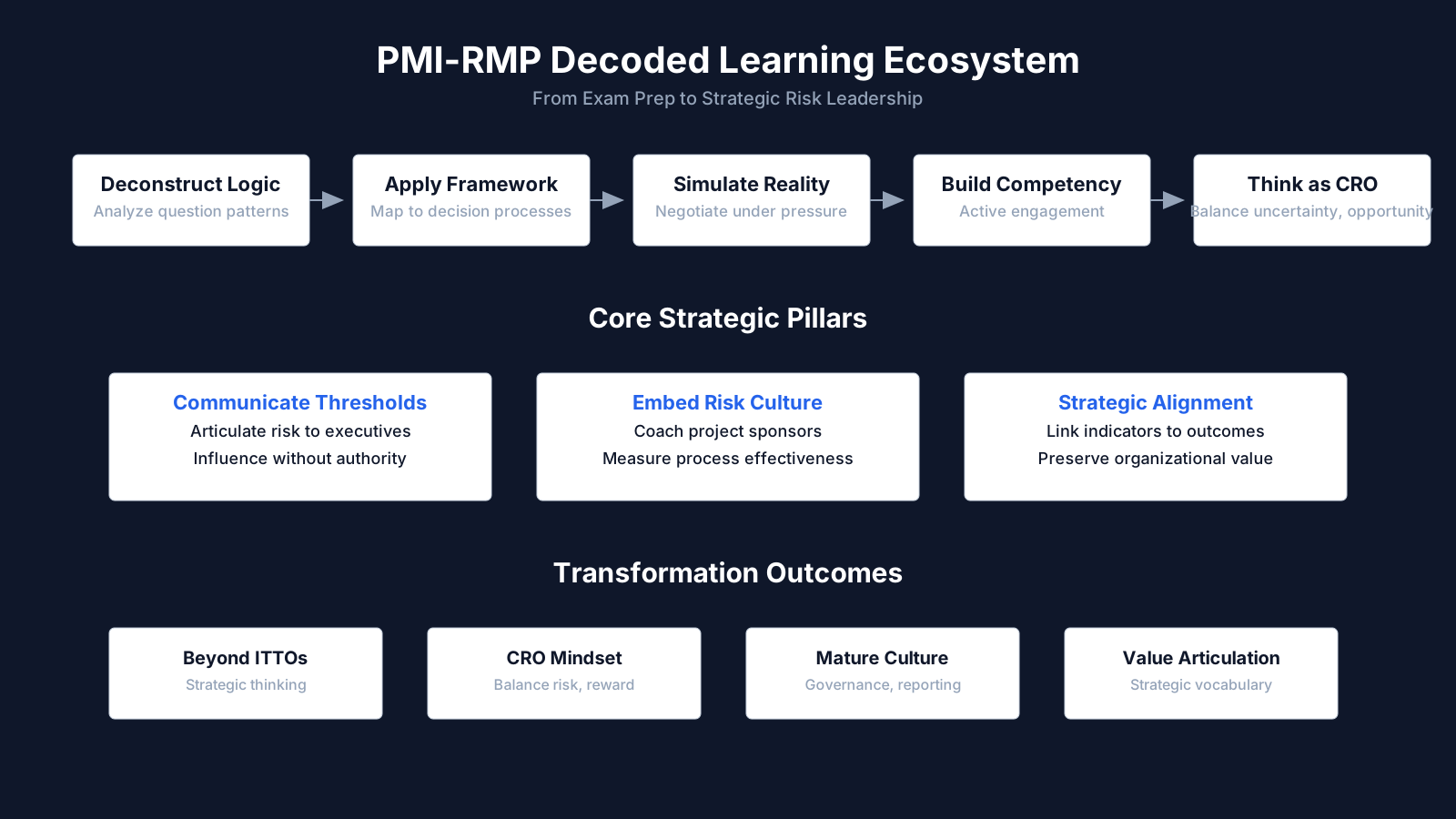
Modern organizations demand that risk management extend beyond isolated project assessments and become woven into the fabric of strategic planning. The PMI-RMP certification embodies this shift by emphasizing the alignment of project risk thresholds with enterprise risk appetite and tolerance. Professionals who hold this credential are uniquely positioned to facilitate conversations between project teams and executive leadership, translating operational uncertainties into language that informs portfolio decisions. This strategic integration requires a deep understanding of how risk interdependencies can cascade across programs, making the certified risk manager a critical architect of organizational resilience rather than a mere preparer of risk registers.
A core competency validated by the PMI-RMP is the ability to design and implement risk response strategies that balance proactive mitigation with adaptive contingency. In practice, this means moving from static risk management plans to dynamic frameworks that evolve with project life cycles. Certified practitioners are trained to employ techniques such as real options analysis and reserve burndown tracking, which provide tangible metrics for stakeholders. These methods help teams avoid the common pitfall of overemphasizing known risks while remaining blind to emergent uncertainties, a discipline that transforms risk management from a compliance activity into a value generating function.
Furthermore, the certification underscores the importance of cultivating a risk aware culture within project teams and across the broader organization. The RMP role model influences behavior by championing psychological safety, where team members feel empowered to surface concerns without fear of reprisal. This cultural dimension is increasingly recognized in management science as essential for early signal detection, a precursor to effective risk response. By mastering facilitation techniques and risk communication, PMI-RMP holders ensure that risk management becomes a continuous, participatory process that strengthens collective decision making under uncertainty.